Tell us about the job
Takes about a minute. No obligation.
Sizing central AC in Montgomery County is a local calculation, not a catalog one. 458 severe weather events were recorded in Montgomery County, Pennsylvania between 2015 and 2024. At that rate, severe weather is part of what every system installed here runs against from its first season, and a contractor who ignores that produces a system that is either underbuilt for the demand or priced around assumptions that do not hold here. Getting the equipment specification right before the install begins is where that load gets addressed.
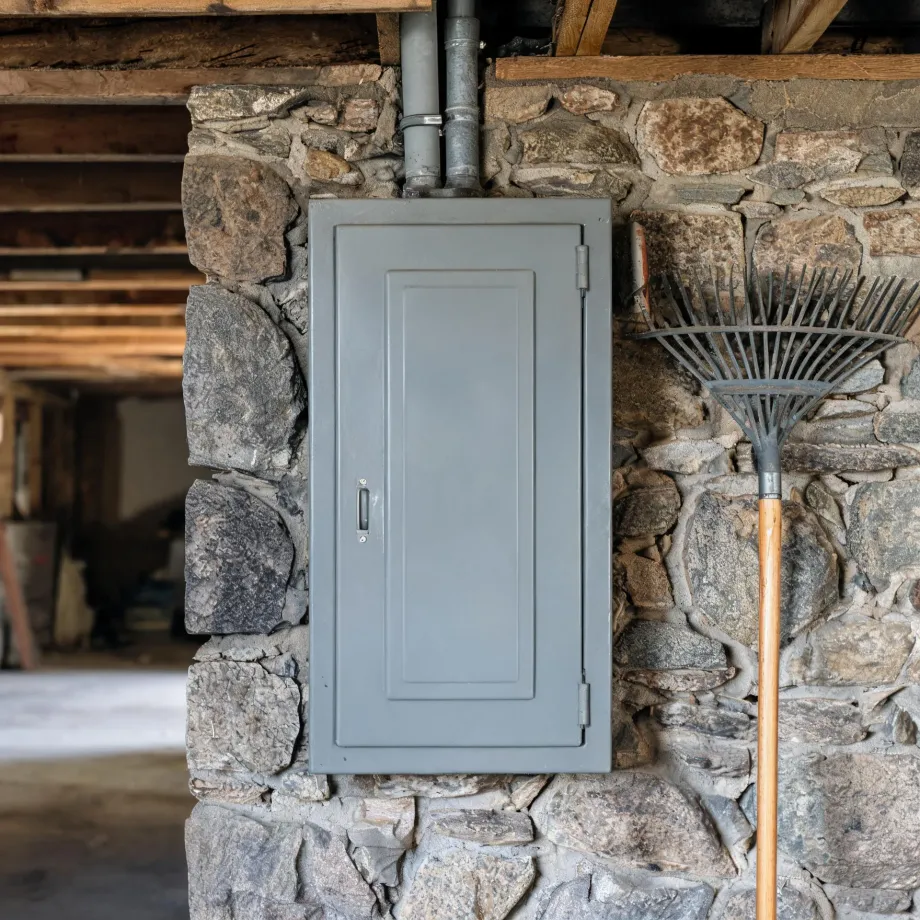
Existing ductwork in a house this age was sized and routed for equipment that has since been replaced at least once, and the path it takes through the house reflects decisions made under entirely different load assumptions. Half the homes in Montgomery County, Pennsylvania were built in 1971 or earlier (2020-2024 ACS 5-year). A contractor installing central AC here spends real time determining whether that ductwork can carry what a new system delivers, and where it cannot, the duct work becomes a separate scope before the unit is ever priced. The electrical is the same story: older service panels were not wired for modern cooling loads, and a licensed contractor checks that before the job goes any further.
What Gets Installed With a New Central AC
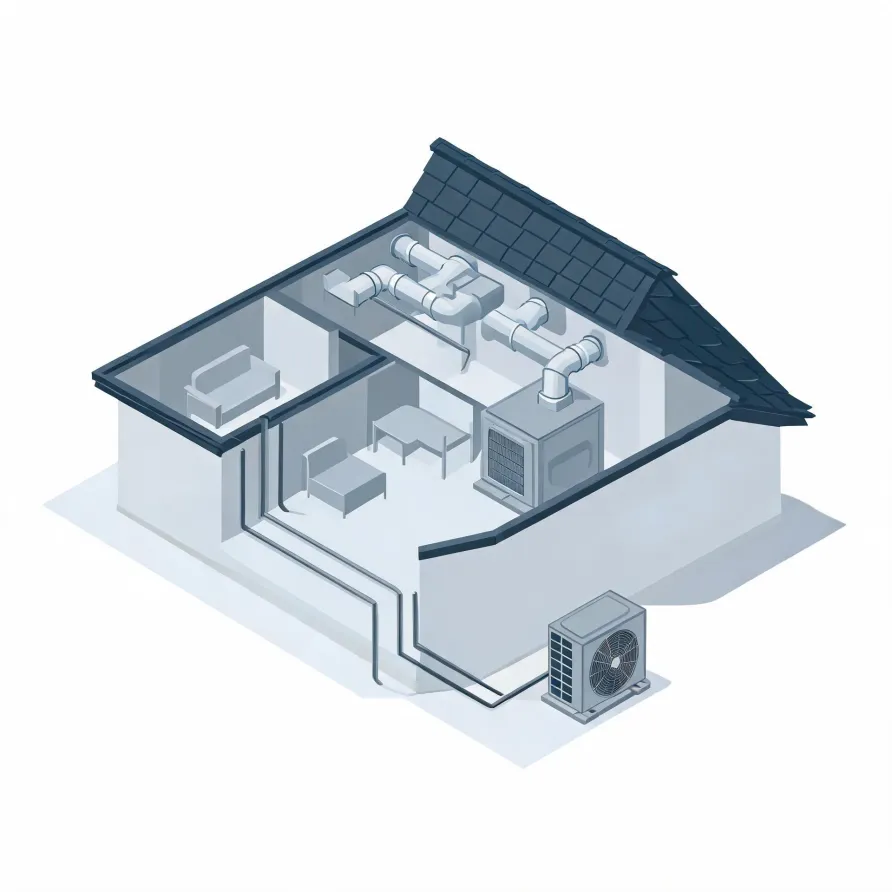
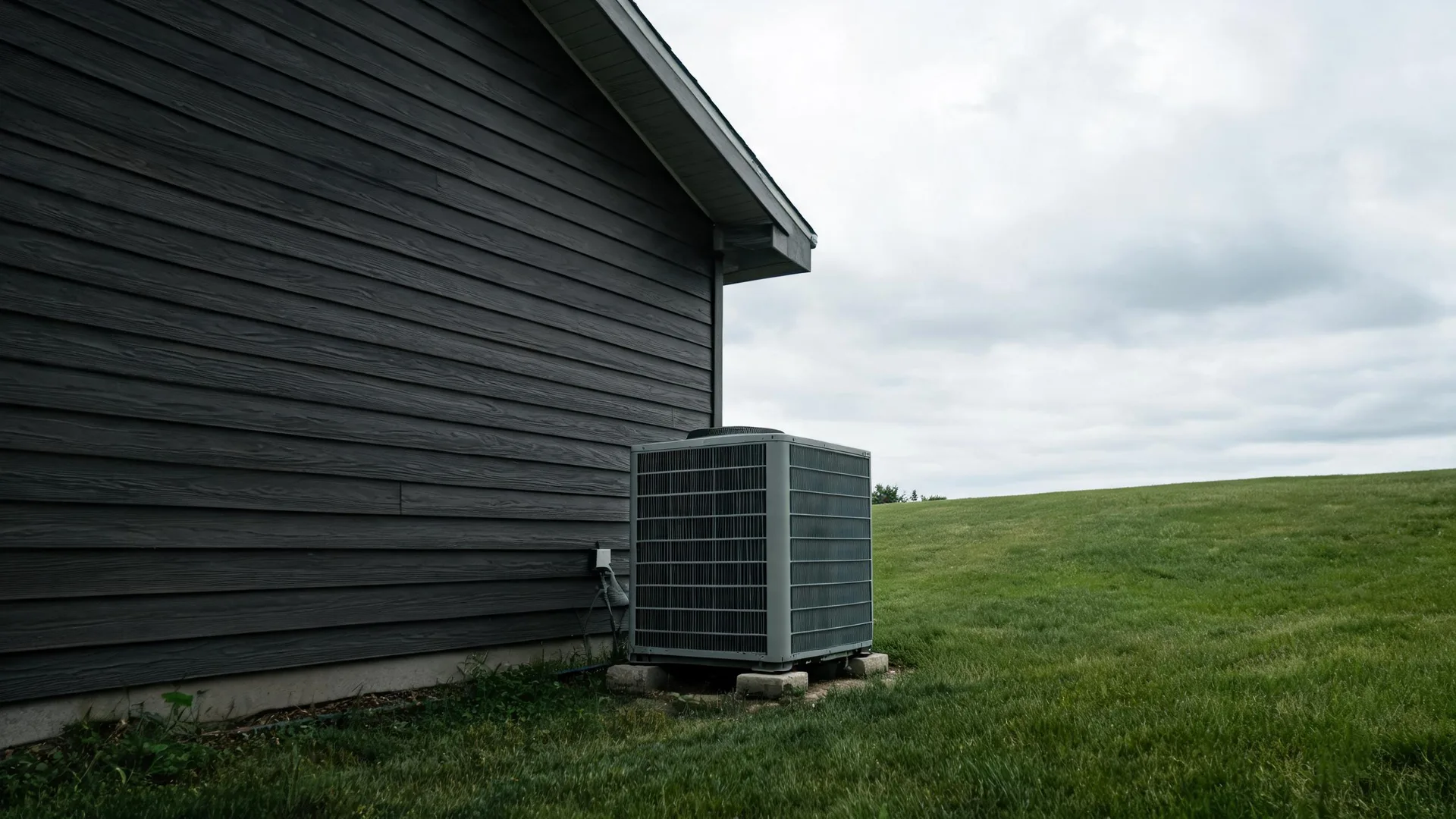
The outdoor condenser unit sits outside the house, usually on a concrete pad along an exterior wall, and houses the compressor and condenser coil. Inside, the air handler or furnace-mounted evaporator coil sits in a utility space, basement, or closet and is where the system picks up heat from the indoor air. These two units are the core of what a contractor installs.
A copper refrigerant line set connects the indoor and outdoor units, running through the wall or floor between them. The thermostat mounts on an interior wall and gives the homeowner control over when the system runs. A contractor also installs a disconnect box near the outdoor unit as part of the electrical connection to the equipment.
The drawing shows a typical layout, and a licensed contractor determines exactly how each piece fits into your particular home.
Find a contractor in Montgomery CountyMontgomery County, PA, by the numbers
458 severe weather events were recorded in Montgomery County, Pennsylvania between 2015 and 2024.
NOAA National Centers for Environmental Information, Storm Events Database, bulk CSV export, events 2015-01-01 through 2024-12-31.Half the homes in Montgomery County, Pennsylvania were built in 1971 or earlier (2020-2024 ACS 5-year).
U.S. Census Bureau, 2020-2024 American Community Survey 5-Year EstimatesMontgomery County, Pennsylvania holds 350,351 housing units (2020-2024 ACS 5-year).
U.S. Census Bureau, 2020-2024 American Community Survey 5-Year EstimatesOwners occupy 71.4% of the occupied homes in Montgomery County, Pennsylvania (2020-2024 ACS 5-year).
U.S. Census Bureau, 2020-2024 American Community Survey 5-Year EstimatesRules & Standards for Central AC Installation in Montgomery County, Pennsylvania11 sourced rules and standards
What the Installation Actually Looks Like
Split-system central air conditioners rated below 45,000 Btu/h manufactured on or after January 1, 2023 must meet a federal minimum of 13.4 SEER2.
Split-system central air conditioners rated at or above 45,000 Btu/h manufactured on or after January 1, 2023 must meet a federal minimum of 13.4 SEER2.
Split-system central air conditioners manufactured between January 1, 2015 and December 31, 2022 had to meet 13 SEER, the metric that preceded SEER2.
Single-package central air conditioners manufactured on or after January 1, 2023 must meet a federal minimum of 13.4 SEER2.
Space-constrained central air conditioners manufactured on or after January 1, 2023 must meet a federal minimum of 11.7 SEER2.
Federal efficiency standards for split-system central air conditioners and heat pumps are set on each certified combination of outdoor unit and indoor coil rather than on the outdoor unit alone.
Residential and light commercial air conditioning and heat pump systems assembled in the field, including mini-splits and unitary systems, may not be installed on or after January 1, 2025 using a refrigerant with a global warming potential above 700.
A field-assembled system whose specified components were all manufactured or imported before January 1, 2025 carries no installation compliance date under the refrigerant restrictions and may still be installed.
Licensing Rules for Montgomery County, Pennsylvania
Pennsylvania names the trade in its own definition: installing central heating or air conditioning is a home improvement under the Act, whether or not the equipment is affixed — so an HVAC installation is work the registration requirement reaches.
A Pennsylvania registration displaces the local one: no political subdivision may require a home improvement contractor to register, license or pay a fee on top of it, though building permits and local code enforcement still apply.
Pennsylvania requires home improvement contractor registration rather than a licence: nobody may hold themselves out as a contractor, or perform any home improvement, without first registering with the Bureau of Consumer Protection.
Severe Weather Events in Montgomery County
Local weather puts real load on cooling equipment, and that load shapes what a system needs to handle year after year. Central AC sized and installed for the conditions here will work differently than one built for a milder climate, which is why the weather record for this area belongs in any honest conversation about installation.
458 severe weather events, 2015–2024. Source: NOAA National Centers for Environmental Information, Storm Events Database.