Tell us about the job
Takes about a minute. No obligation.
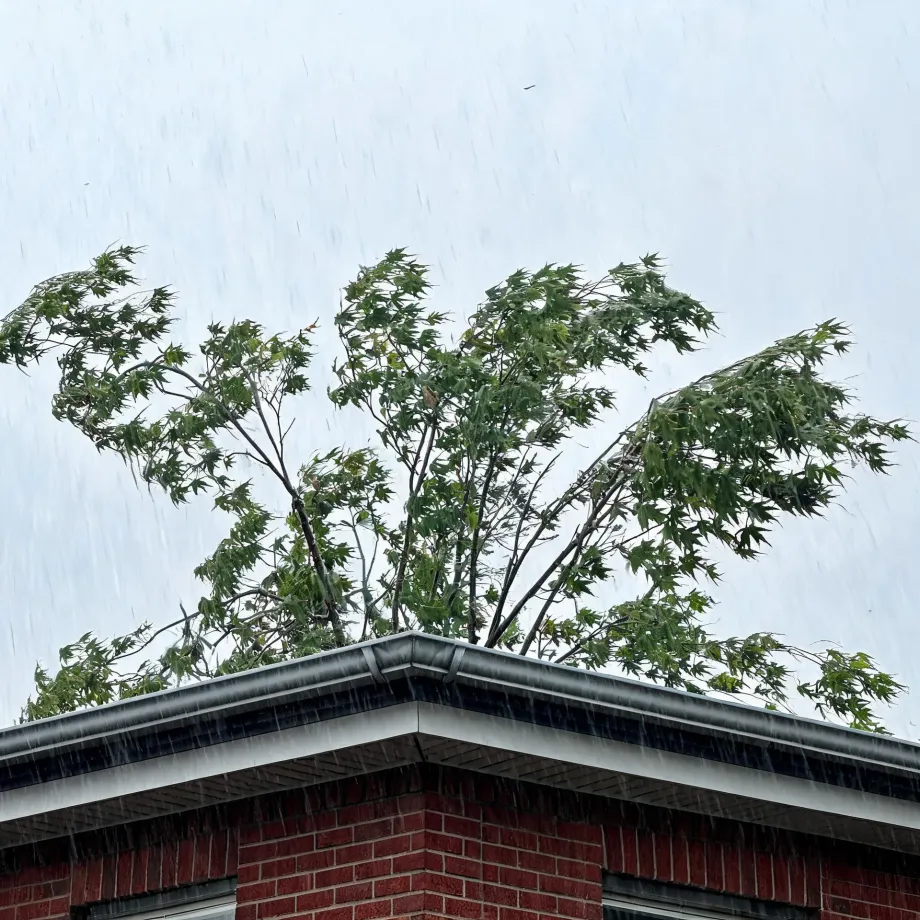
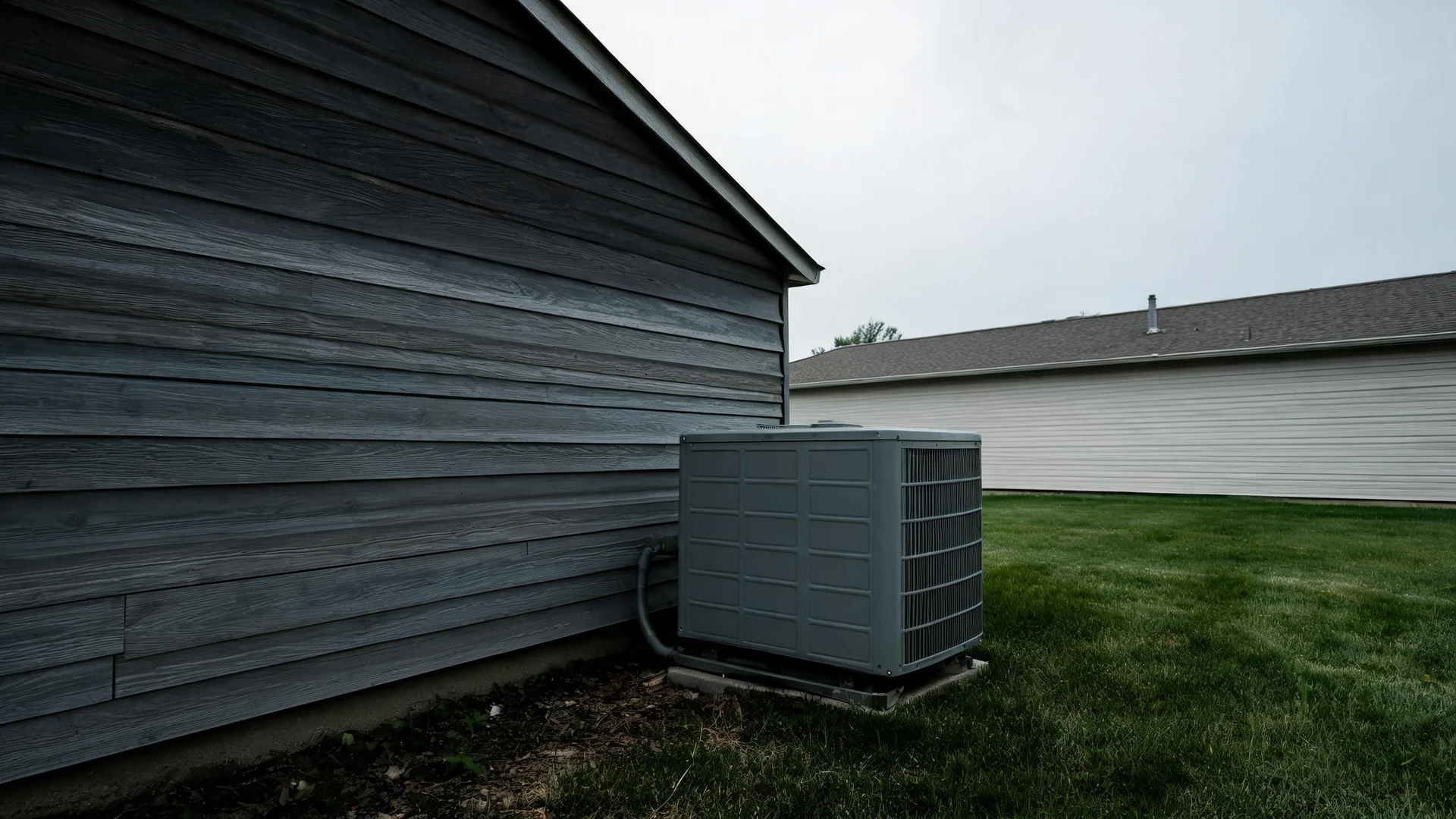
A contractor quoting central AC installation in York County is not working from a standard catalog spec. 252 severe weather events were recorded in York County, Pennsylvania between 2015 and 2024. At that rate, severe weather is a standing condition of operating here, not an occasional disruption, and it shapes which equipment a contractor sizes for the house and how conservatively they set it up. A system installed to handle ordinary summer demand and nothing more will be undersized for what this area actually delivers. Duct sealing, unit placement, and load calculations all land differently when the climate pushes hard on a regular basis.
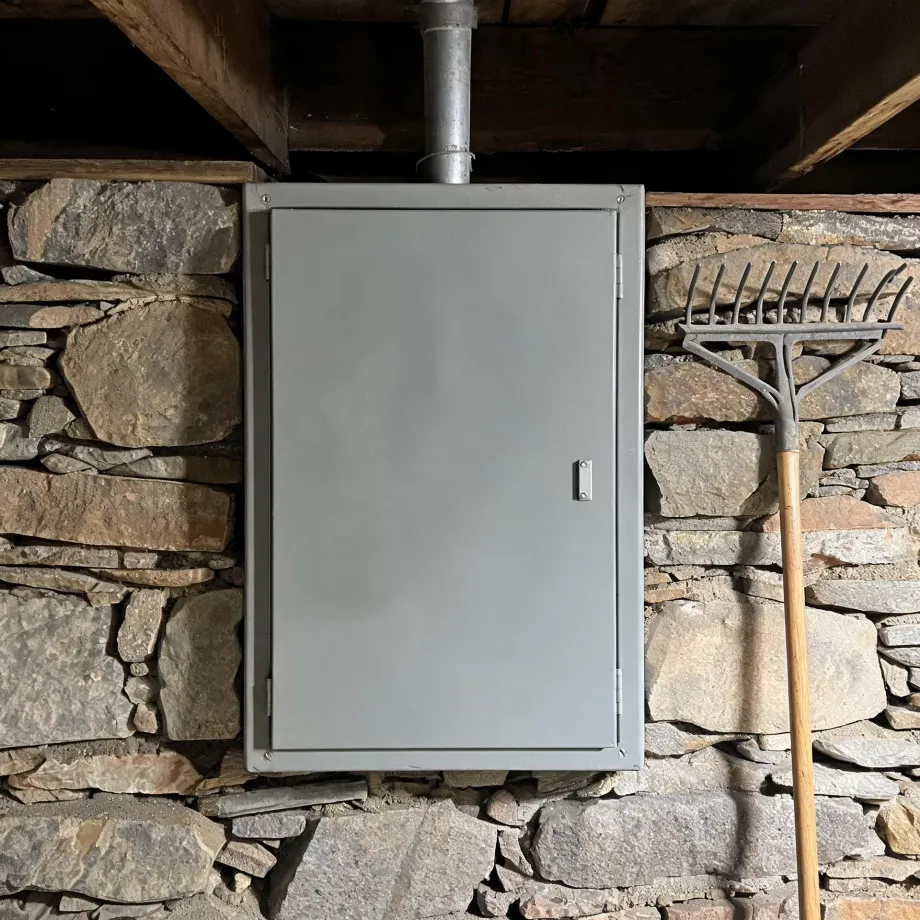
Ductwork designed for a different generation of equipment is what a contractor runs into in a meaningful share of York County installs. Half the homes in York County, Pennsylvania were built in 1976 or earlier (2020-2024 ACS 5-year). The ducts in a house that old were sized and routed for systems with different static pressure requirements, different airflow assumptions, and often different fuel sources, and a new central AC unit has to run on whatever is already in the walls. The electrical panel gets the same scrutiny. What the house already contains is where the installation budget either holds or does not.
What Gets Installed With a New Central AC
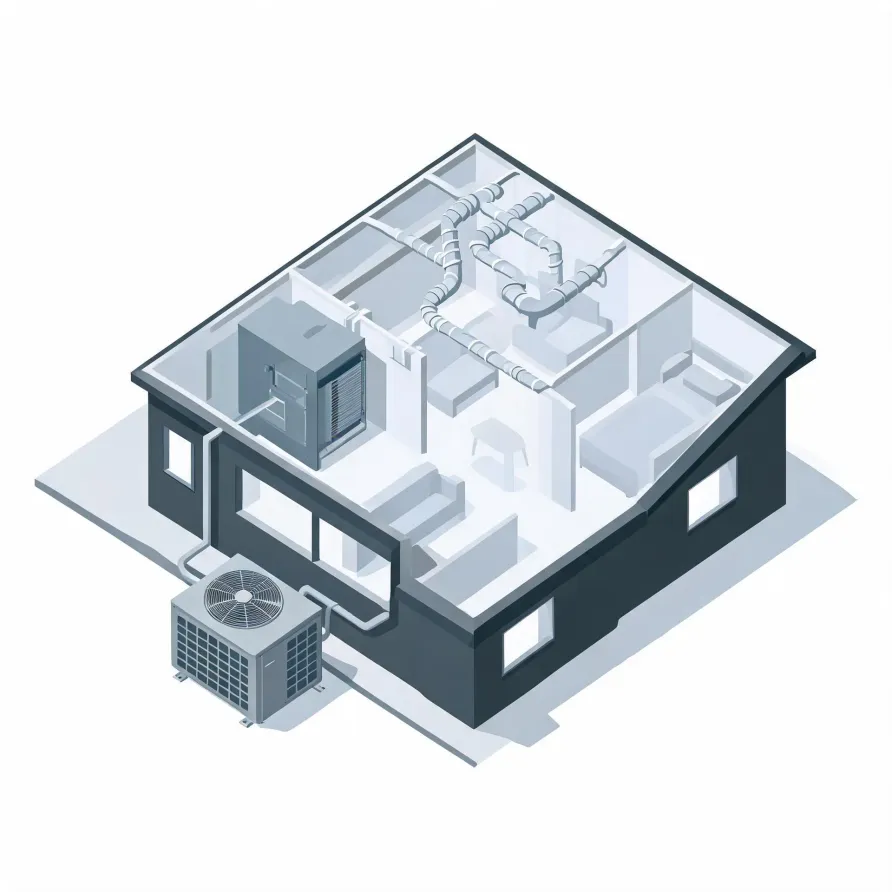
The outdoor condenser unit sits on a pad beside the house and holds the compressor and condenser coil, which together shed heat collected from inside. The indoor air handler or furnace-based evaporator coil goes in a mechanical room, basement, or utility closet, and it is the piece that actually cools the air passing through.
The refrigerant lines run between those two units, linking the outdoor and indoor sections into a single closed loop. A thermostat goes on an interior wall where it reads the temperature of the living space and signals the system to run or stop.
The drawing shows a typical layout, and a licensed contractor determines which components and configurations apply to your specific home.
Find a contractor in York CountyYork County, Pennsylvania, by the numbers
252 severe weather events were recorded in York County, Pennsylvania between 2015 and 2024.
NOAA National Centers for Environmental Information, Storm Events Database, bulk CSV export, events 2015-01-01 through 2024-12-31.Half the homes in York County, Pennsylvania were built in 1976 or earlier (2020-2024 ACS 5-year).
U.S. Census Bureau, 2020-2024 American Community Survey 5-Year EstimatesYork County, Pennsylvania holds 189,857 housing units (2020-2024 ACS 5-year).
U.S. Census Bureau, 2020-2024 American Community Survey 5-Year EstimatesOwners occupy 76.3% of the occupied homes in York County, Pennsylvania (2020-2024 ACS 5-year).
U.S. Census Bureau, 2020-2024 American Community Survey 5-Year EstimatesRules & Standards for Central AC Installation in York County, Pennsylvania11 sourced rules and standards
What the Installation Looks Like in York County
Split-system central air conditioners rated below 45,000 Btu/h manufactured on or after January 1, 2023 must meet a federal minimum of 13.4 SEER2.
Split-system central air conditioners rated at or above 45,000 Btu/h manufactured on or after January 1, 2023 must meet a federal minimum of 13.4 SEER2.
Split-system central air conditioners manufactured between January 1, 2015 and December 31, 2022 had to meet 13 SEER, the metric that preceded SEER2.
Single-package central air conditioners manufactured on or after January 1, 2023 must meet a federal minimum of 13.4 SEER2.
Space-constrained central air conditioners manufactured on or after January 1, 2023 must meet a federal minimum of 11.7 SEER2.
Federal efficiency standards for split-system central air conditioners and heat pumps are set on each certified combination of outdoor unit and indoor coil rather than on the outdoor unit alone.
Residential and light commercial air conditioning and heat pump systems assembled in the field, including mini-splits and unitary systems, may not be installed on or after January 1, 2025 using a refrigerant with a global warming potential above 700.
A field-assembled system whose specified components were all manufactured or imported before January 1, 2025 carries no installation compliance date under the refrigerant restrictions and may still be installed.
Licensing and Legal Requirements in York County, Pennsylvania
Pennsylvania names the trade in its own definition: installing central heating or air conditioning is a home improvement under the Act, whether or not the equipment is affixed — so an HVAC installation is work the registration requirement reaches.
A Pennsylvania registration displaces the local one: no political subdivision may require a home improvement contractor to register, license or pay a fee on top of it, though building permits and local code enforcement still apply.
Pennsylvania requires home improvement contractor registration rather than a licence: nobody may hold themselves out as a contractor, or perform any home improvement, without first registering with the Bureau of Consumer Protection.
Severe Weather Events in York County
Weather patterns drive how hard cooling equipment has to work and how often it runs at its limits. What happens in York County shapes what a well-sized, properly installed central AC system needs to handle.
252 severe weather events, 2015–2024. Source: NOAA National Centers for Environmental Information, Storm Events Database.