Tell us about the job
Takes about a minute. No obligation.
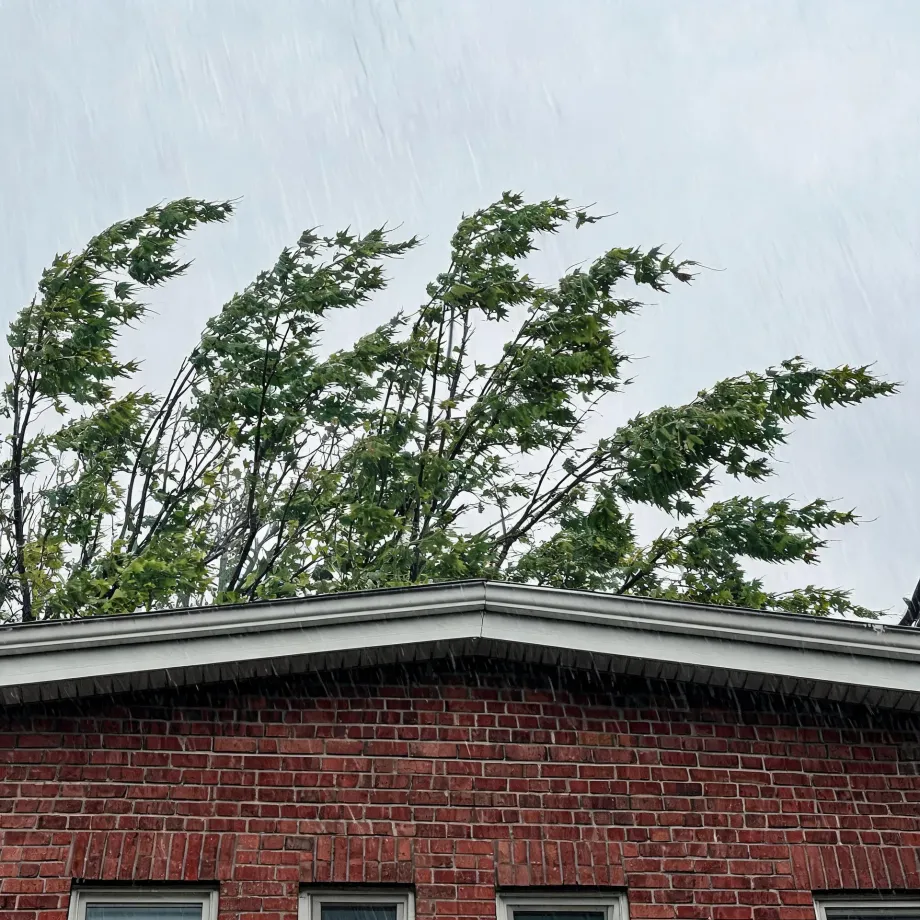
A central AC system in this county has been running against a climate that pushes equipment hard season after season. 102 severe weather events were recorded in Wayne County, Pennsylvania between 2015 and 2024. At that rate, compressors and their associated components accumulate stress in ways that show up as refrigerant loss, reduced capacity, or cycling failures rather than any single dramatic breakdown. A contractor called out for a repair will look at those components closely before concluding the fault is purely electrical or mechanical wear unrelated to operating load.
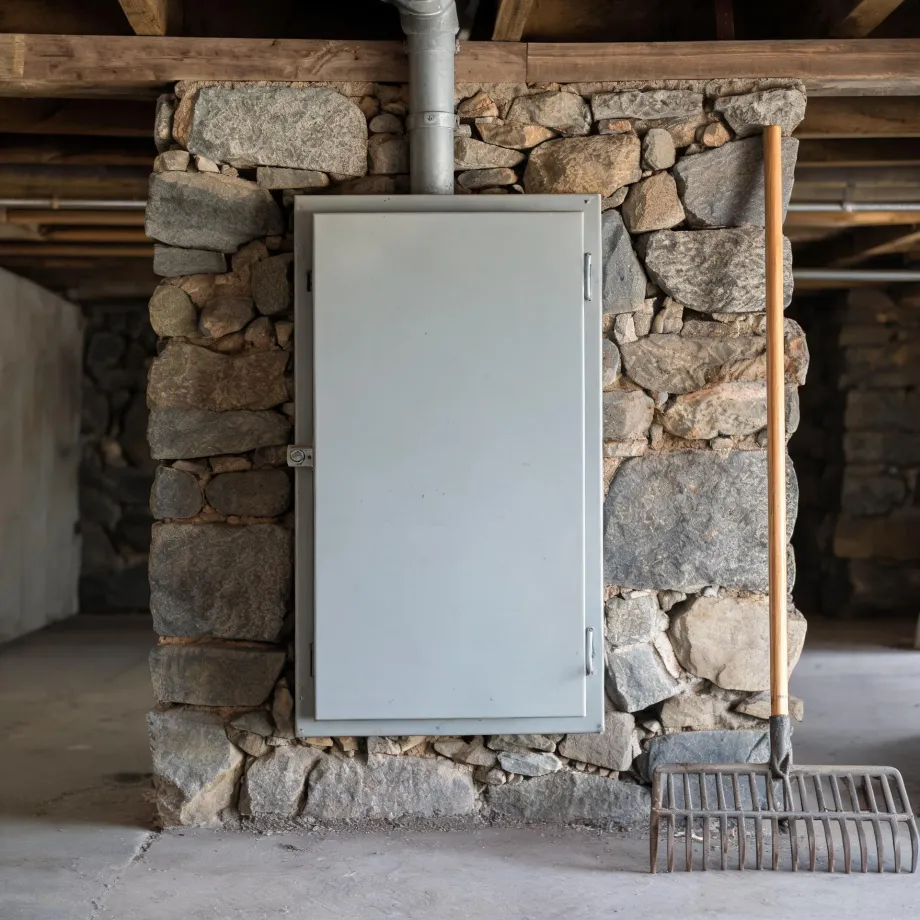
Half the homes in Wayne County, Pennsylvania were built in 1980 or earlier (2020-2024 ACS 5-year). Housing built that long ago has had time to cycle through more than one system, and what sits in a house now reflects decades of replacements and workarounds rather than a single original install. When a contractor opens a central AC unit here, the question that shapes the repair is whether the components that have failed are still manufactured. Older refrigerants, discontinued control boards, and proprietary parts from systems that have since left the market can turn a repair into a parts search. That search, and its outcome, is what determines the scope and the bill.
The Parts of a Central AC a Contractor Checks First
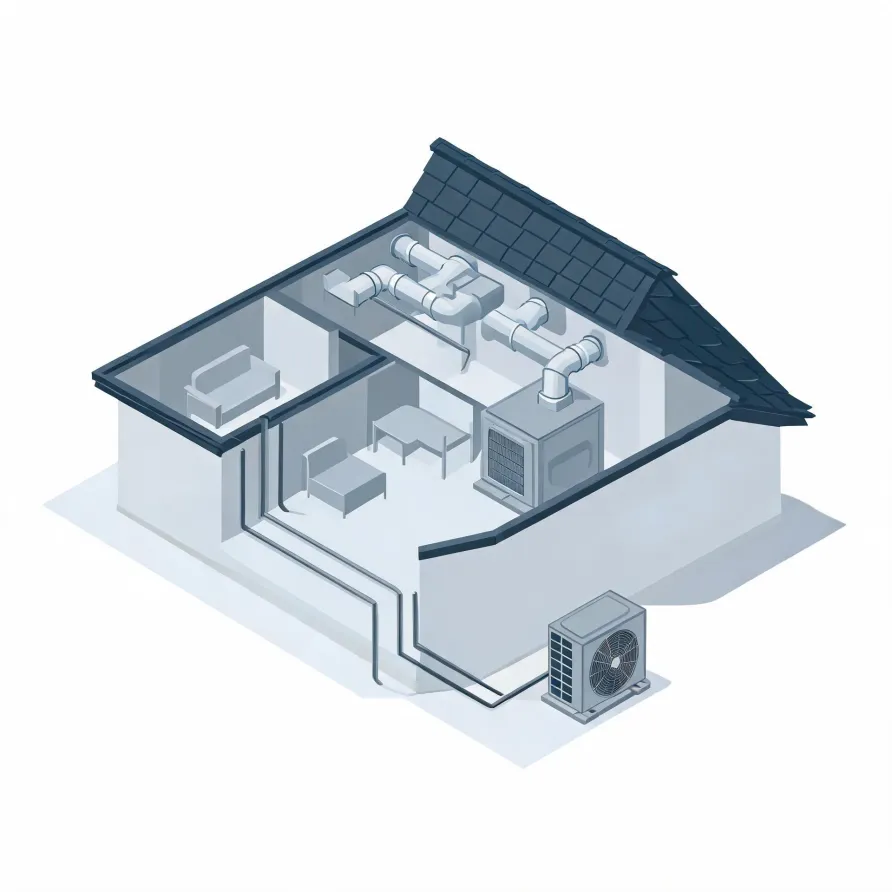
The outdoor condenser unit sits outside the house, usually on a concrete pad at the side or rear, and it is where heat pulled from inside the home gets released. The compressor lives inside that cabinet and is often the first thing a contractor tests when the system runs but produces no cooling.
The air handler or furnace sits inside, typically in a basement, closet, or utility room, and it holds the evaporator coil, where the refrigerant does its work. The refrigerant line set runs between the two units, and the expansion valve and the blower motor are both common sources of trouble when cooling drops off or airflow feels weak.
The drawing shows the general layout of a central AC system, and a licensed contractor determines which parts and connections apply to the specific equipment and configuration in your house.
Find a contractor in Wayne CountyWayne County, Pennsylvania, by the numbers
102 severe weather events were recorded in Wayne County, Pennsylvania between 2015 and 2024.
NOAA National Centers for Environmental Information, Storm Events Database, bulk CSV export, events 2015-01-01 through 2024-12-31.Half the homes in Wayne County, Pennsylvania were built in 1980 or earlier (2020-2024 ACS 5-year).
U.S. Census Bureau, 2020-2024 American Community Survey 5-Year EstimatesWayne County, Pennsylvania holds 32,171 housing units (2020-2024 ACS 5-year).
U.S. Census Bureau, 2020-2024 American Community Survey 5-Year EstimatesOwners occupy 80.5% of the occupied homes in Wayne County, Pennsylvania (2020-2024 ACS 5-year).
U.S. Census Bureau, 2020-2024 American Community Survey 5-Year EstimatesRules & Standards Behind Central AC Repair in Wayne County, Pennsylvania11 sourced rules and standards
What HVAC Repair Looks Like in Wayne County
Split-system central air conditioners rated below 45,000 Btu/h manufactured on or after January 1, 2023 must meet a federal minimum of 13.4 SEER2.
Split-system central air conditioners rated at or above 45,000 Btu/h manufactured on or after January 1, 2023 must meet a federal minimum of 13.4 SEER2.
Split-system central air conditioners manufactured between January 1, 2015 and December 31, 2022 had to meet 13 SEER, the metric that preceded SEER2.
Single-package central air conditioners manufactured on or after January 1, 2023 must meet a federal minimum of 13.4 SEER2.
Space-constrained central air conditioners manufactured on or after January 1, 2023 must meet a federal minimum of 11.7 SEER2.
Federal efficiency standards for split-system central air conditioners and heat pumps are set on each certified combination of outdoor unit and indoor coil rather than on the outdoor unit alone.
Residential and light commercial air conditioning and heat pump systems assembled in the field, including mini-splits and unitary systems, may not be installed on or after January 1, 2025 using a refrigerant with a global warming potential above 700.
A field-assembled system whose specified components were all manufactured or imported before January 1, 2025 carries no installation compliance date under the refrigerant restrictions and may still be installed.
Licensing Rules for HVAC Repair in Wayne County, Pennsylvania
Pennsylvania names the trade in its own definition: installing central heating or air conditioning is a home improvement under the Act, whether or not the equipment is affixed — so an HVAC installation is work the registration requirement reaches.
A Pennsylvania registration displaces the local one: no political subdivision may require a home improvement contractor to register, license or pay a fee on top of it, though building permits and local code enforcement still apply.
Pennsylvania requires home improvement contractor registration rather than a licence: nobody may hold themselves out as a contractor, or perform any home improvement, without first registering with the Bureau of Consumer Protection.
Severe Weather Events in Wayne County
Extreme weather puts real hours on cooling equipment. How hard a central AC system works, and how quickly its parts wear, is shaped by what the local climate actually does.
102 severe weather events, 2015–2024. Source: NOAA National Centers for Environmental Information, Storm Events Database.