Tell us about the job
Takes about a minute. No obligation.
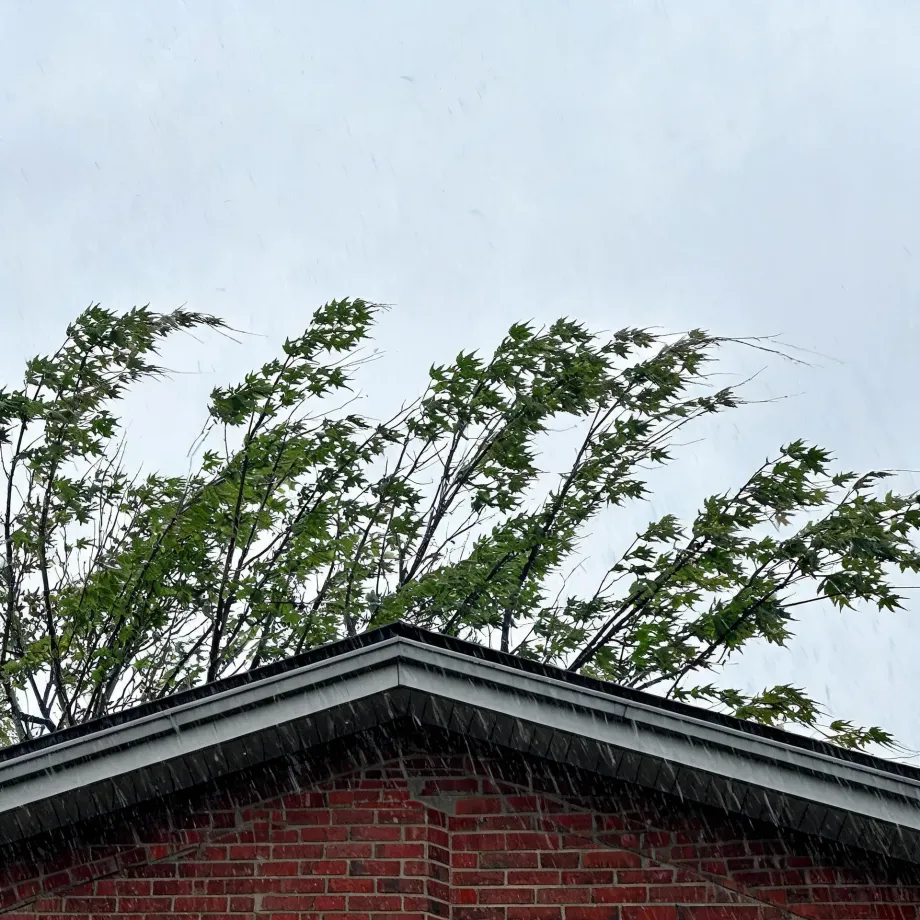
A contractor repairing central AC here has to establish what actually drove the failure before they can quote the job accurately. 141 severe weather events were recorded in Somerset County, Pennsylvania between 2015 and 2024. At roughly the seventieth percentile nationally, that puts Somerset County in the heavier portion of the range, which means the compressor, capacitor, and refrigerant lines in a given home have been running against a real cumulative load. A part that failed could have gone from age alone, but it could just as honestly have been pushed there by the stress of keeping up through repeated severe weather conditions. The repair scope changes depending on which it was, because age calls for one fix while accumulated environmental wear often points a contractor toward related components that are close behind.
Half the homes in Somerset County, Pennsylvania were built in 1964 or earlier (2020-2024 ACS 5-year). A house that old was built before residential central AC was standard, which means the ductwork and the system inside it were added or adapted at some point after the walls went up. When a repair job opens the equipment, what a contractor finds often comes down to whether the parts that unit takes are still in production, and whether the adaptation held. Older refrigerant lines, non-original fittings, and components sized for a system that predated the current one can all shape what the repair actually costs.
The Parts of a Central AC a Contractor Checks First
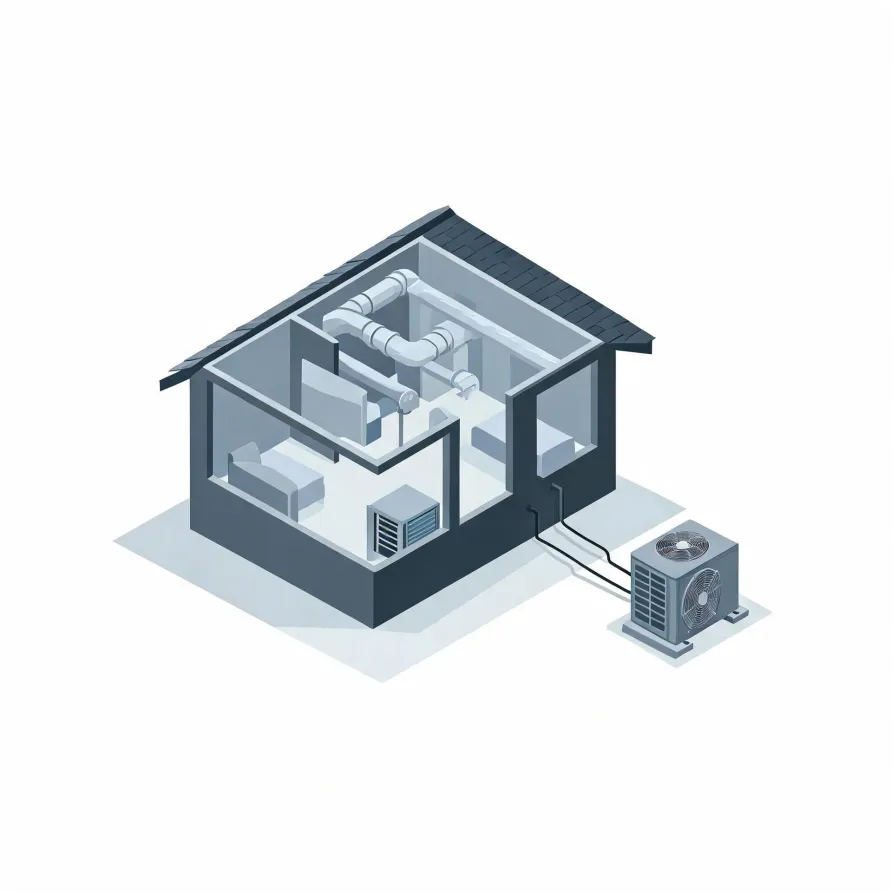
The outdoor condenser unit sits outside the house and holds the compressor and condenser coil, which together release heat pulled from inside. When the system runs but cools poorly, or not at all, a contractor starts here. A failed compressor, a refrigerant leak at the coil, or a seized condenser fan motor are the common findings at this unit.
Inside the house, the air handler or furnace cabinet holds the evaporator coil and the blower. The evaporator coil is where refrigerant absorbs heat from indoor air, and a frozen or fouled coil stops that process entirely. The blower motor moves air across the coil and through the house, and a weak or failed motor shows up as low airflow even when cooling is otherwise working.
The drawing shows a typical central AC layout, and a licensed contractor determines which components apply to your specific house and system.
Find a contractor in Somerset CountySomerset County, by the numbers
141 severe weather events were recorded in Somerset County, Pennsylvania between 2015 and 2024.
NOAA National Centers for Environmental Information, Storm Events Database, bulk CSV export, events 2015-01-01 through 2024-12-31.Half the homes in Somerset County, Pennsylvania were built in 1964 or earlier (2020-2024 ACS 5-year).
U.S. Census Bureau, 2020-2024 American Community Survey 5-Year EstimatesSomerset County, Pennsylvania holds 37,863 housing units (2020-2024 ACS 5-year).
U.S. Census Bureau, 2020-2024 American Community Survey 5-Year EstimatesOwners occupy 80.4% of the occupied homes in Somerset County, Pennsylvania (2020-2024 ACS 5-year).
U.S. Census Bureau, 2020-2024 American Community Survey 5-Year EstimatesCodes & Standards Governing Central AC Repair in Somerset County, Pennsylvania11 sourced rules and standards
What HVAC Repair Looks Like in Somerset County
Split-system central air conditioners rated below 45,000 Btu/h manufactured on or after January 1, 2023 must meet a federal minimum of 13.4 SEER2.
Split-system central air conditioners rated at or above 45,000 Btu/h manufactured on or after January 1, 2023 must meet a federal minimum of 13.4 SEER2.
Split-system central air conditioners manufactured between January 1, 2015 and December 31, 2022 had to meet 13 SEER, the metric that preceded SEER2.
Single-package central air conditioners manufactured on or after January 1, 2023 must meet a federal minimum of 13.4 SEER2.
Space-constrained central air conditioners manufactured on or after January 1, 2023 must meet a federal minimum of 11.7 SEER2.
Federal efficiency standards for split-system central air conditioners and heat pumps are set on each certified combination of outdoor unit and indoor coil rather than on the outdoor unit alone.
Residential and light commercial air conditioning and heat pump systems assembled in the field, including mini-splits and unitary systems, may not be installed on or after January 1, 2025 using a refrigerant with a global warming potential above 700.
A field-assembled system whose specified components were all manufactured or imported before January 1, 2025 carries no installation compliance date under the refrigerant restrictions and may still be installed.
Licensing Rules for HVAC Repair in Somerset County, Pennsylvania
Pennsylvania names the trade in its own definition: installing central heating or air conditioning is a home improvement under the Act, whether or not the equipment is affixed — so an HVAC installation is work the registration requirement reaches.
A Pennsylvania registration displaces the local one: no political subdivision may require a home improvement contractor to register, license or pay a fee on top of it, though building permits and local code enforcement still apply.
Pennsylvania requires home improvement contractor registration rather than a licence: nobody may hold themselves out as a contractor, or perform any home improvement, without first registering with the Bureau of Consumer Protection.
Severe Weather Events in Somerset County
Stress on central AC equipment in Somerset County comes partly from what the weather demands of it. Repair needs reflect local conditions, and the record below shows what those conditions have looked like year by year.
141 severe weather events, 2015–2024. Source: NOAA National Centers for Environmental Information, Storm Events Database.