Tell us about the job
Takes about a minute. No obligation.
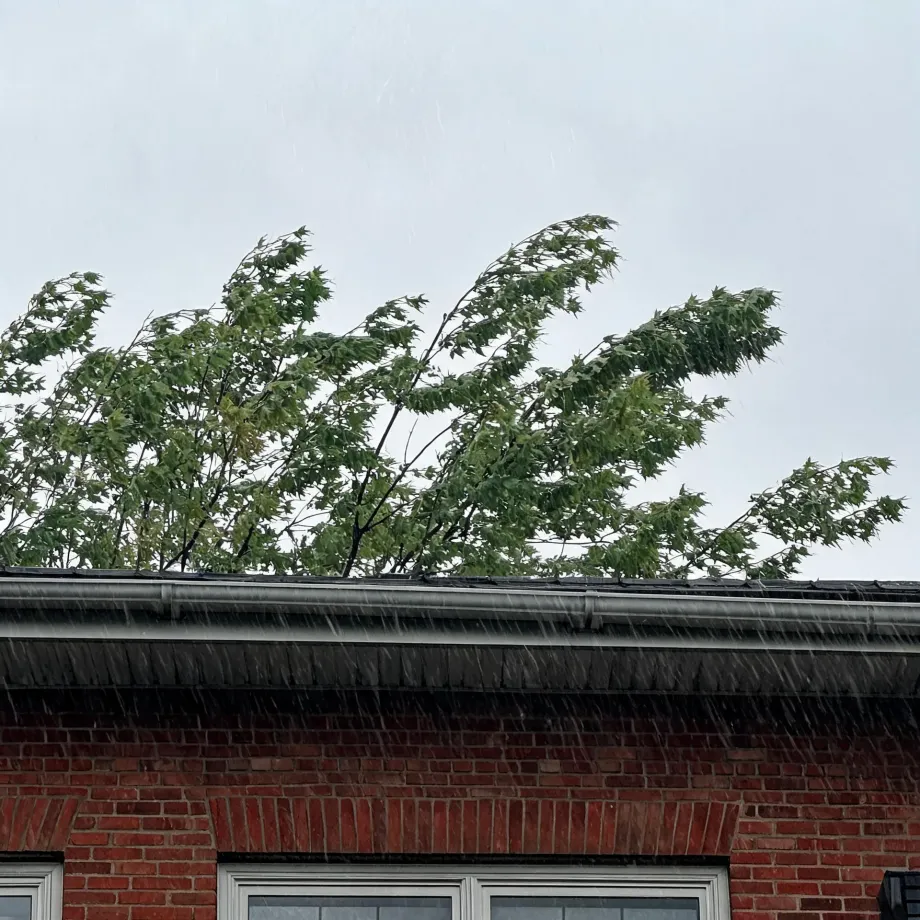
A contractor quoting a central AC repair here has to work out what the system has already been through before they can say which part failed and why. 215 severe weather events were recorded in Centre County, Pennsylvania between 2015 and 2024. At that rate, severe weather is a standing feature of this area, not an occasional one, and the compressor, capacitor, and condenser coils carry that load season after season. A part that tests borderline on a mild day may have been borderline for a while. That history shapes what a contractor checks first and what they price to replace.
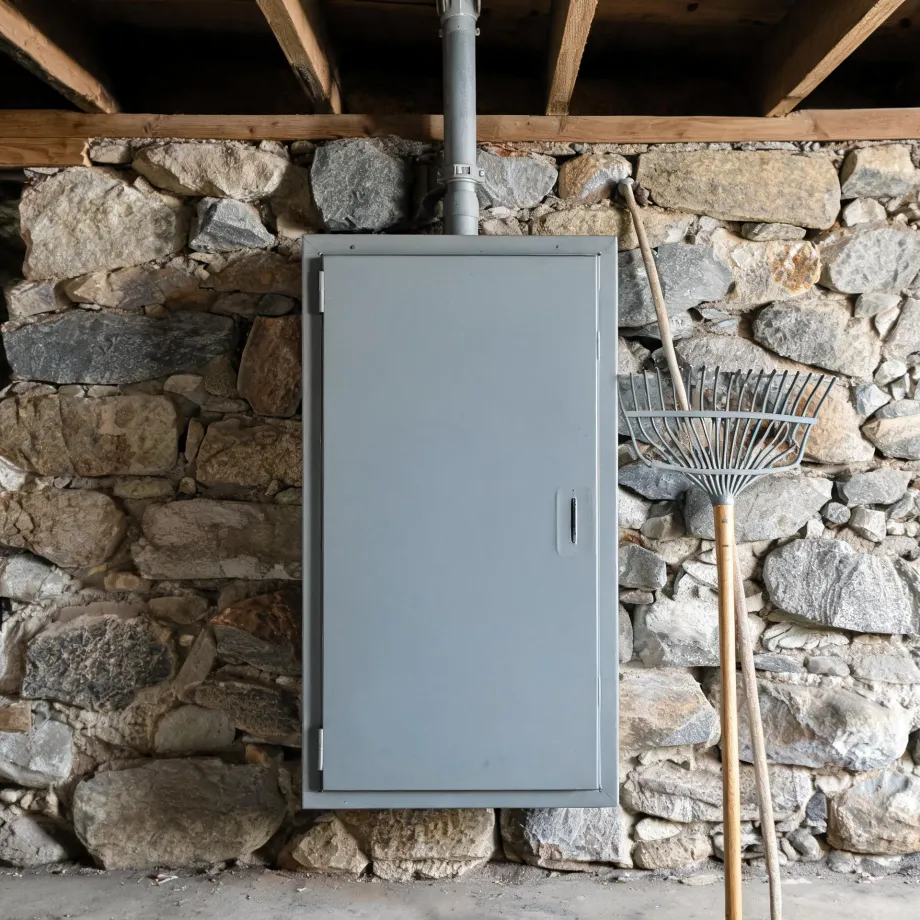
Ductwork and refrigerant lines in many houses here were run for equipment generations back, and when a central AC unit fails today, what a contractor pulls from the opened system reflects that layered history. Half the homes in Centre County, Pennsylvania were built in 1980 or earlier (2020-2024 ACS 5-year). A compressor or control board from a system installed into older infrastructure often draws on a parts line that manufacturers have since discontinued, and the contractor has to determine that before a repair price means anything. A job that looks straightforward from the outside can stall on a single component that requires sourcing from secondary suppliers or changes the repair path entirely.
The Parts of a Central AC a Contractor Checks First
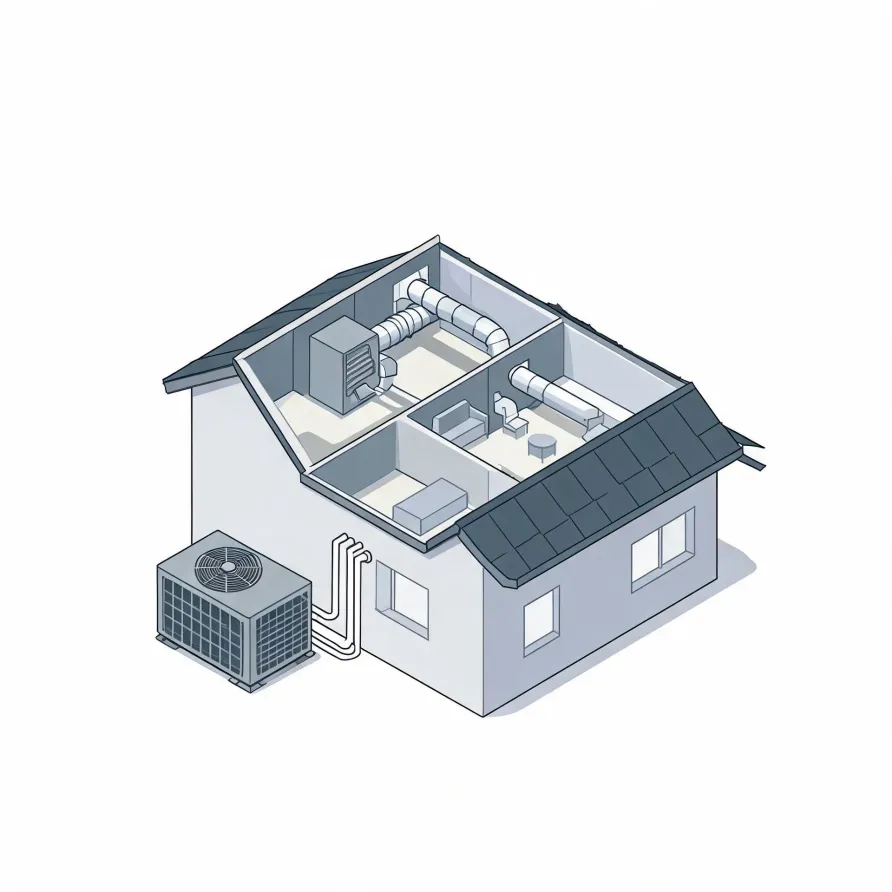
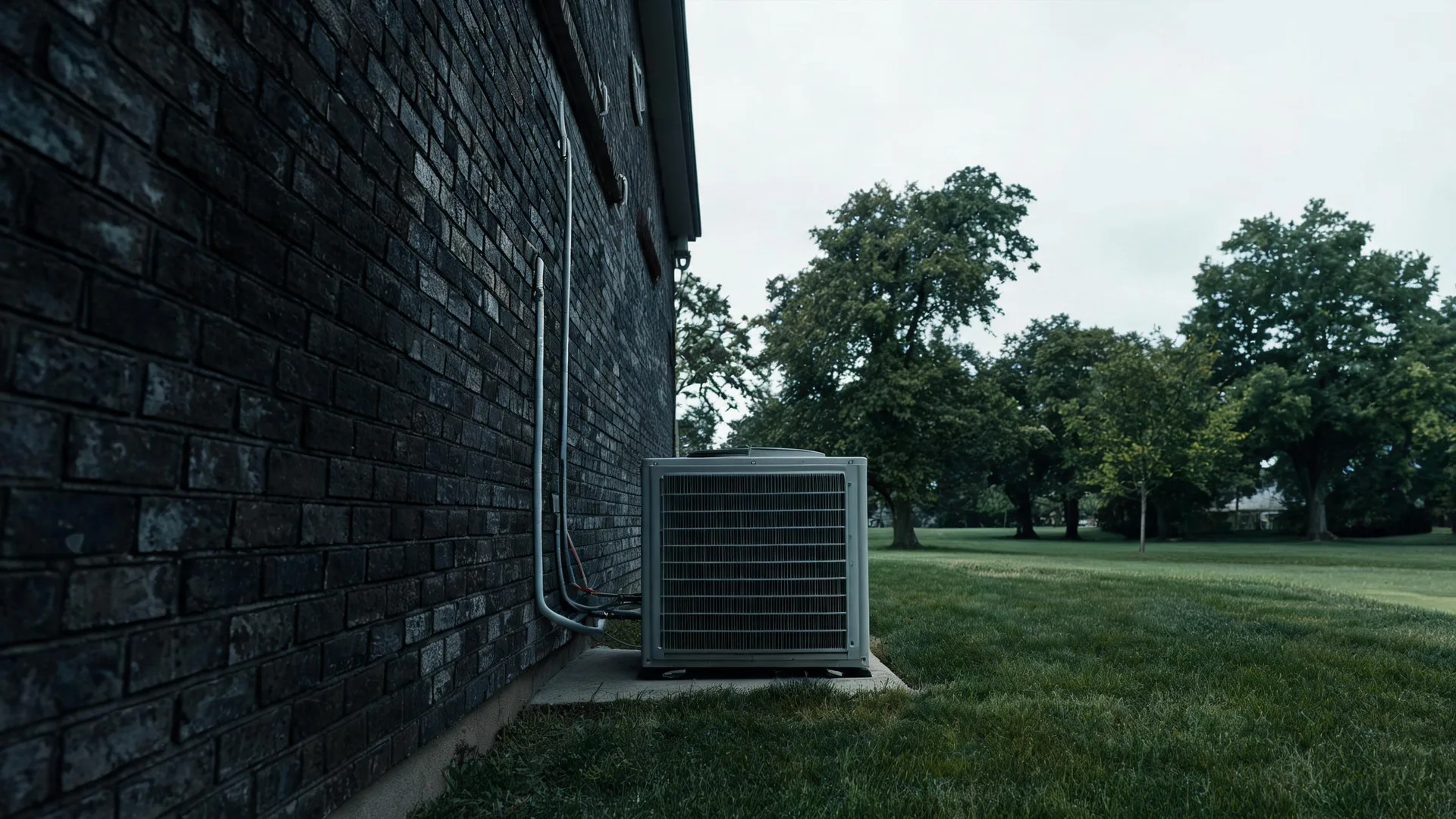
The outdoor condenser unit sits outside the house, usually on a concrete pad at ground level, and it is where the system sheds heat. When a central AC stops cooling, a contractor starts here, checking the compressor inside the cabinet and the condenser coil wrapped around it. A failed compressor or a clogged, bent, or leaking coil will stop the whole system cold.
Inside the house, the air handler or furnace-mounted evaporator coil sits in a utility space, basement, or closet and pulls heat out of the indoor air. The refrigerant line set runs between the two units, and the expansion valve and refrigerant charge are inspected alongside it. The thermostat, which the homeowner sees on the wall, is also checked early because a wiring or calibration fault can mimic a mechanical failure.
The drawing shows the general layout of a central AC system, and a licensed contractor determines which components apply to your specific house.
Find a contractor in Centre CountyCentre County, by the numbers
215 severe weather events were recorded in Centre County, Pennsylvania between 2015 and 2024.
NOAA National Centers for Environmental Information, Storm Events Database, bulk CSV export, events 2015-01-01 through 2024-12-31.Half the homes in Centre County, Pennsylvania were built in 1980 or earlier (2020-2024 ACS 5-year).
U.S. Census Bureau, 2020-2024 American Community Survey 5-Year EstimatesCentre County, Pennsylvania holds 66,475 housing units (2020-2024 ACS 5-year).
U.S. Census Bureau, 2020-2024 American Community Survey 5-Year EstimatesOwners occupy 61.8% of the occupied homes in Centre County, Pennsylvania (2020-2024 ACS 5-year).
U.S. Census Bureau, 2020-2024 American Community Survey 5-Year EstimatesCodes & Standards Covering Central AC Repair in Centre County, Pennsylvania11 sourced rules and standards
What HVAC Repair Looks Like in Centre County
Split-system central air conditioners rated below 45,000 Btu/h manufactured on or after January 1, 2023 must meet a federal minimum of 13.4 SEER2.
Split-system central air conditioners rated at or above 45,000 Btu/h manufactured on or after January 1, 2023 must meet a federal minimum of 13.4 SEER2.
Split-system central air conditioners manufactured between January 1, 2015 and December 31, 2022 had to meet 13 SEER, the metric that preceded SEER2.
Single-package central air conditioners manufactured on or after January 1, 2023 must meet a federal minimum of 13.4 SEER2.
Space-constrained central air conditioners manufactured on or after January 1, 2023 must meet a federal minimum of 11.7 SEER2.
Federal efficiency standards for split-system central air conditioners and heat pumps are set on each certified combination of outdoor unit and indoor coil rather than on the outdoor unit alone.
Residential and light commercial air conditioning and heat pump systems assembled in the field, including mini-splits and unitary systems, may not be installed on or after January 1, 2025 using a refrigerant with a global warming potential above 700.
A field-assembled system whose specified components were all manufactured or imported before January 1, 2025 carries no installation compliance date under the refrigerant restrictions and may still be installed.
Licensing and Legal Requirements in Centre County, Pennsylvania
Pennsylvania names the trade in its own definition: installing central heating or air conditioning is a home improvement under the Act, whether or not the equipment is affixed — so an HVAC installation is work the registration requirement reaches.
A Pennsylvania registration displaces the local one: no political subdivision may require a home improvement contractor to register, license or pay a fee on top of it, though building permits and local code enforcement still apply.
Pennsylvania requires home improvement contractor registration rather than a licence: nobody may hold themselves out as a contractor, or perform any home improvement, without first registering with the Bureau of Consumer Protection.
Severe Weather Events in Centre County
Extreme weather puts real hours on central AC equipment. Understanding what the climate here demands is part of diagnosing why a system is struggling and what a repair needs to address.
215 severe weather events, 2015–2024. Source: NOAA National Centers for Environmental Information, Storm Events Database.