Send the form and stop researching installers for the new air conditioner.
Summers in Pennsylvania get sticky, and if you're weighing a new system you've probably landed on two choices: central air or a ductless mini split. Both can cool a Pennsylvania home. Which one makes sense for yours depends on what's already there, what you heat with, and what you're trying to fix.
Most homes here heat with gas, which usually means ductwork already runs through the house. If that's true for you, central air uses what's already in place. A mini split skips ducts entirely, which matters if you're cooling a room that was added on, a converted attic, or a space the existing ductwork never reached well.
Power is expensive here, and that affects both choices differently. A mini split cools only the room it's in, so you're not paying to condition space nobody's using. Central air cools the whole house at once, evenly, through the same system already tied to your furnace.
Neither answer is right for every house, and the honest answer depends on things a page can't see: how your ducts are laid out, where the hot spots are, what your electrical panel can support. A contractor who's been inside homes like yours can tell you in minutes what would take you weeks to figure out on your own, reading reviews, calling around for quotes, explaining your situation to five different companies.
Send the form below and that search becomes someone else's job instead of yours. No more comparing estimates you can't translate, no more repeating the same details to every contractor who calls back. You get matched, and from there it's a conversation about your house, not a hunt for who to even ask.
If your home already has ductwork, central air is usually the better fit. Most Pennsylvania homes heat with gas, and that furnace sits on the same ducts your AC would use, so central air shares a system that's already there instead of asking you to build something new. A mini split earns its place when ducts aren't an option: an addition, a converted attic, a garage, or an older home that was never ducted for cooling. It cools room by room instead of the whole house at once, which can help in a single room that never feels right, but it won't do much for the rest of the house unless you install more than one unit. Pennsylvania summers get sticky enough that whichever system you choose needs to keep up through July and August. The right call comes down to what's already behind your walls, not which system cools better in general.
Central air sends cool air through the same ducts your gas furnace already uses, so the house cools room to room without new equipment on the walls.
A mini split skips the ductwork entirely, running refrigerant lines to a wall unit, which matters if a room or an addition was never on the ducts.
Central air works off one thermostat, so the whole duct run gets the same setting at the same time. It cycles on at full capacity, cools the house down, then shuts off until the temperature climbs again. For that to work evenly, every room on the system needs a return air path back to the furnace or air handler. Skip that, and the room without one runs warmer than the rest of the house, no matter what the thermostat says.
A mini split works differently. Each indoor head has its own remote and holds its own temperature, so one room can run colder than another without any extra ductwork. The outdoor compressor and the indoor head communicate directly, and most compressors modulate their speed rather than just switching on and off, matching output to whatever that zone actually needs. Because there's no duct run between the two, there's nothing for the cooled air to lose on the way. That's also what makes a mini split useful for a single space, like a finished attic or a sunroom, that the main ductwork never reached.
How Each System Actually Cools
A central air system cools the whole house through one thermostat, so every room connected to the ducts gets the same setting at the same time.
A mini split gives each zone its own remote and its own target temperature, so the guest room can sit at 74 while the living room runs cooler.
Central air cycles on and off at one fixed capacity, while most mini splits modulate their compressor speed to match the load in that zone.
A mini split's outdoor compressor and indoor head talk to each other directly, so there's no duct run to lose cooling along the way.
Central air needs a return air path back to the furnace or air handler in every room it serves, or that room runs warmer than the rest.
A mini split can cool one finished attic or sunroom on its own circuit without touching the ductwork that serves the rest of the house.
One request and it's handed off
Skip collecting and comparing quotes for the new air conditioner.
One request ends the search for an air conditioner installer.
Asking costs nothing, and the choice to hire stays yours.
Is your house keeping up on the worst days?
You know the days. It's humid outside, the house feels heavy even with the AC running, and the upstairs bedrooms stay warmer than the living room no matter how low you set the thermostat. Maybe a window unit is doing the work in the room that never cools right. Maybe the system runs most of the afternoon and the air still feels damp. If your ducts are old or were never sized for the house as it is now, central air can struggle to move enough cold air to every room, and that uneven cooling is usually what's pushing the electric bill up without actually making the house comfortable.
1
A contractor checks your ductwork for leaks, size, and airflow.
2
The indoor coil and outdoor condenser get matched to your home's load.
3
Refrigerant lines connect the coil to the condenser outside.
4
The system ties into your existing thermostat and furnace blower.
Why does central air struggle to cool my upstairs bedrooms?
Why does central air struggle to cool my upstairs bedrooms?
Your ducts are sized for the whole house, not just the top floor
Every room on your central air system pulls from the same supply trunk, and that trunk was sized to split air evenly across the whole house based on the load the contractor calculated at install. Heat rises, so upstairs rooms carry more load on a hot day than the same square footage downstairs, but the ductwork doesn't send more air up there to compensate. The result is warm air pooling on the second floor while the thermostat downstairs reads satisfied and shuts the system off. A mini split in just the upstairs rooms gives them their own output, sized and aimed at that specific load, instead of asking one set of ducts to cover a house that heats unevenly.
That stickiness has a number behind it. Across Pennsylvania, the summer dew point averages 61°F, according to NOAA climate data. Above 60, air starts to feel heavy, and your AC has to pull that moisture out before the house feels comfortable, not just cool. That's extra work beyond lowering the temperature on the thermostat. A system sized only for temperature can run and run without the house ever feeling dry. It's why the air can feel clammy even when the thermostat says 72, and why the right system matters as much as the right size.
NASA POWER T2MDEW county cells weighted by homes
Central Air or Mini Split: Weighing the Fit
Central Air
Works through the same ductwork your gas furnace uses, so install means tying into a system already in the walls.
One thermostat sets the temperature for the whole house, which is simpler if your family doesn't fight over the setting.
If your ducts leak or were never sized right, central air can't fix that on its own, and the upstairs still runs warm.
Humid Pennsylvania air gets pulled through the return and across the coil, so the whole house dries out at the same rate.
Outdoor condenser and indoor coil need matching to your home's size, not just swapped in from whatever's cheapest that week.
No wall units to look at indoors, since everything but the vents stays out of sight.
Mini Split
Runs refrigerant lines instead of ducts, so it works in additions, finished attics, or rooms central air never reached.
Each zone gets its own remote, so a bedroom that runs hot can be set colder without changing the rest of the house.
Nothing to check for duct leaks or airflow problems, because there's no duct run to lose air in.
Wall-mounted indoor units are visible in every room they serve, which some homeowners weigh against the room-by-room control.
Covers one room or a few rooms well, but cooling a whole house this way means a unit in most rooms you use.
Pairs with a gas furnace for heat without touching the furnace or its ducts at all.
When the system is doing its job
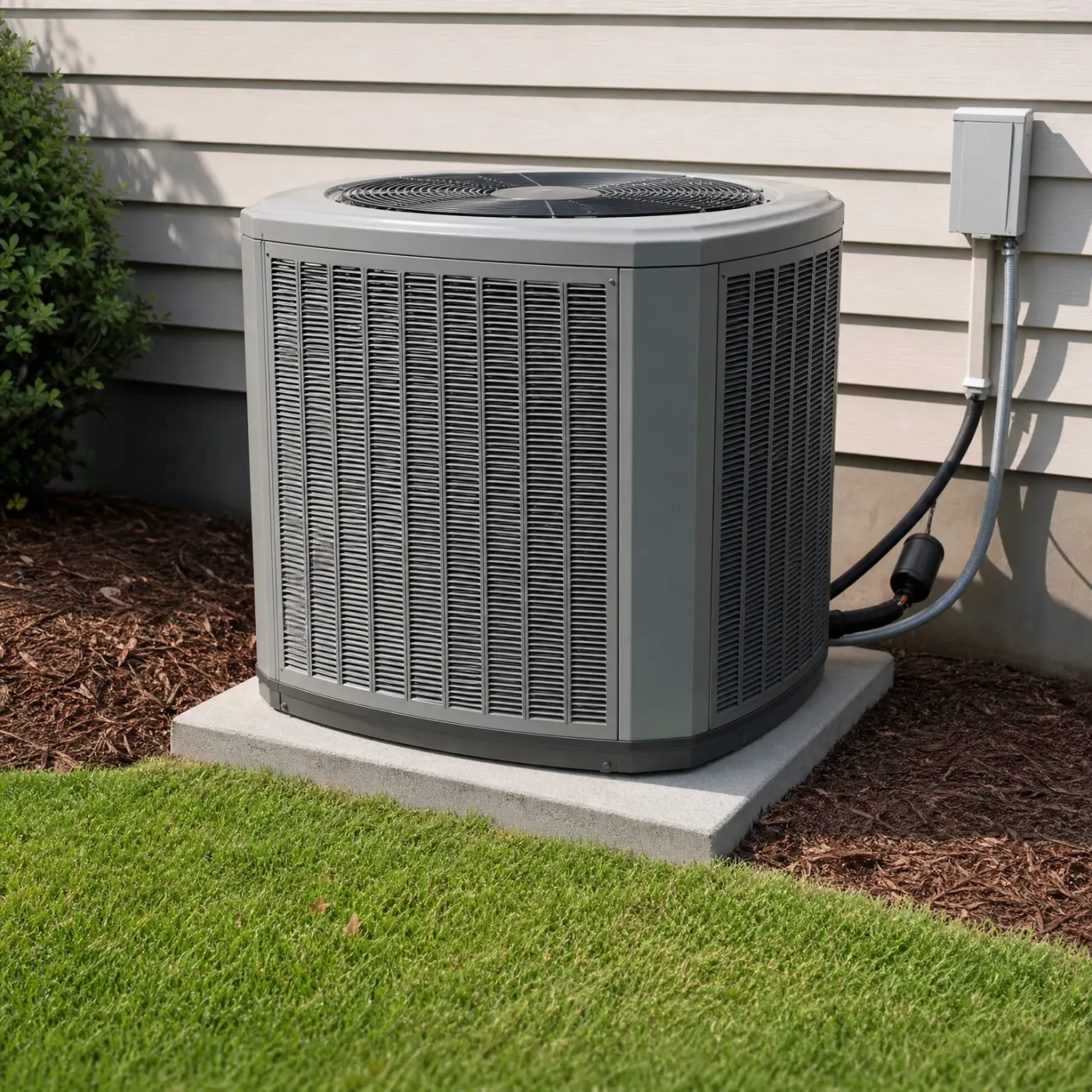
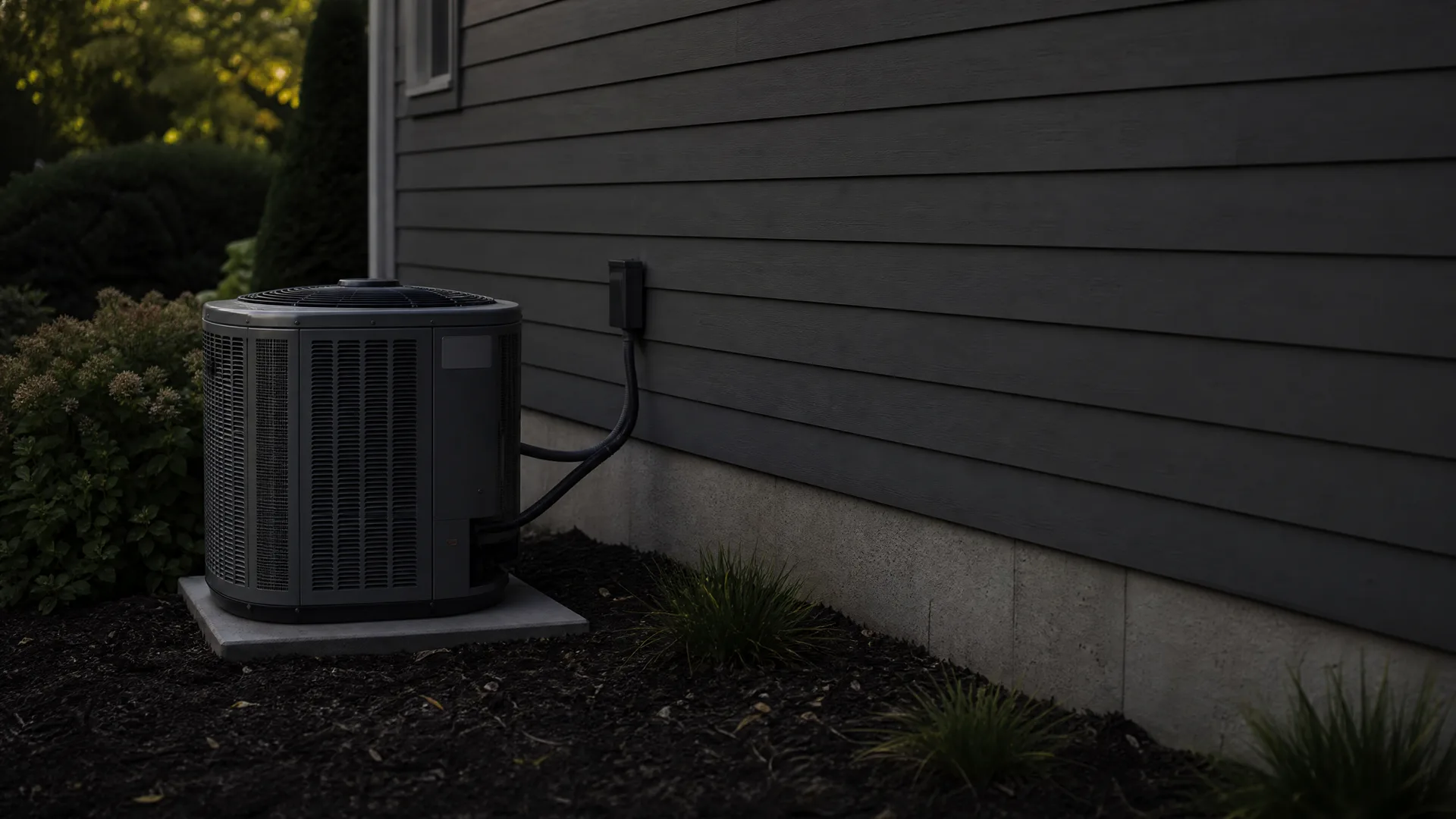
This is what a healthy condenser looks like: clean grilles, a clear pad, lines running straight into the wall. On a sticky Pennsylvania afternoon, this unit is keeping up without strain. If yours still looks like this, replacement isn't the question.
When it's time to plan the next move
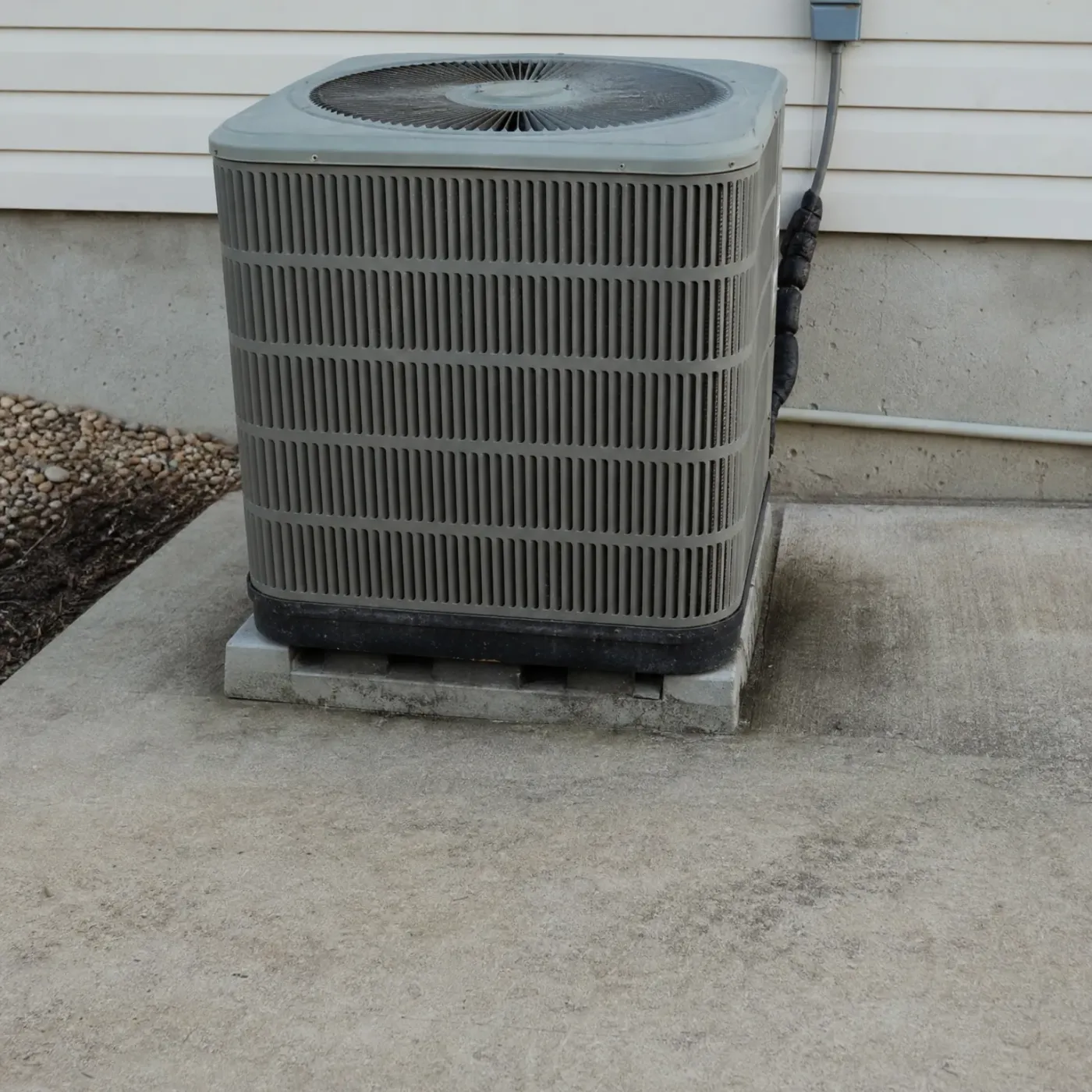
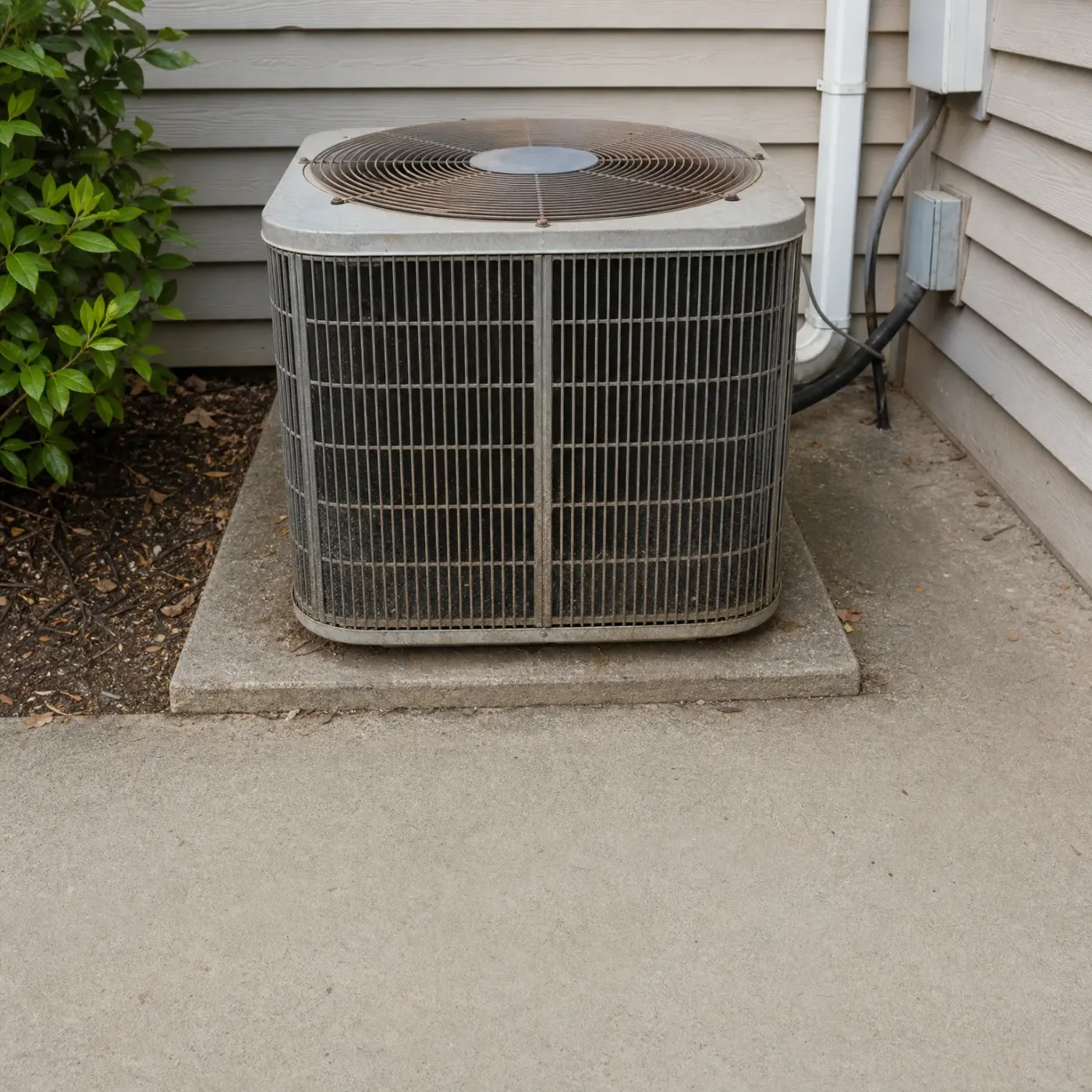
Dirt caked on the grilles and years on the cabinet are signs a condenser is nearing the end. If yours looks like this heading into summer, waiting for it to fail on the worst day means scrambling to find someone fast instead of choosing on your own schedule.
Power costs 19.29 cents per kilowatt-hour statewide
At 19.29 cents per kilowatt-hour, every degree you push your thermostat down costs more here than in most states. A mini split's inverter compressor adjusts its speed to match the room instead of cycling on and off, so it tends to pull fewer kilowatt-hours over a sticky month than a central system sized for the whole house.
EIA-861 2025 statewide residential average
Central air if you have ducts, a mini split if you don't
That's the choice, and what's already in your walls decides it more than anything else. A home with ductwork and a gas furnace gains the most from central air, since the system it needs is already in place. A room with no ducts, or a space like a finished attic or garage that was never tied in, is where a mini split earns its keep. Either way, a contractor sizes the equipment to your house rather than guessing at it off a chart.
You don't have to figure out which contractor handles both central air and ductless work, call around to see who's free, or explain your ductwork situation three different times to three different companies. Send the form once and that search is off your plate. Someone licensed for the job reaches out, looks at what you've got, and tells you straight whether your ducts make the case for central air or whether a mini split solves the room central air can't reach.
Done looking for an air conditioner pro
Skip the round of in-home estimates for a new air conditioner.