



Profile view of a bearded man wearing a dark green baseball cap and a dark gray T-shirt against a plain light background.

How long an AC should run on a hot Pennsylvania day

Step 1 of 3: Equipment

How long should my AC run on a hot day in Pennsylvania?

On a sticky, 90 degree day, you notice the AC barely shuts off. You start wondering if that's normal or if something's working too hard to keep the house cool. With how expensive power is here, a unit that never seems to rest feels like it's costing you, and it's hard to know if that's just how central air works on a bad day or a sign of trouble.

It should run long, often most of the hour, and that's normal on a hot day

A central air conditioner is sized to run close to the whole time on the hottest days, not just in short bursts. When it's in the 90s and humid, the unit may run 45 minutes or more out of every hour just to hold the house at its set temperature. That's the system doing its job, not struggling. What's worth watching is whether it ever shuts off at all, or whether the house still feels warm and sticky despite the long runtime. A unit that runs constantly and still can't keep up with a Pennsylvania heat wave is telling you something different than one that runs long and holds steady.

  1. Thermostat senses indoor temp climbing above the setpoint

  2. Compressor and condenser fan start, running on a single stage

  3. Indoor coil pulls heat and moisture out of the air

  4. System keeps running as long as heat keeps entering the house

A gray-haired, bearded man in a dark coat dusted with snow stands smiling in a dimly lit room with a lamp, mirror, framed art, and a sofa in the background.
An older man with white hair and a beard, wearing a dark snow-dusted coat and scarf, stands in a warmly lit interior hallway with a framed landscape picture, a table lamp and a potted plant behind him, and a snowy view through a window at left.
An older man in a dark snow-flecked overcoat and scarf stands smiling in a warmly lit home entryway, with a glass-paned door showing darkness outside and a lamp-lit room visible through a doorway behind him.
An older man with gray hair and a beard, wearing a dark snow-dusted jacket and scarf, stands smiling in a warmly lit interior hallway with a lit table lamp, a vase of dried branches, and a framed picture in the background.

Why long runtimes aren't a problem

A central air conditioner is built to run for long stretches. It's not like a car engine that wears down from being on too long. The compressor is happiest running steadily rather than starting and stopping over and over. Each start pulls a surge of power and puts more strain on the parts than just letting it run does. So on a 90 degree day, a system running for an hour or more at a time is working the way it's supposed to. What matters more is whether it ever catches up and shuts off at all.
When runtime does mean trouble

If your AC runs nonstop for hours and the house still isn't hitting the setpoint, that's different from a long run that eventually shuts off. A unit that never gets ahead of the heat could be low on refrigerant, have a dirty coil cutting its capacity, or simply be sized too small for the house. A dirty filter can also choke airflow enough that the coil can't pull in the heat it needs to. None of these show up as noise or smell. They show up as the thermostat never quite reaching the number you set.

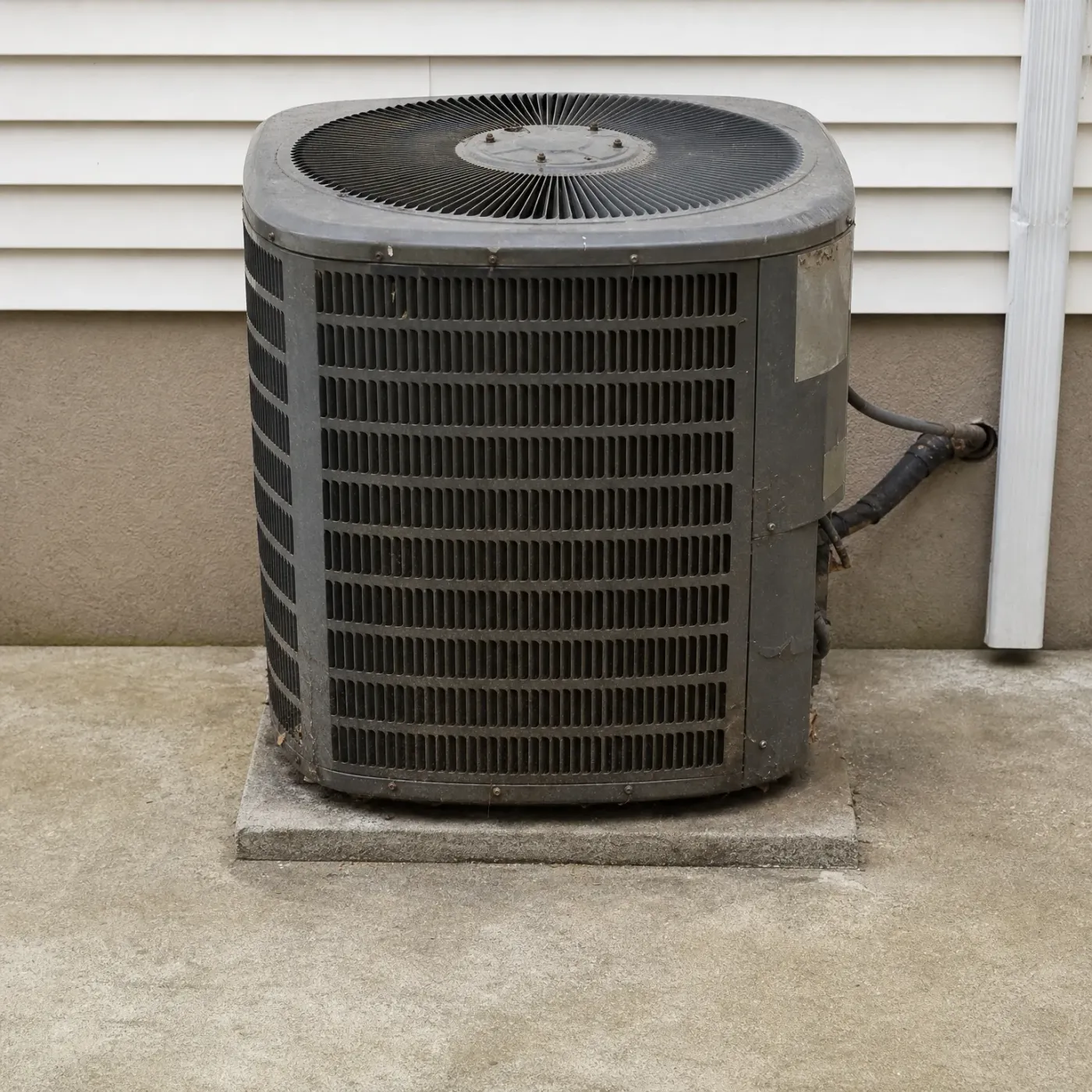
An outdoor air conditioner condenser unit on a concrete pad beside a house wall with stucco lower section, horizontal siding above, and a white downspout to the right.
Before you get your air conditioner maintenance
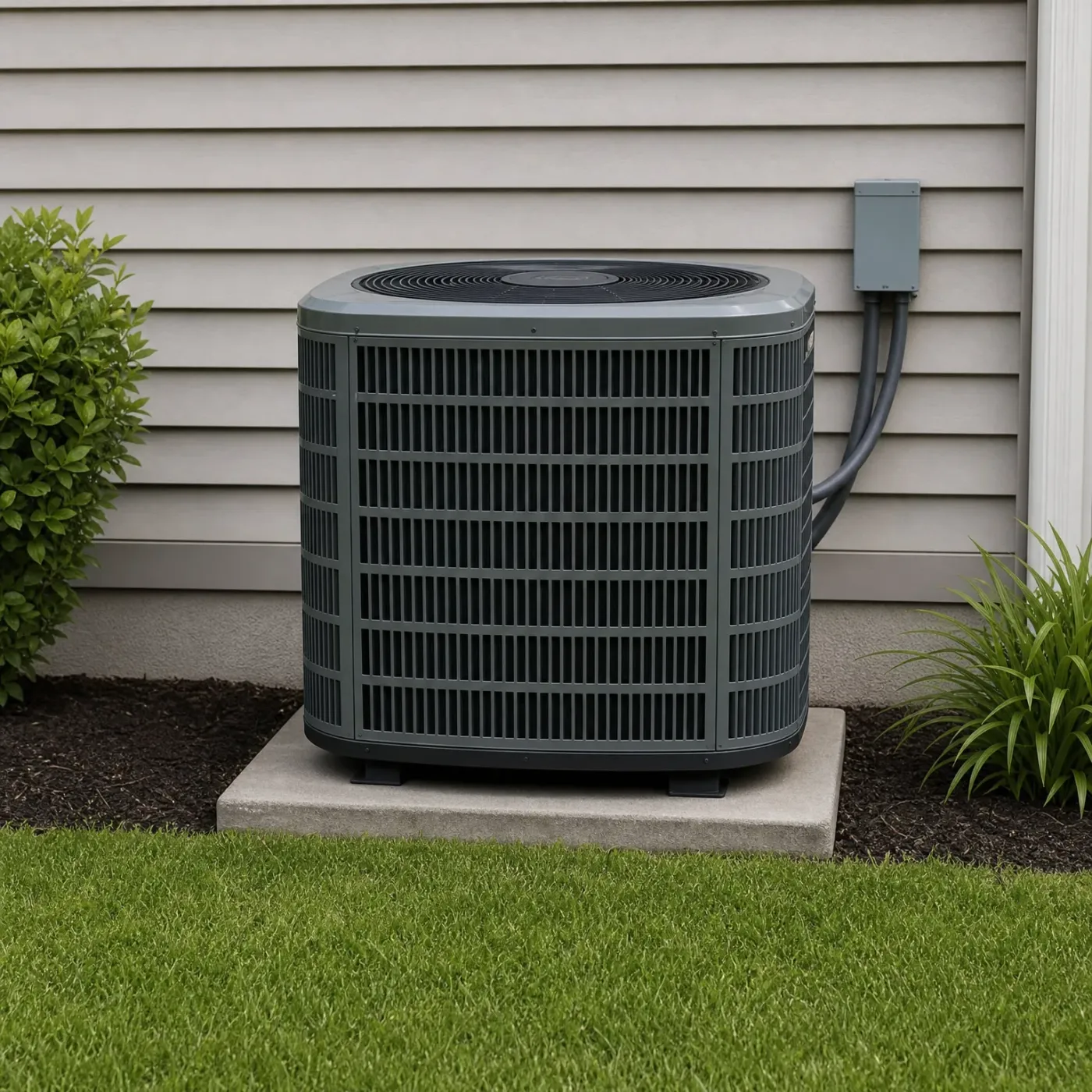
A gray outdoor air conditioning condenser unit on a concrete pad beside a house with horizontal lap siding, with a wall-mounted electrical disconnect box and refrigerant lines, shrubs, mulch and lawn around it.
After you get your air conditioner maintenance

You'll feel it before you see the bill. The house stays sticky even though the AC hasn't stopped running since lunch. Upstairs rooms lag behind the thermostat reading. You start closing vents or running a fan just to even things out, and the unit still doesn't shut off once the sun goes down. None of that means the AC is broken. It means something is making the job harder than it should be, a dirty filter, a coil that's lost some of its charge, a blower that isn't moving enough air. Each of those makes the compressor run longer to do the same work, and every extra hour shows up on your power bill before it ever shows up as a repair call. A system quietly losing efficiency doesn't usually announce itself with a strange noise or a breakdown. It just runs more than it used to, even on days that aren't the hottest you've had all summer, and costs you more to keep the house at the same temperature.

What a struggling AC costs you

  • A dirty filter or a coil losing its charge makes your AC run longer to reach the same setpoint, and you pay for those extra hours.
  • If the house never quite feels cool even after hours of runtime, the system is losing the fight against the heat coming in.
  • A unit that runs all afternoon without cycling off at all, even after sunset, is working harder than the heat outside explains.
  • Weak airflow from a clogged filter or failing blower forces the compressor to run longer to pull out the same moisture.
  • Long runtime by itself costs you in electricity before it ever shows up as a breakdown.
  • A system that's losing efficiency will often run close to nonstop on days that aren't even the hottest of the summer.
A woman wrapped in a thick beige fleece blanket sits on a sofa with an open book on her lap, beside a lit table lamp, with a frost-covered window behind her.
An older woman with gray hair in a bun and glasses, wearing a beige knit sweater, smiles while looking to the side in a warmly lit kitchen, with a loaf of bread on the counter in the foreground and a snowy scene outside the window.

18 to 20 hours a day

On a 90 degree day in Pennsylvania, your AC running almost nonstop is normal. It's keeping pace with heat coming in through walls, windows and the roof all day long.

Get one local pro

Short bursts, then off

If your AC shuts off after a few minutes and starts again soon after, that's short cycling. It points to a problem worth having looked at, not normal operation.

Get one local pro

Is your AC running longer than it used to this summer

You might notice the outdoor unit never seems to stop humming, or that the vents are blowing but the air doesn't feel as cold as it should. Maybe a room upstairs stays warm no matter how long the system runs, or the thermostat shows 74 when you set it to 70. You check the electric bill and it's higher than the heat felt like it should cause. None of that means the unit is broken. But if it keeps climbing summer after summer, something inside it, a dirty coil, a weak capacitor, a filter clogged with a season of dust, is making it work harder for the same result, and that's wear that adds up.

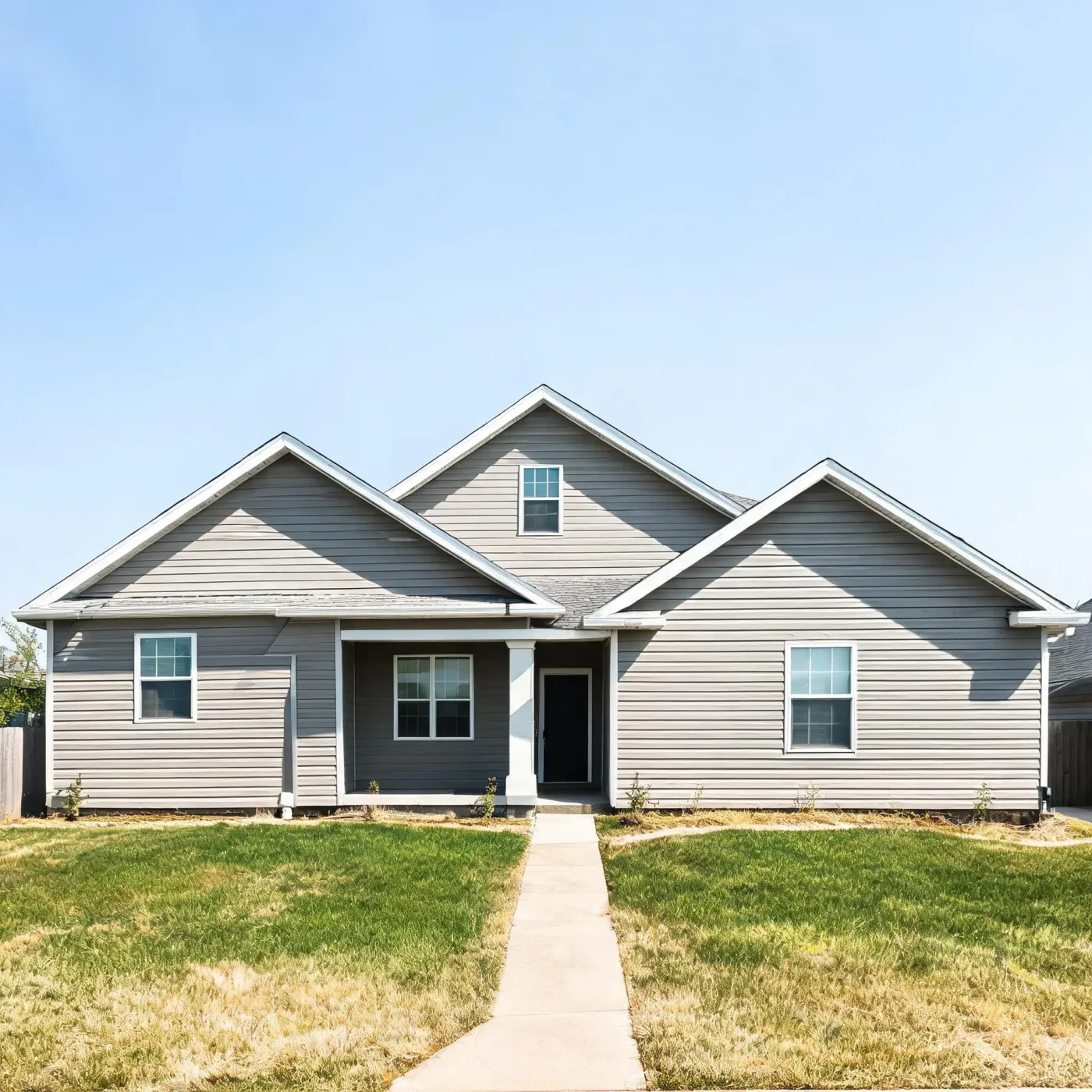
A single-story gray horizontal-siding house with multiple front-facing gables, white-trimmed windows, a dark front door, and a concrete walkway crossing a partly dry lawn under a clear blue sky.

Pennsylvania summers don't just get hot, they get heavy. Averaged across June, July and August, the dew point in the state sits around 61°F, according to NOAA climate data. That's muggy enough that your AC isn't just cooling the air, it's wringing moisture out of it too, and that takes time. A system pulling that much water out of the house will run longer than it would in a dry climate at the same temperature. If your runtimes feel long this summer, that's part of why. A local contractor who services this equipment all season knows how a system here should perform against that kind of humidity, and can tell you if yours is keeping up or falling behind.

NASA POWER T2MDEW county cells weighted by homes

Matched to your air conditioner job

A long runtime on a 90 degree day doesn't tell you much by itself. What matters is whether your AC is keeping up or just grinding away without getting the house cool. A system that's lost some refrigerant or has a coil caked in dust will run those same long hours and still leave you sweating upstairs. That's wasted power, and here, power isn't cheap. Maintenance is how you find that kind of thing before it turns into a July breakdown. A local contractor who services this equipment all season knows what tends to fail on the units common in this area and what to check first. Getting matched means one contractor looks at your system, not a handful competing for the job. If your AC has been running longer than it used to, or the air coming out doesn't feel as cold as it should, that's worth having someone look at before the next heat wave hits.

Single-stage versus multi-stage cooling

  • A single-stage compressor runs at one speed, full on or fully off, with no in-between setting.
  • Two-stage and variable-speed compressors throttle down to a low setting and stay there for hours instead of cycling.
  • A unit that modulates its output can hold the house at setpoint while using less power per hour than a single-stage unit.
  • The outdoor unit's fan speed often matches the compressor stage, so a quieter, slower-sounding fan on a hot day is normal for these systems.
  • Refrigerant charge affects how much heat the coil can absorb per cycle, which changes how long each stage needs to run.
  • A contractor who services this equipment every summer can tell from the stage pattern alone whether the system is working as designed.

Not every air conditioner runs the same way on a 90 degree day. A single-stage system has one compressor speed. It's either running full blast or it's off, so on a hot day it cycles on, runs hard, shuts off briefly, and starts again. A two-stage or variable-speed system works differently. It can drop down to a lower setting and just stay there, sometimes for hours, instead of shutting off and restarting. That's why two houses on the same block can look like they're running completely differently and both be fine. If your outdoor unit sounds quieter than you'd expect on a scorching afternoon, that's often the low stage doing the work, not the system struggling. A unit that can throttle down tends to use less power per hour than one that only knows full on, because it's matching its output to what the house actually needs instead of overshooting every time it kicks on. None of this holds if the system has lost refrigerant. Charge affects how much heat the coil can pull out of the air during each stage, so a low charge means the low stage can't keep up and the unit climbs to high stage more often, or stays there longer than it should. A contractor who works on these systems every summer can usually tell from the stage pattern alone, how often it shifts between low and high, whether it's behaving the way it was designed to or compensating for something that needs attention.

Power costs 19.29 cents per kilowatt-hour statewide

At just over 19 cents per kilowatt-hour, every extra hour your AC runs this summer shows up on the bill. A unit running long because it's dirty or low on refrigerant isn't just working harder, it's costing more for the same cool house.

EIA-861 2025 statewide residential average

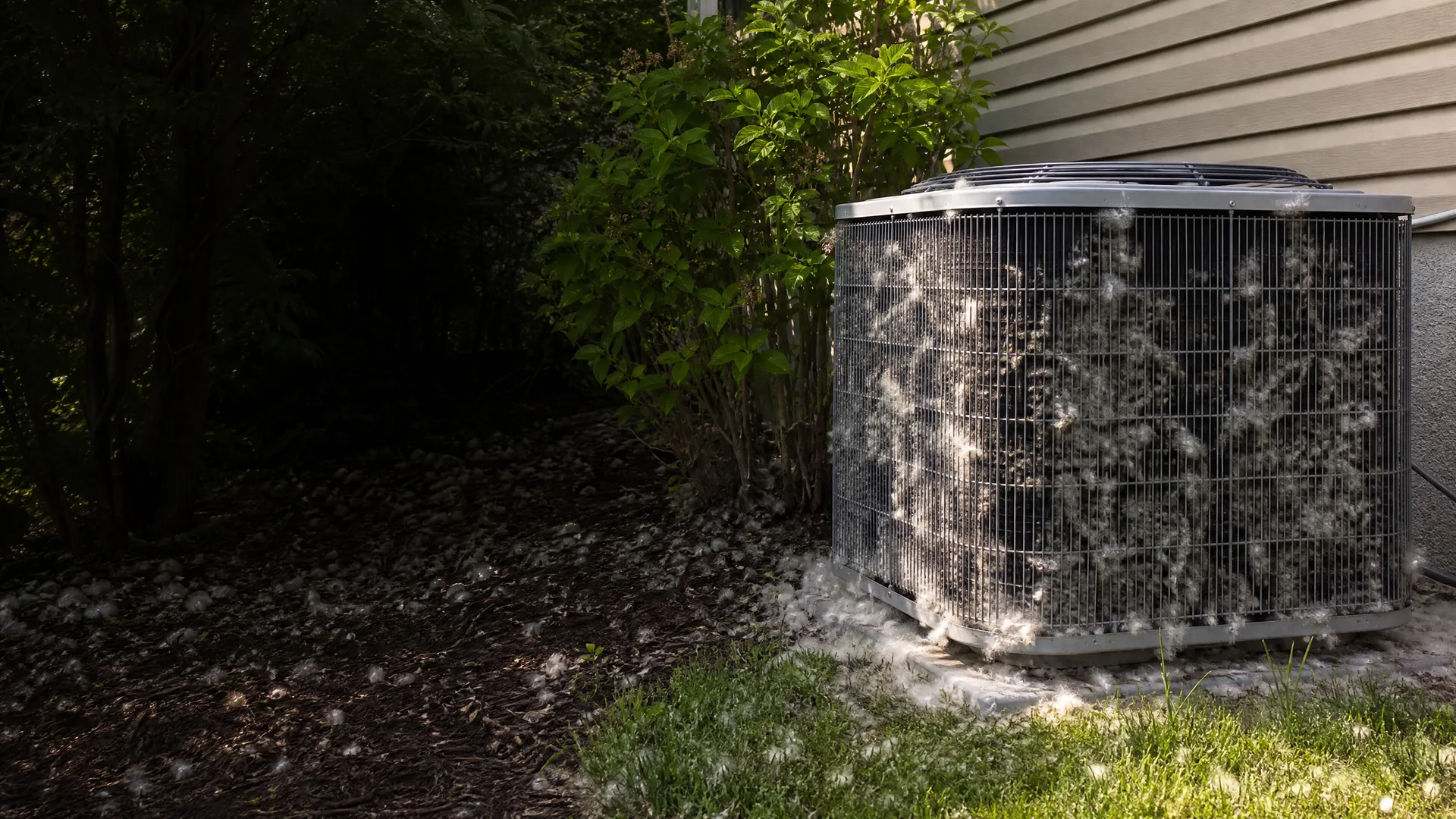
An outdoor air conditioner condenser unit beside a house with horizontal siding and stucco, its coil fins covered in white cottonwood fluff that also collects on the surrounding grass and mulch.

Late May, and the cottonwoods along the side yard have let go. You step out to grab the hose and notice the condenser's been running a while, that low steady hum you've gotten used to since the heat came on. Up close, the fins are white with fluff, matted in so thick you can't see metal through them. It's caught in every gap across the face of the coil. You run a finger over it and the stuff just packs in tighter. The unit's still pushing air, still working, but it's pulling that air through a screen of seed fluff now instead of open metal.

A woman in a cream sweater and jeans stands in the open doorway of a white stucco house, holding the dark door, while a man in a dark quilted jacket seen from behind walks toward the entry past potted plants.

Long runtime isn't the problem. Not keeping up is.

Your AC running most of the day on a 90 degree afternoon in Pennsylvania is doing what it's supposed to do. What matters is whether the house actually cools down, whether every room feels right, and whether that runtime stays about the same from one July to the next. If it's climbing while the house feels the same or worse, something in the system is losing ground.

A contractor who services AC units around Pennsylvania all summer knows the handful of things that usually cause that: a coil losing refrigerant, a filter choking airflow, fins packed with debris. Get matched with one who works near you, and they'll look at your specific system rather than guess from a phone call. You'll hear from that one contractor directly, not a handful of companies competing for the job, just someone local who can tell you whether your AC's long hours are normal wear on a hot day or a sign it's falling behind.

Interior corner with a beige sofa holding a dark green and a light cushion and a textured throw, a potted small-leaved tree beside a white-framed window, and a dark shallow bowl on a wooden coffee table in the foreground.
A dark standing-seam metal roof with a stone chimney and metal cap, seen against a backdrop of autumn-colored forest and layered hills under an overcast sky.

An air conditioner pro near you

Get a local pro

Asking costs nothing, and the choice to hire stays yours.

A local contractor who services AC systems all summer knows the difference between a unit working hard and one struggling. One visit can tell you which one you have, and whether the long runtime you're seeing is normal or a sign something needs attention before the next heat wave.