The R-410A phase-out and new AC units in Pennsylvania
Describe the project once instead of to every installer.
R-410A is being phased out. New central air conditioners sold now use R-454B or another lower-impact refrigerant instead, and the equipment built for it isn't the same equipment you had before. If your AC is old enough to need a serious repair or a replacement, this changeover is probably part of why the conversation feels more complicated than it used to.
In Pennsylvania that conversation matters more than it would somewhere mild. Summers here get sticky enough that a working air conditioner isn't optional, and most homes heat with gas, so the AC is really a standalone system that has to hold up on its own through July and August. Power here isn't cheap either, so the efficiency of whatever gets installed affects the bill for years, not just the sticker price on install day.
Figuring out what to replace an old R-410A unit with, whether it still makes sense to repair it, and what a new system actually costs installed, takes more than a quick search. Left on your own, you'd be calling around to a handful of companies, explaining your system's age and symptoms to each one, waiting on callbacks, and then trying to compare quotes that are not quite priced the same way for not quite the same equipment. That's hours gone before a single wrench turns.
This page connects you with a contractor local to Pennsylvania who installs these systems every season and already knows which older R-410A units are still worth servicing and which ones are better replaced outright. You explain your situation once. One contractor follows up, not five, so you're not fielding a string of calls from companies you didn't choose to talk to.
What happens next is below: how the phase-out actually affects your options, and what to ask before you decide anything.
Can I still get R-410A for my AC in Pennsylvania?
You've got an older R-410A system and you're wondering if you can still find refrigerant for it, or buy a new R-410A unit, before you're forced into something unfamiliar. Pennsylvania summers get humid enough that a few days without working AC is more than an inconvenience, so you want to know what's actually available before you're stuck mid-July without options.
R-410A is still around, but new equipment using it has stopped being made
As of 2025, manufacturers stopped building new central air conditioners that use R-410A. The refrigerant itself is still being produced to service existing systems, so if your AC already runs on it, a contractor can still charge or repair it. What changed is what's sitting on dealer shelves for new installs. If your system needs replacing, the unit going in will run on R-454B or another approved refrigerant instead. That matters here because Pennsylvania summers push air conditioners hard for months at a time, and a system that can't be serviced with the refrigerant it needs is a system that leaves your house hot and humid while parts get sorted out.
A System Still Running on R-410A
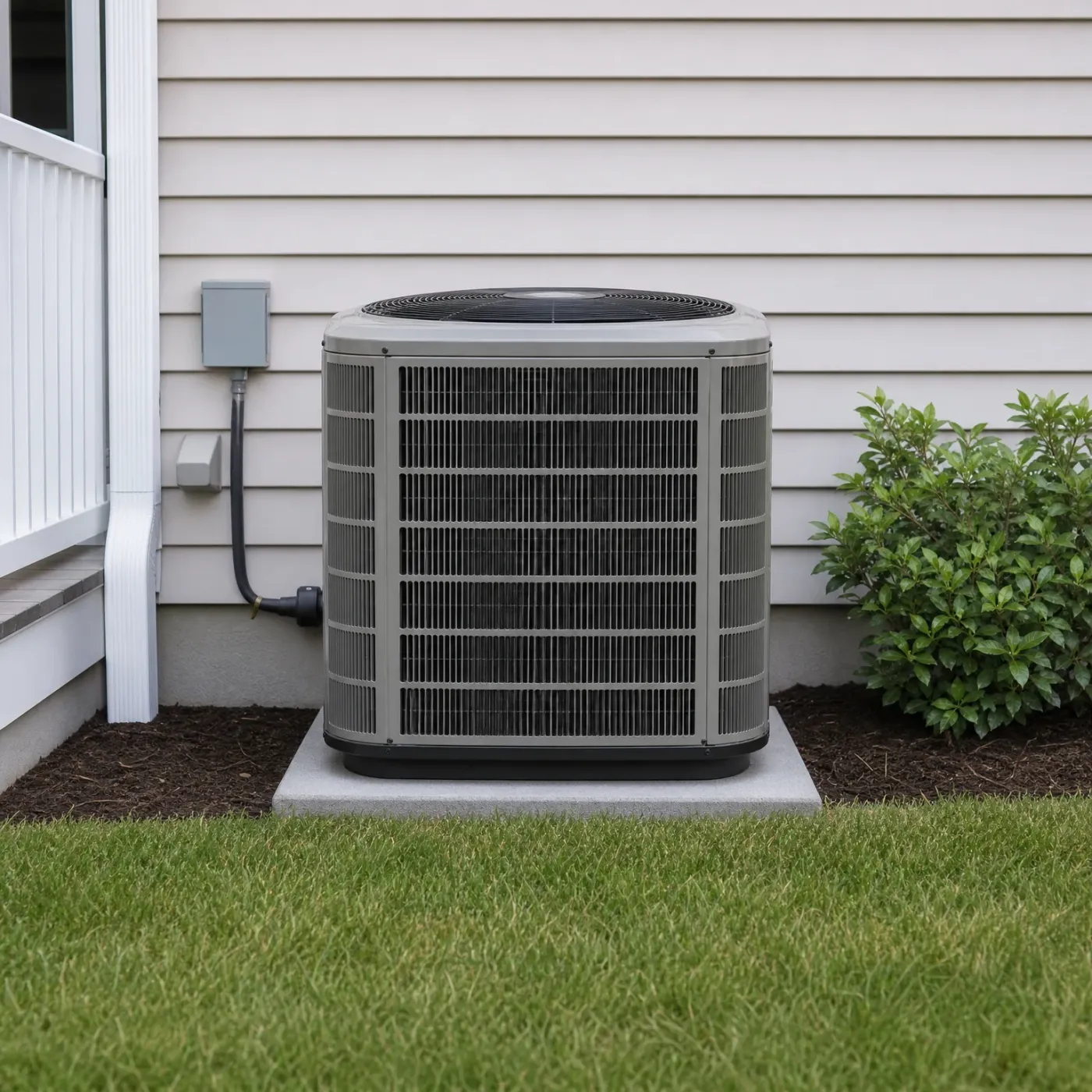
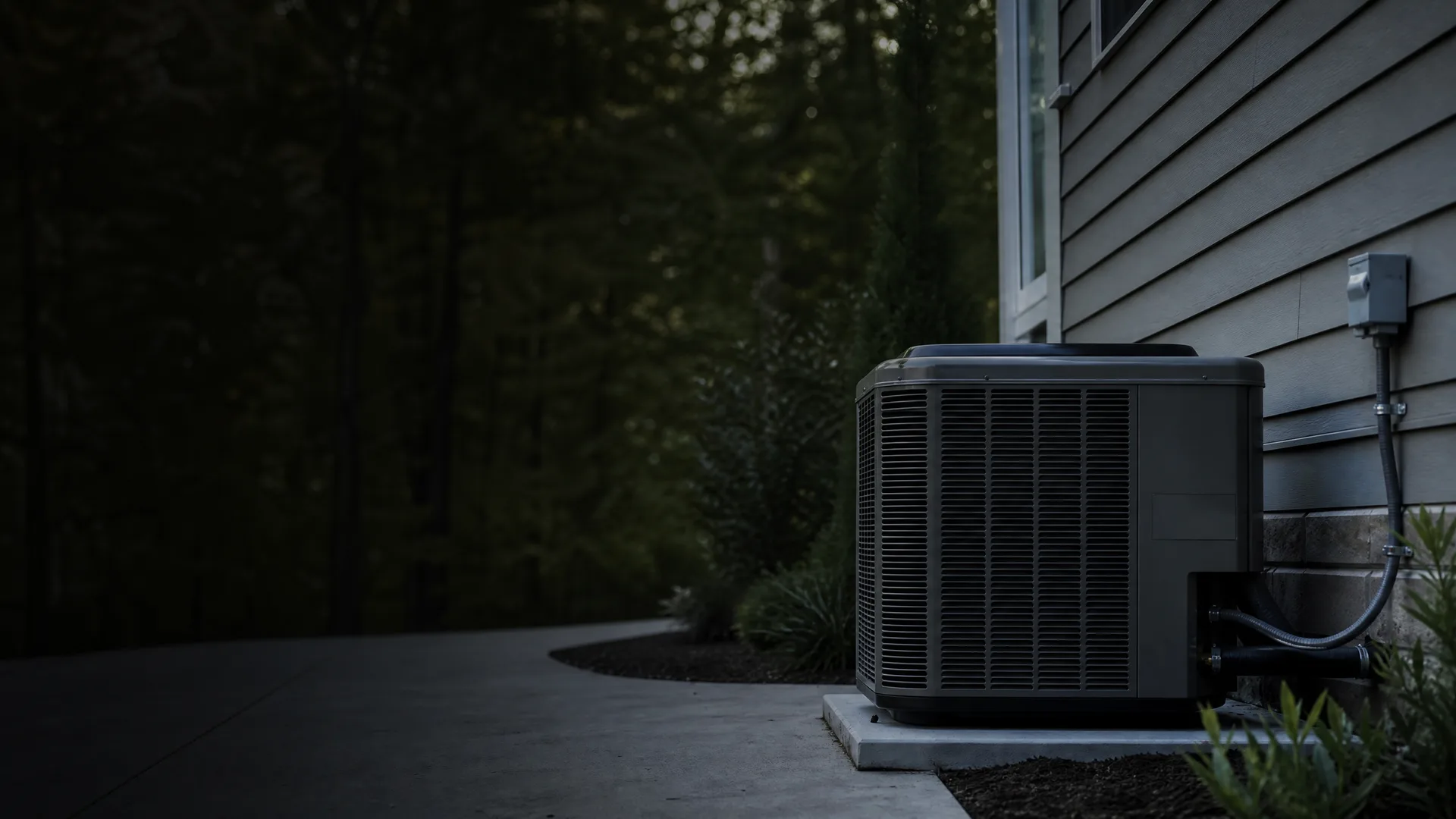
This is a unit built before the change, sitting on its pad doing what it was built to do. If yours still cools the house on a hot Pennsylvania afternoon, there's no reason to swap it out early. Keep up with the yearly service and let it run.
A System Past Its Point
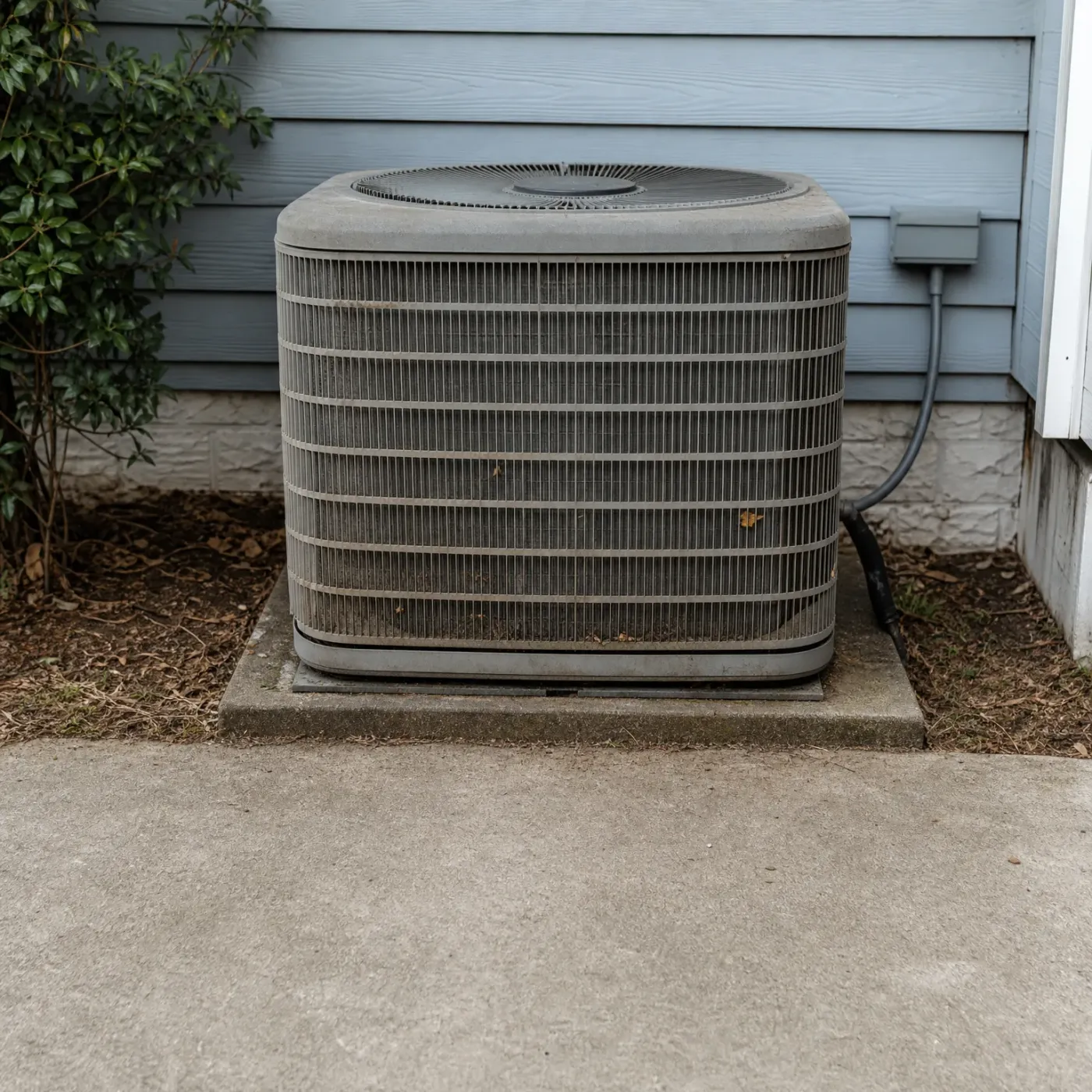
Dust packed into the coil guards like this means the unit is working harder than it should to move heat. On an old R-410A system, that strain often shows up right before a compressor gives out. Once it fails, you're looking at new equipment, not a refill.
Repair the Unit You Have, or Replace It Now
Repairing Your R-410A Unit
R-410A is still being produced for servicing existing equipment, so a leak fix or a part swap on your current system is still possible right now.
A licensed contractor local to you who works on these units every summer will know what tends to fail on a system that's been running for years in Pennsylvania's humidity.
If the repair is a capacitor, a contactor or a fan motor, it costs less upfront than a full replacement and gets the house cool again the same day.
A refrigerant leak means paying to recharge a system that's going to keep leaking, since the leak itself still needs to be found and sealed.
If the compressor goes, you're looking at a major repair on an aging unit built for a refrigerant that's being phased down year over year.
Installing a New System
New units sold now run on R-454B or another lower-impact refrigerant, so the equipment itself, not just the gas inside it, is different from what you have.
A new system comes with a warranty on the whole unit, not just whatever part got replaced in a repair.
Pennsylvania's expensive electricity makes the efficiency of a new unit matter more here than it would somewhere with cheaper power.
Installation means matching the new equipment to your home's existing ductwork and electrical setup, which a local contractor can check before the work starts.
You avoid the risk of putting more money into an old R-410A system only to have it fail again next summer anyway.
One installer gets your project, so there's no bidding war over it.
It costs nothing to send, and you don't have to hire anyone.
Why R-454B Means New Equipment
R-454B absorbs and releases heat differently than R-410A, so the compressor, coils and metering device are all built to a different spec.
A2L refrigerants like R-454B carry a mild flammability rating, which is why new units use different leak detection and different wiring near the refrigerant lines.
The line set sizing changes with the new refrigerant, so a contractor can't just drain the old charge and refill an R-410A system with R-454B.
Technicians need separate certification to handle A2L refrigerants, since the recovery and charging equipment isn't the same as what R-410A used.
The indoor coil and outdoor condenser are matched as a set for the refrigerant they're designed around, so the whole system gets replaced together, not piece by piece.
R-410A and R-454B are not interchangeable, and the reason comes down to how each one behaves under pressure. R-454B absorbs heat at different rates, so the compressor that pumps it, the coils that carry it, and the metering device that controls its flow all have to be built to different tolerances than the parts in your current unit. That's also why the line set connecting the indoor and outdoor parts is sized differently for R-454B. A contractor can't take a system built for R-410A, pull the old charge, and refill it with the new refrigerant. The parts underneath don't match what the new refrigerant needs.
There's a safety piece too. R-454B belongs to a class called A2L, which carries a mild flammability rating that R-410A doesn't have. New units built for it use different leak detection and different wiring near the refrigerant lines to account for that. Working on it takes separate certification, since the recovery and charging equipment is different from what's used on R-410A systems. Whoever services your next system needs to be trained and equipped for that specifically.
Because of all this, the indoor coil and outdoor condenser get sold and installed as a matched pair, built together for the refrigerant running through them. When it's time to replace, it's the whole system at once, not one piece this year and another piece later.
Running Fine, Old Refrigerant
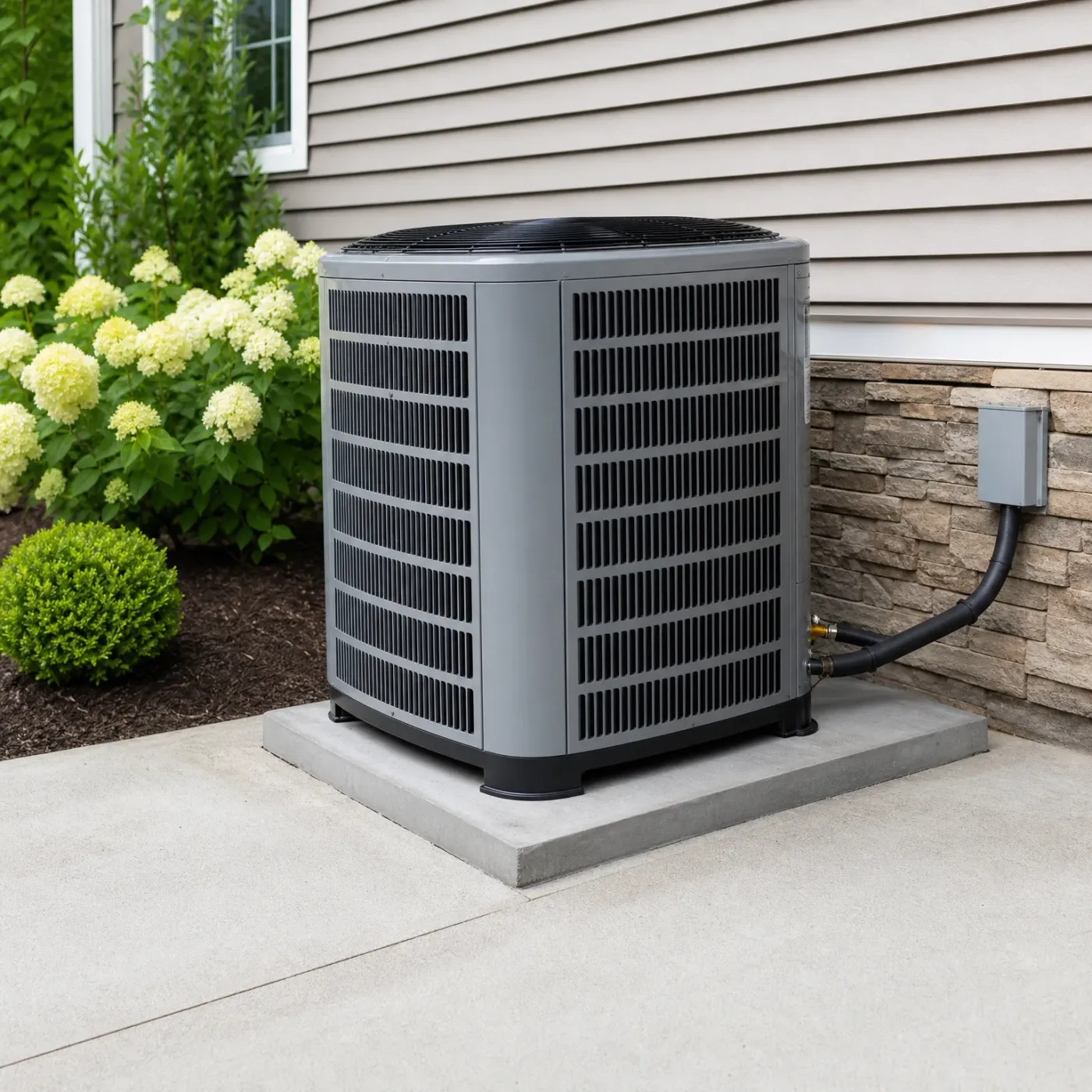
This condenser sits on its pad doing the job it was built for, lines running clean into the wall. If it's still pulling humidity out of the air on a sticky Pennsylvania afternoon, that's an R-410A unit earning its keep. Nothing about the phase-out forces you to touch it while it's working.
Weathered and Due for a Look
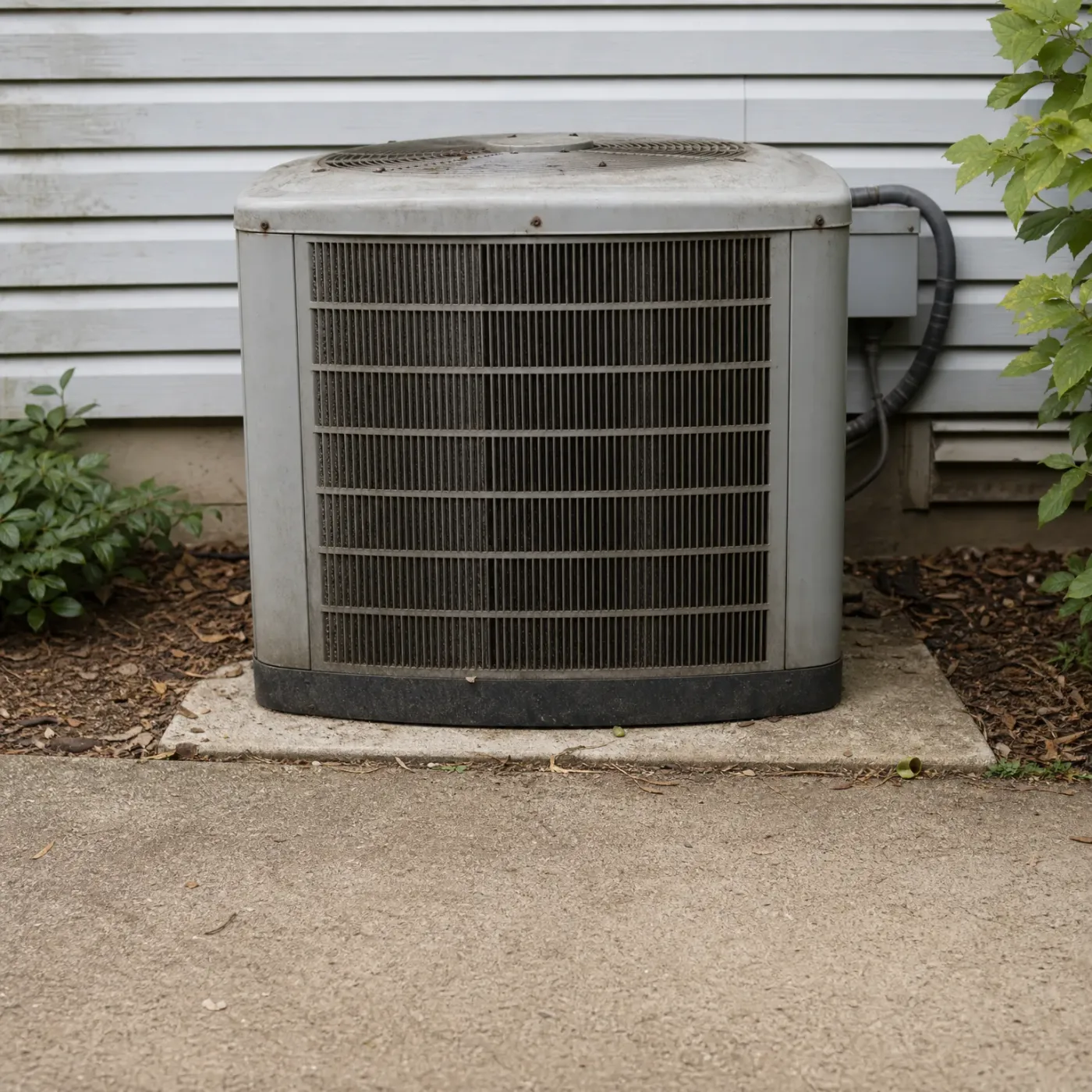
Dirt packed into the fins and a casing that's taken years of weather are signs this unit is working harder than it should. When something on it finally fails for good, the R-410A replacement parts get thinner on the ground. That's the point a new R-454B system starts making more sense than another repair.
Power costs 19.29 cents per kilowatt-hour statewide
At 19.29 cents per kilowatt-hour, every hour your AC runs costs more here than in most states. A unit that's lost efficiency, whether it's old R-410A equipment or a newer model with a dirty coil or low charge, pulls more power to do the same job on a humid Pennsylvania afternoon. The newer R-454B units are built to run efficiently from the start, which matters more here than almost anywhere.
EIA-861 2025 statewide residential average
R-410A isn't gone. If your system runs on it now, you can keep repairing it, and new R-410A hasn't disappeared from the shelf for service work. What's changed is what's being built going forward, and that only matters to you when your current unit is done for good or you're ready to replace it on your own terms. Either way, the decision comes down to your equipment, not the industry's calendar. When you do need someone to look at it, a licensed Pennsylvania contractor who's worked on R-410A systems and R-454B installs all summer long will know which one makes sense for your house and won't need to guess at it. You'll hear from one contractor, not a handful, so you can talk through what you're actually dealing with once instead of explaining your system over and over to different companies.
Skip the search
The pro who reaches out is licensed in Pennsylvania.