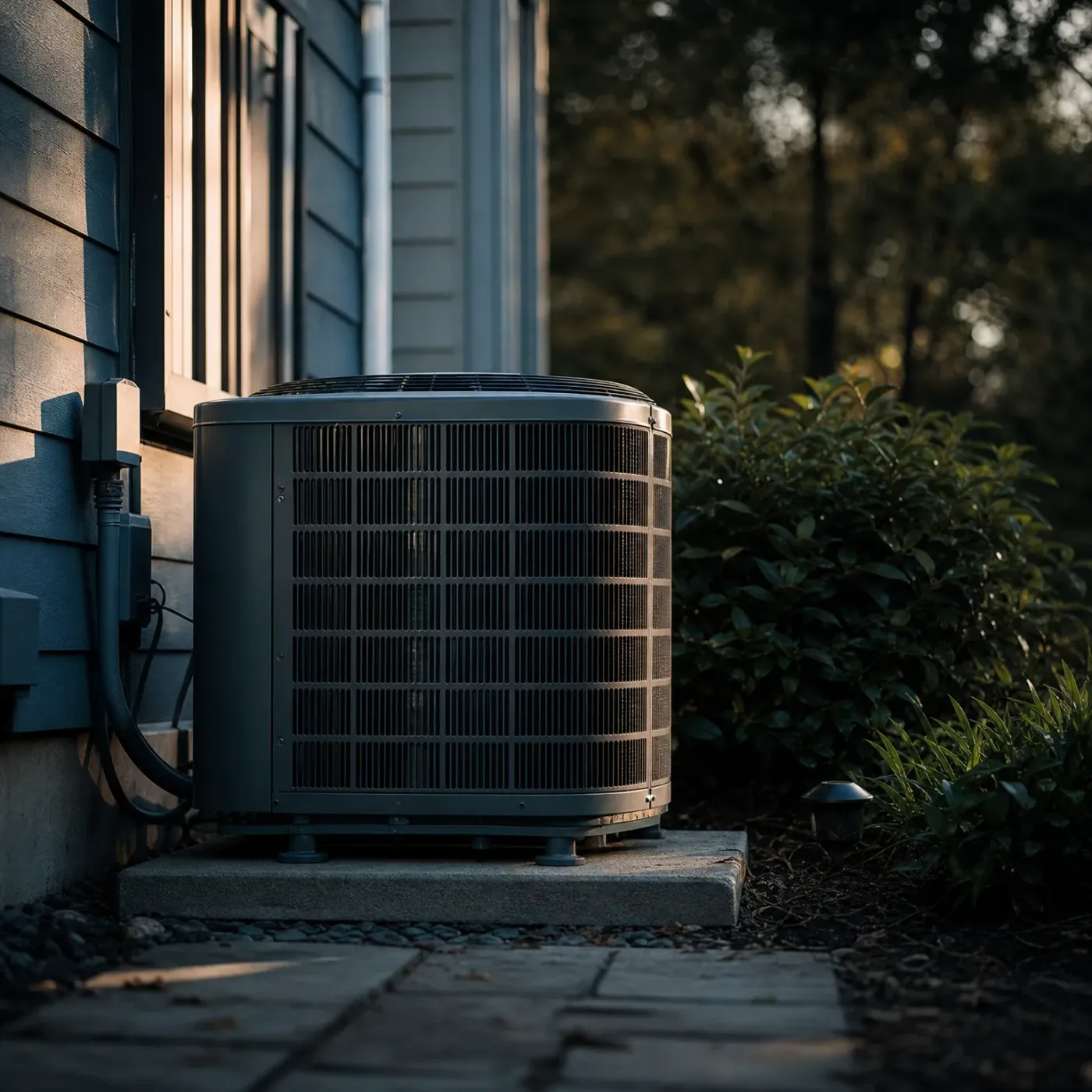
An outdoor air conditioning condenser unit on a concrete pad beside a house with horizontal siding, with an electrical disconnect box on the wall and shrubs to the right in low evening light.

Skip calling around

Why your AC can't keep up on hot Pennsylvania days

On a muggy 95 degree day, your AC runs nonstop and the house still doesn't cool down past a certain point. This page gets into why that happens, what's usually behind it, and what it takes to fix. No need to spend the afternoon calling around and repeating yourself to different companies to find out.

Skip the calls

Your AC can't keep up because it's losing a fight against two things at once: the heat outside and the moisture in the air. On a muggy Pennsylvania day, the unit has to pull humidity out of the house before it can touch the temperature, and if it's already working with a dirty coil, a low refrigerant charge, or a system that was sized for a cooler summer than this one, it runs out of capacity. It doesn't break. It just can't move enough heat out of the house fast enough to match how fast the sun is putting heat in. That's why the thermostat says it's running constantly but the house sits at 78 instead of 72. The fix depends on what's actually limiting it, whether that's something blocking airflow, a refrigerant problem, or a unit that was undersized from the start. A contractor who checks the system under load, on a day like this one, can tell you which it is.

Power costs 19.29 cents per kilowatt-hour statewide

At 19.29 cents a kilowatt-hour, a struggling AC doesn't just fail to cool, it runs up the bill while it's at it. A unit working overtime on a humid day burns power the whole time, so a repair that gets it back to cycling normally is what keeps that number in check.

EIA-861 2025 statewide residential average

The system is undersized or aging

Some AC units were sized for the house as it was years ago, not for the additions, the finished basement, or the extra window unit someone pulled out and never replaced with proper ductwork. An older compressor also loses capacity over time, so a system that cooled fine five summers ago can fall behind now even with nothing obviously broken. On a 95 degree day there's no spare capacity to draw on. A technician can check whether the tonnage still matches the house, or whether the unit is simply wearing out.

Something specific is failing right now

Other times the house cooled fine last July and the problem showed up this season on its own. A low refrigerant charge, a failing capacitor, a coil caked with dirt, or a blower motor losing strength all show up the same way, as a house that won't cool past a certain point. These are repairs, not replacements, and most get fixed in a single visit once a technician finds the actual part at fault. The house usually goes back to cooling the way it used to once that part is replaced.

A woman and a sleeping child wrapped together in a cream knitted blanket on a couch, with a potted plant, framed photo and lit lamp in the background.
A gray-haired woman in a cream knit sweater stands in a dimly lit kitchen at night, looking to her right, with a round loaf of bread in the foreground and a dark window and potted plant behind her.

Describe it once

A low charge, a weak capacitor, a coil caked with dust, a blower that's lost its pull. Any one of those will make an AC run all day and still lose ground on a 95 degree afternoon, and telling them apart takes someone standing in front of the unit, not another guess from this page. That's the part worth handing off. Instead of calling a few companies, explaining the same symptoms to each one, and lining up quotes to figure out who actually knows what they're doing, this goes to one licensed contractor working in Pennsylvania, someone who sees these systems fail the same ways every muggy summer and knows what to check first. No phone tag, no repeating yourself, no sorting through strangers. With power running almost 20 cents a kilowatt-hour here, a unit stuck running flat out is costing you right now, every hour it goes unaddressed.

What It Comes Down To

  • A 95 degree day with high humidity will beat an AC that's low on charge, short on airflow, or sized wrong for the house.
  • Heat and moisture together are what break a struggling system, not just the outside temperature by itself.
  • A unit that runs nonstop without catching up is telling you something specific is wrong, not just that the day is hot.
  • Finding the actual cause, whether it's the charge, the capacitor, the coil, or the blower, takes someone looking at the unit in person.
  • A local contractor who works on these systems all summer knows which of those failures shows up most in Pennsylvania heat.
  • One contractor means one visit and one diagnosis, not several opinions to sort through while the house stays hot.

A 95 degree day with real humidity behind it will find the weak point in any AC system. Sometimes that's the charge. Sometimes it's a capacitor that's about to go, a coil that's choked with dust, or a blower that isn't moving enough air anymore. Sometimes the unit was never sized for the house it's cooling now. None of that sorts itself out by running the system harder or longer. It takes someone standing at the unit, gauges in hand, checking it the way it needs to be checked.

That's where a local contractor earns the call. Someone who works on these systems through a full Pennsylvania summer has seen which parts give out first in this kind of heat, and knows what to check before guessing at the rest. You get one contractor, licensed to do the work, not a handful of companies competing for the job and ringing your phone the same afternoon. One visit, one answer, and a repair aimed at what's actually wrong instead of what's easiest to replace.

The heat outside isn't going to let up, and the moisture that comes with it isn't either. What changes is whether the system in your house is working the way it's supposed to. A unit that's low on charge or short on airflow will lose that fight every time, no matter how long it runs. Getting it looked at is what turns a system that's straining into one that keeps up again.

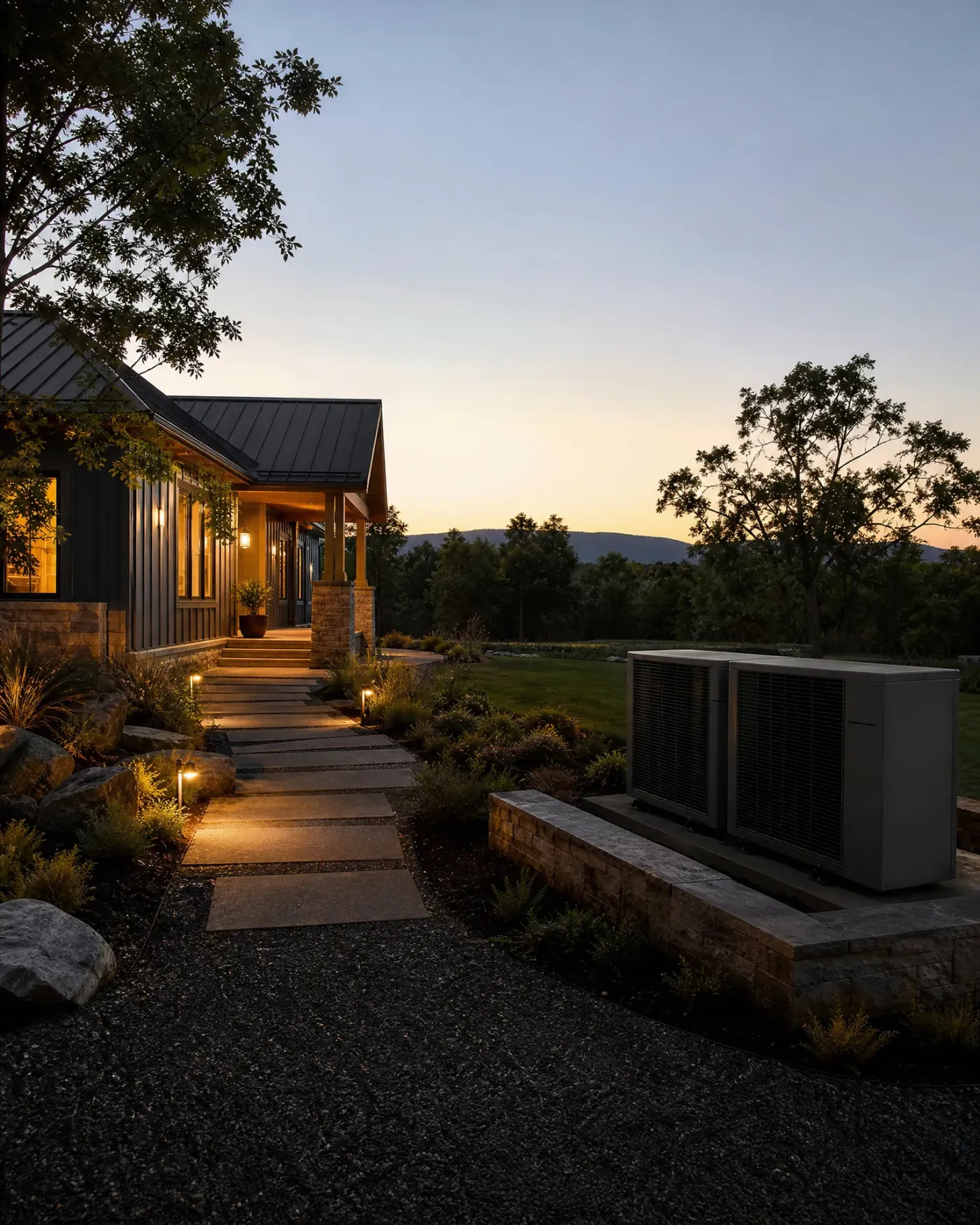
At dusk, a dark board-and-batten house with a standing-seam metal roof and lit entry walkway of stone pavers, with two large outdoor heat pump units on a stone-walled pad at right and trees and hills in the background.

Air Conditioner Repair

No phone calls to make

Step 1 of 3: Equipment
  • A cream chunky cable-knit throw draped over a beige upholstered armchair beside a bright window, with a wooden side table holding a book and a vase of leafy branches at left.
    • Describe your air conditioner job, and a local pro who handles it gets in touch.
    • Say what's going on with your air conditioner, and a pro who works on them reaches out.
  • Living room corner with a gray sofa holding beige pillows and a knit throw, a round wooden coffee table with a dark planter and shallow bowl, a jute rug, a floor lamp, a framed landscape print on the wall, and a window showing trees.
    • Once you send the form, finding a pro is off your list.
    • After you send the request, you're done searching.
  • A living room corner with a cream sofa and cushion, knit throw, wooden coffee table holding a shallow bowl and dark ceramic vase with green foliage, a floor lamp, potted plant in a woven basket, and linen curtains at a window.
    • Fill out one short form instead of calling around.
    • Explain the job once and skip repeating it on every call.
  • A round reclaimed-wood coffee table with a black metal base sits on a woven rug in front of a cream sofa with cushions, with a lit built-in fireplace and a tall indoor tree in the background.
    • Only one pro gets your request, so you hear from one company.
    • Your request stays with one local pro.