
Why your AC compressor won't kick on in Pennsylvania
A compressor that won't start usually comes down to one of a few things: a tripped breaker or blown fuse, a bad capacitor that can't give the motor its starting jolt, a failed contactor that never closes to send power through, or a safety switch holding the system off because of a clogged filter or a frozen coil. Pennsylvania summers push these units hard for months at a time, and a part that was already weak tends to give out on the first real stretch of heat and humidity, not on a mild day. Thermostat settings and basic power are worth checking first, since those are the easy answers. If the outdoor unit is getting power and still sitting silent, the problem is inside it, and it's not something to keep testing on your own with the system off and summer heat building in the house.
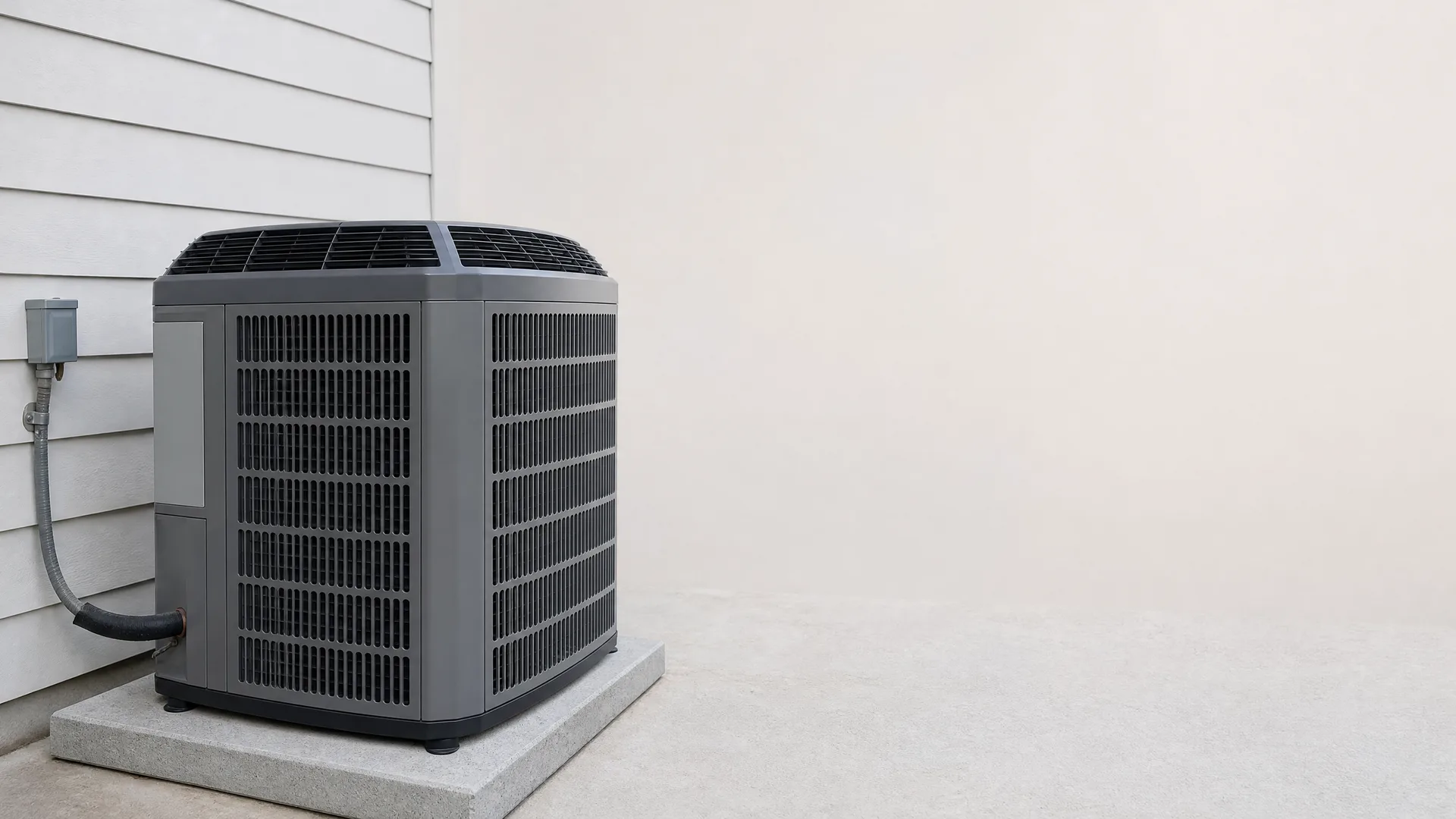
The capacitor is usually the first to go
The capacitor stores the charge that gives the compressor motor its first push. Heat wears it down faster than anything else in the unit, and Pennsylvania summers push outdoor units past 90 degrees for weeks at a stretch. A weak capacitor can still run a fan while leaving the compressor silent, which is why some systems blow air that never gets cold.
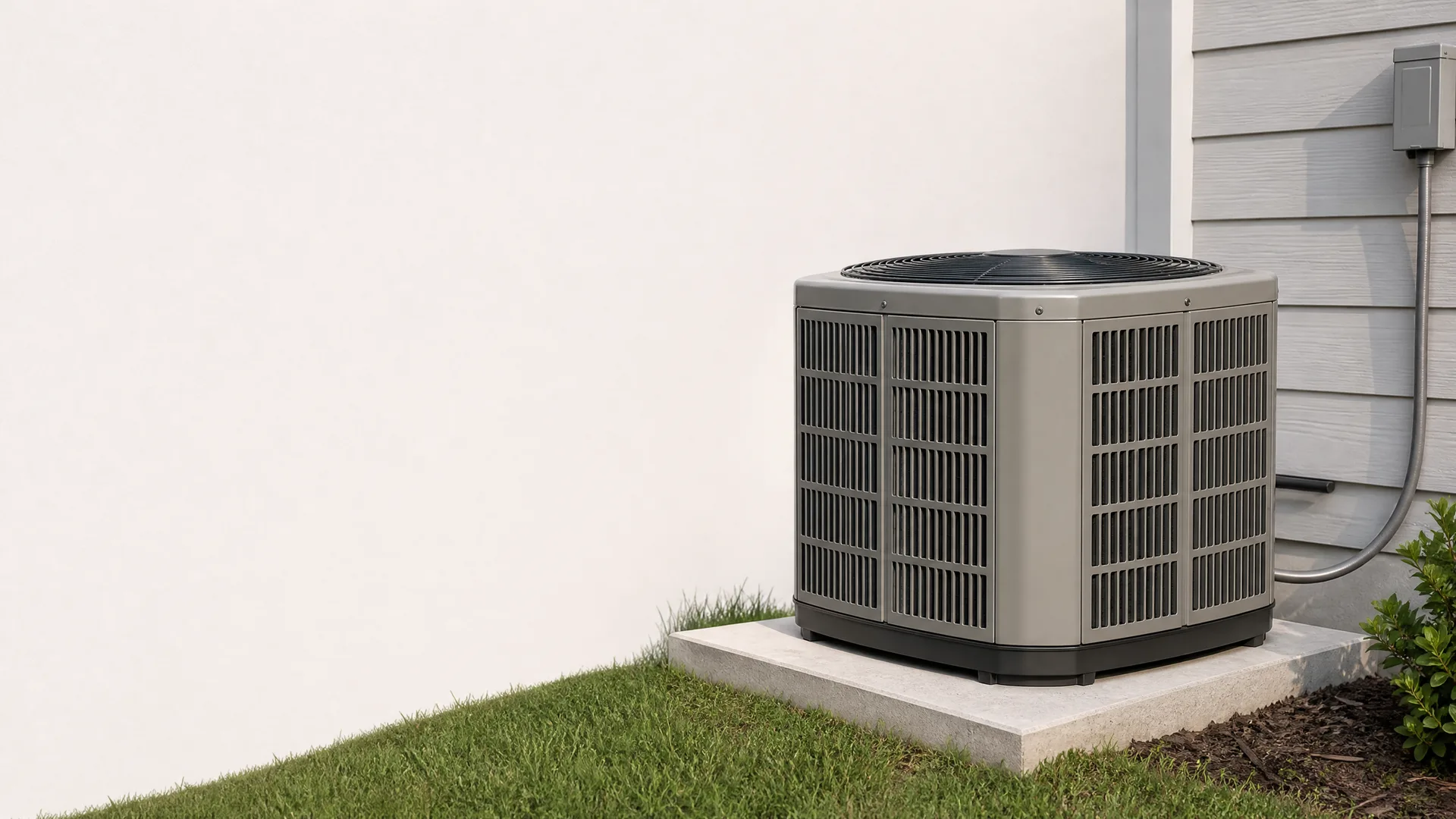
A safety switch may be doing its job
Many outdoor units have a high pressure or low pressure switch that shuts the compressor down on purpose. It is not broken, it is protecting the system from a low charge, a dirty condenser coil, or a blocked line. Clearing whatever tripped it does not always mean replacing a part, but finding which switch tripped and why is the first step before anything gets swapped out.
So what are you noticing right now outside
Go out and look at the unit. The fan on top might be spinning while the compressor itself stays silent, just a hum or nothing at all. Or the whole thing is dead quiet, no hum, no click, no fan. Inside, the air still moves through the vents but it's the same temperature as the room, maybe warmer. You've probably bumped the thermostat down a few degrees to see if that does anything. It doesn't. Meanwhile the house is holding onto the heat and humidity from the day, and if this stretches into a run of 90-degree afternoons, that's not just uncomfortable. Stale, damp air sitting in a closed-up house for days is its own problem, especially for anyone older or with breathing trouble.




Hand off the search today

Answer a few questions instead of calling shop after shop.
Asking costs nothing, and the choice to hire stays yours.
Call an electrician or an HVAC contractor
If the breaker keeps tripping every time you reset it, that is an electrical problem first. Something is pulling too much current, and an electrician can trace whether it is the breaker itself, the wiring to the outdoor unit, or the compressor drawing more than it should. An HVAC contractor can test the compressor and the parts around it, but if the panel itself is the issue, that is outside what an AC repair covers. Flipping the breaker back on and watching it trip again doesn't tell you which one you need. A contractor who shows up and finds it's wiring, not the unit, will say so rather than guess.
When it's worth paying to find out
A capacitor swap costs little next to a compressor that has to be replaced outright. The trouble is you can't always tell which one you're looking at from outside the unit. A hum with no start sounds the same whether it's a weak capacitor or a compressor that's seizing. Guessing wrong means paying twice, once for the wrong part and once for the right one. Pennsylvania summers don't leave a lot of room to wait this out either. A few days without cooling in a sticky stretch is enough reason to get someone out to look at it rather than keep testing it yourself.


A capacitor or contactor swap takes a contractor fifteen minutes once they're on site with the part in hand. That's the easy case.
A compressor that's locked up or grounded out is a different job, and sometimes the unit itself is what needs replacing, not a part inside it.
Power costs 19.29 cents per kilowatt-hour statewide
At 19.29 cents a kilowatt-hour, a compressor that short-cycles or a contactor arcing under strain is already pulling more power each time it tries and fails to start. Get it fixed instead of running a struggling unit while you wait.
EIA-861 2025 statewide residential average
Where That Leaves You
- A dead compressor almost always traces back to a breaker, a capacitor, a contactor, or a safety switch.
- What you see at the unit, a hum, a spinning fan with no compressor, or total silence, narrows down which one it is.
- A tripped breaker that trips again points to an electrical problem, not a part inside the unit.
- A worn capacitor or a stuck contactor is usually a short job once a contractor has the part in hand.
- A locked-up compressor is a longer job, and sometimes replacing the unit makes more sense than repairing it.
- Every hour spent running a struggling compressor on a hot Pennsylvania day adds to a power bill already priced at 19.29 cents a kilowatt-hour.
A compressor that won't start comes down to a short list of causes, and what you saw at the unit, whether it hummed, whether the fan spun alone, whether it stayed dead quiet, already points toward which one. A tripped breaker that trips again is an electrician's problem, not a part inside the cabinet. A worn capacitor or a stuck contactor is a short job once the right part is on the truck. A locked-up compressor takes longer, and sometimes the unit itself is what needs replacing. None of that changes what the next hour looks like if the air stays off: a house in a Pennsylvania summer holds heat fast, and every cycle a struggling compressor attempts and fails adds to a bill already running 19.29 cents a kilowatt-hour.
What changes is what you don't have to do. You don't have to search through contractors, call a handful, and describe the same hum or the same silence to each one. You don't have to sit with quotes side by side trying to guess which price is fair for a capacitor swap versus a compressor that's actually gone. Send the form and that part of it is done. A licensed contractor still has to look at the unit, test the capacitor, check the contactor, trace the wiring if the breaker keeps tripping. That part takes the time it takes. But finding someone to do it, the part that eats an evening before the repair even starts, is off your plate the moment you send it.





Hand off the air conditioner problem
Describe your air conditioner job once, to one pro.
No fee to send it, and nothing to sign.