




Why your AC outdoor fan isn't spinning in Pennsylvania

Tell a local repair pro what your air conditioner is doing.

Find my pro

Why isn't my AC outdoor fan spinning?

You go out to the condenser on a hot day and hear a hum, or nothing at all, but the fan on top isn't turning. Meanwhile the house is warming up. In Pennsylvania summer stickiness, a stopped outdoor fan means the system can't dump heat outside, and you want to know what's wrong before it turns into a bigger repair or a dead compressor.

Usually a bad capacitor, a seized motor, or a tripped breaker

Most often the fan motor's capacitor has weakened and can't give the motor the jolt it needs to start turning, even though you can hear it humming. Sometimes the motor bearings themselves have seized after years of running outside in the heat. A tripped breaker or a blown fuse at the disconnect box can also cut power to just the fan while the rest of the unit tries to run. Any of these leaves the compressor working with no way to cool itself, and that's when a simple fan problem turns into a compressor replacement. Pennsylvania summers push these units hard for months at a time, so a fan that's struggling now usually doesn't fix itself by next week.

A woman in a cream cowl-neck sweater stands in a lamp-lit room looking out a window at a snow-covered yard with shrubs and bare trees at dusk.
A woman in a gray turtleneck sweater stands near a large window in a lamp-lit living room, looking out at falling snow and snow-covered conifers.
A woman in a chunky knit sweater stands by a large window looking out at snow-covered ground, with a dimly lit living room containing a gray sofa, framed artwork, shelves and table lamps behind her.
A woman in a gray turtleneck sweater stands in a dimly lit living room with a lamp and bookshelves, looking out a multi-pane window at falling snow.
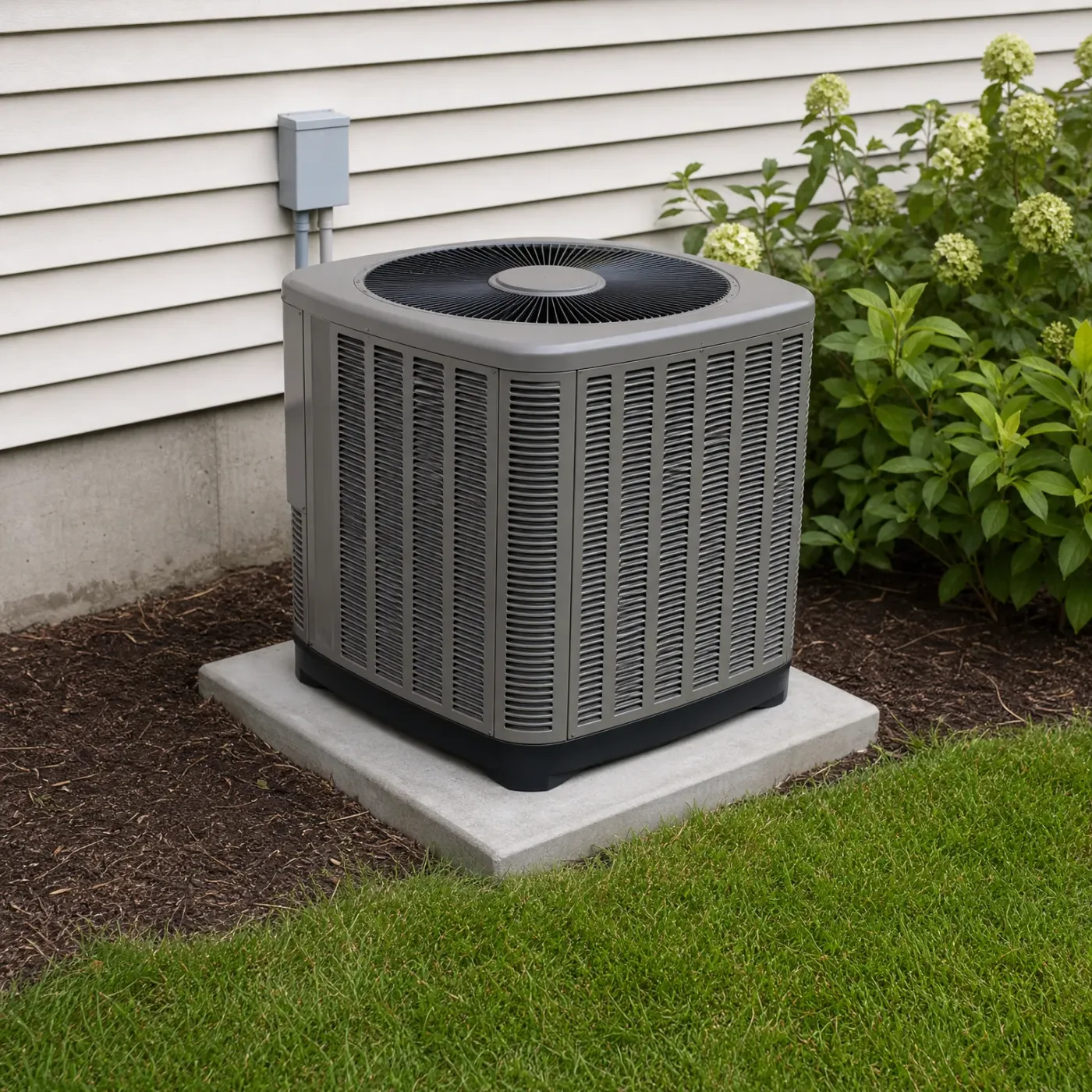
A gray outdoor air conditioner condenser unit on a concrete pad beside a house with horizontal vinyl siding, surrounded by mulch, flowering shrubs, and lawn.
The fan blades sit clean and clear above the coil, so the unit can push heat out and keep up on a muggy afternoon.
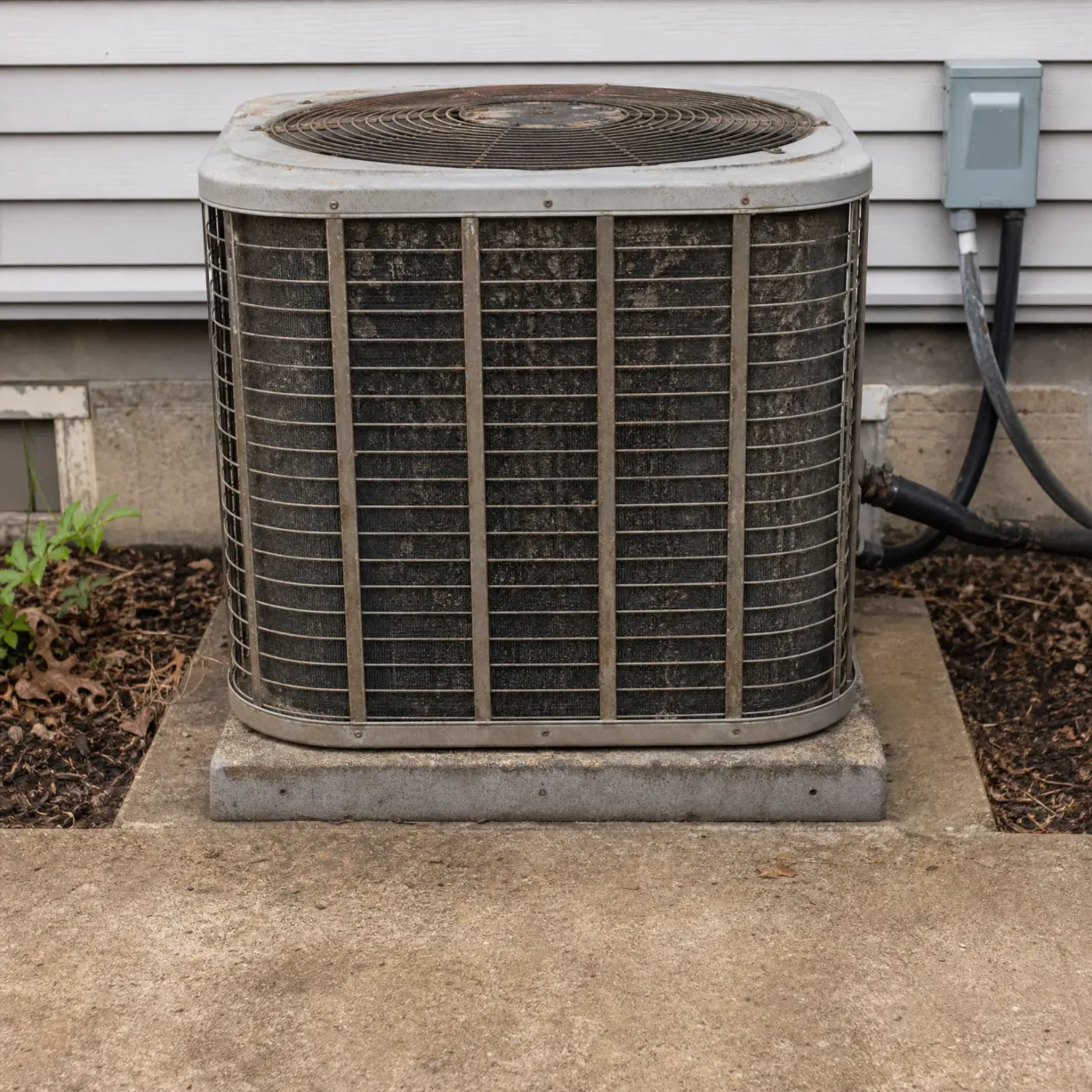
A weathered outdoor air conditioning condenser unit on a concrete pad beside a house with light horizontal siding, an electrical disconnect box and conduit on the wall, and mulched soil on either side.
Dirt and grime cake the coil fins, and a choked coil makes the fan work harder or seize up when it's needed most.

A fan that won't turn doesn't just mean a warm house. The compressor inside the condenser can keep running even with the fan stopped, and it needs that airflow to shed heat. Run it that way for long and you're looking at a compressor that overheats and trips out, or fails outright, which turns a fan motor repair into a full system replacement. You'll likely notice the air coming from your vents getting warmer by the hour, and on a sticky Pennsylvania afternoon that can mean a house climbing into the 80s indoors before dinner. With power costs what they are here, a compressor straining against no airflow is also pulling hard on your electric bill for every minute it runs like that. Shutting the system off at the thermostat or breaker until someone looks at it costs you nothing and protects the expensive part. Leaving it running because the house is hot is the choice that turns a small fix into a big one.

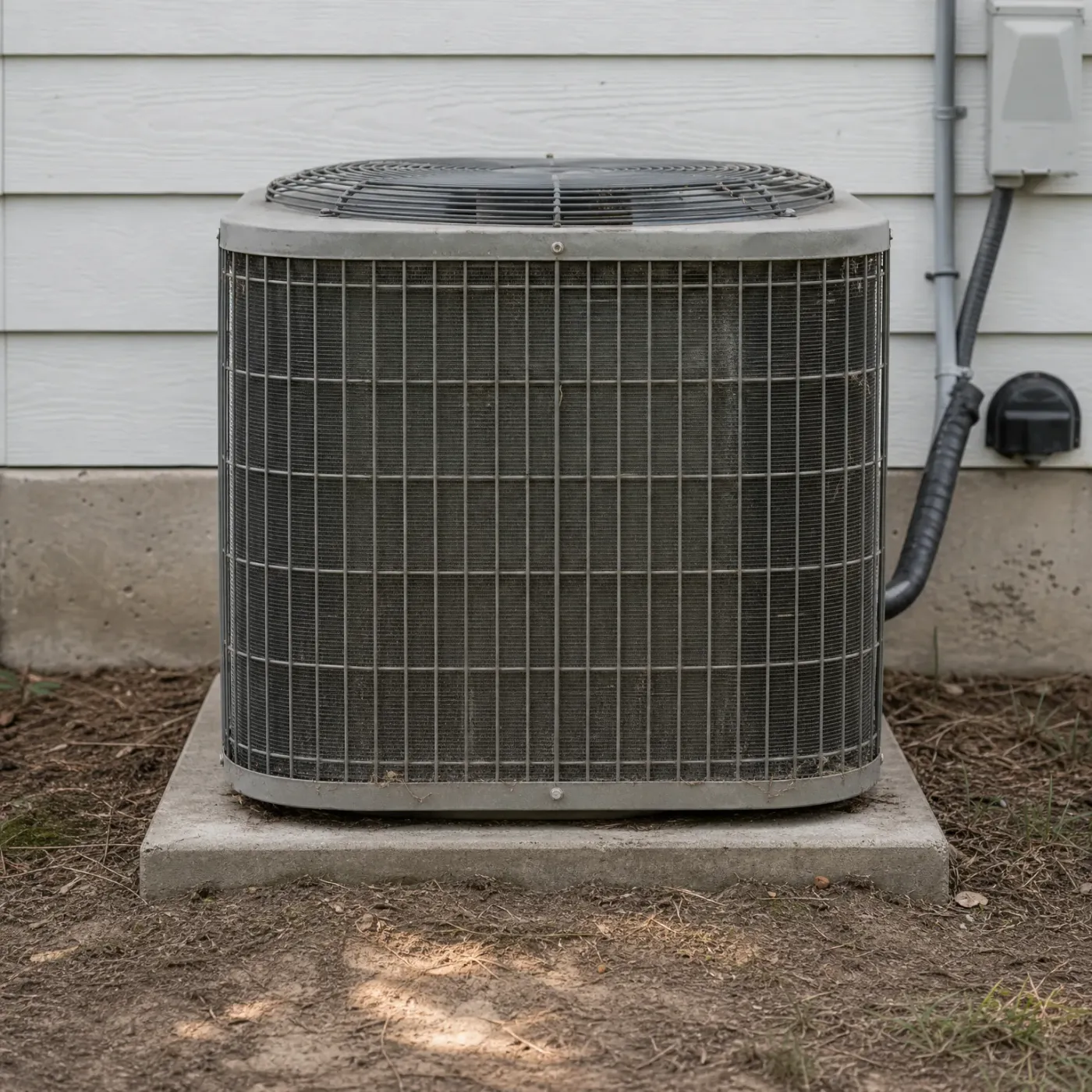
An outdoor air conditioning condenser unit on a concrete pad beside a house with horizontal lap siding, with a conduit and electrical disconnect box on the wall at right.
Before you get your air conditioner repair
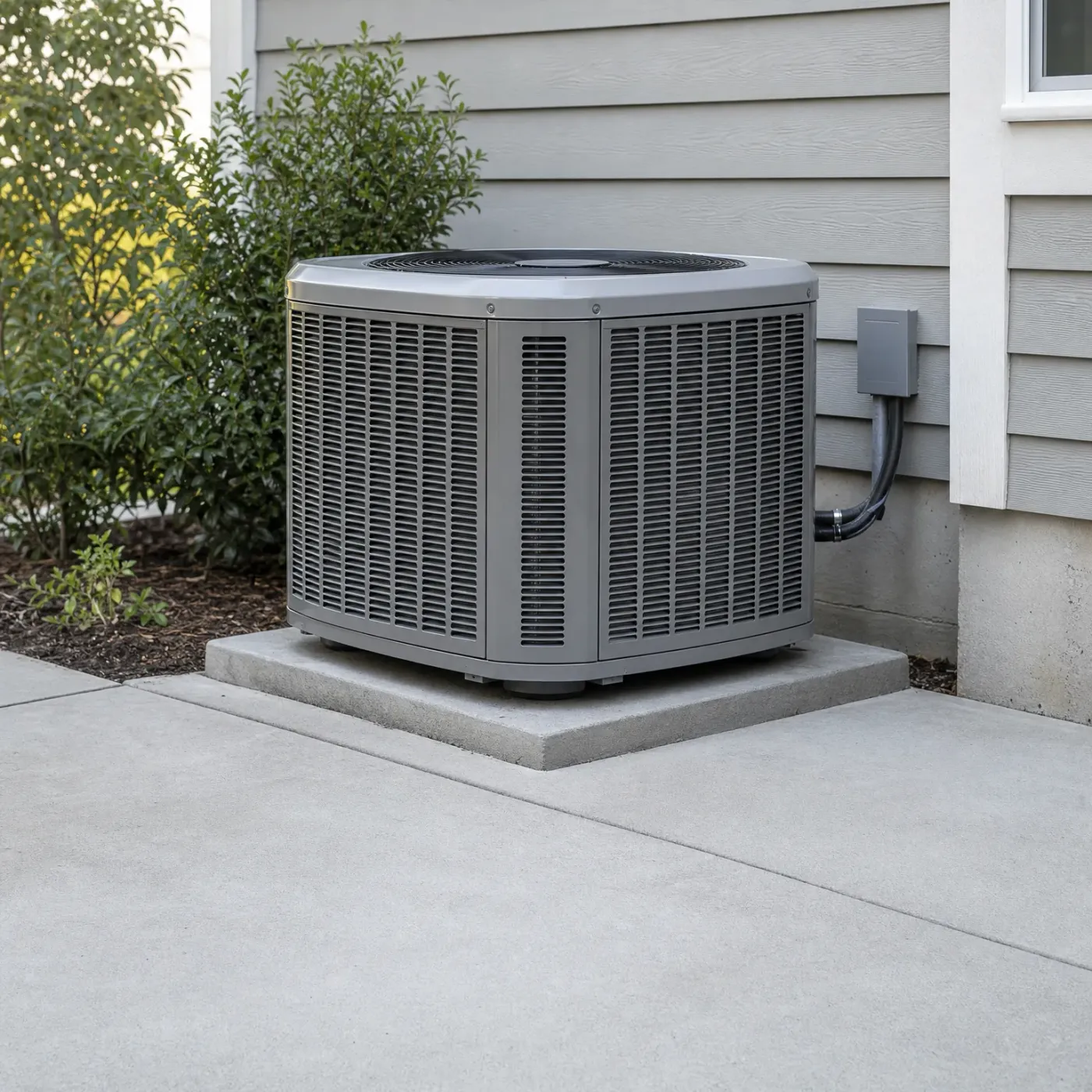
A gray outdoor air conditioner condenser unit on a concrete pad beside a house with horizontal lap siding, with a wall-mounted disconnect box and conduit to its right and shrubs to the left.
After you get your air conditioner repair

What's usually behind it

A bad run capacitor is the most common reason the fan won't turn even when the unit hums. The capacitor gives the motor its starting and running push, and when it weakens, the motor can't get moving on its own. Sometimes you'll see the fan blade stuck at an odd angle, or it'll spin if you nudge it with a stick, which points straight at the capacitor. A seized motor bearing or a tripped breaker from pulling too much power can cause the same silence, and all three show up more in July and August when the compressor runs longest.


Checking the breaker first

Before anything gets opened up, it's worth looking at the breaker panel. A condenser that trips its breaker repeatedly is drawing more current than it should, and resetting it without finding why just invites the same trip on the next hot day. If the breaker holds and the fan still won't move, the problem is in the unit itself, not the power feeding it. Either way, this is one you check rather than guess at, since a humming unit with a stuck fan can still be pulling full power toward a compressor that isn't getting cooled.

A bearded man in a blue and brown plaid flannel shirt stands indoors looking out a window at snow-covered trees, with a ceramic mug on the windowsill.
A man in a blue T-shirt sits on a light gray sofa, laughing while looking at an open laptop in the foreground, with a framed picture, lamp and potted plant behind him.

Get your air conditioner to the right pro

A stopped fan on a muggy Pennsylvania afternoon isn't something to let ride. Power here isn't cheap, and a condenser running without its fan still draws current while it does less and less cooling, so the bill climbs while the house stays warm. Most homes here heat with gas, which means the outdoor unit only has one job, cooling, and when it can't do that job in July or August there's no backup system to lean on. Figuring out whether it's a worn capacitor, a seized motor, or a bad relay takes a multimeter and someone who works on these units regularly, not guesswork at the side of your house. Once you send the request, you're done looking for help. A contractor who takes on these repairs gets your information and follows up, and you can go back to waiting out the heat indoors instead of standing over the condenser trying to figure out what died.

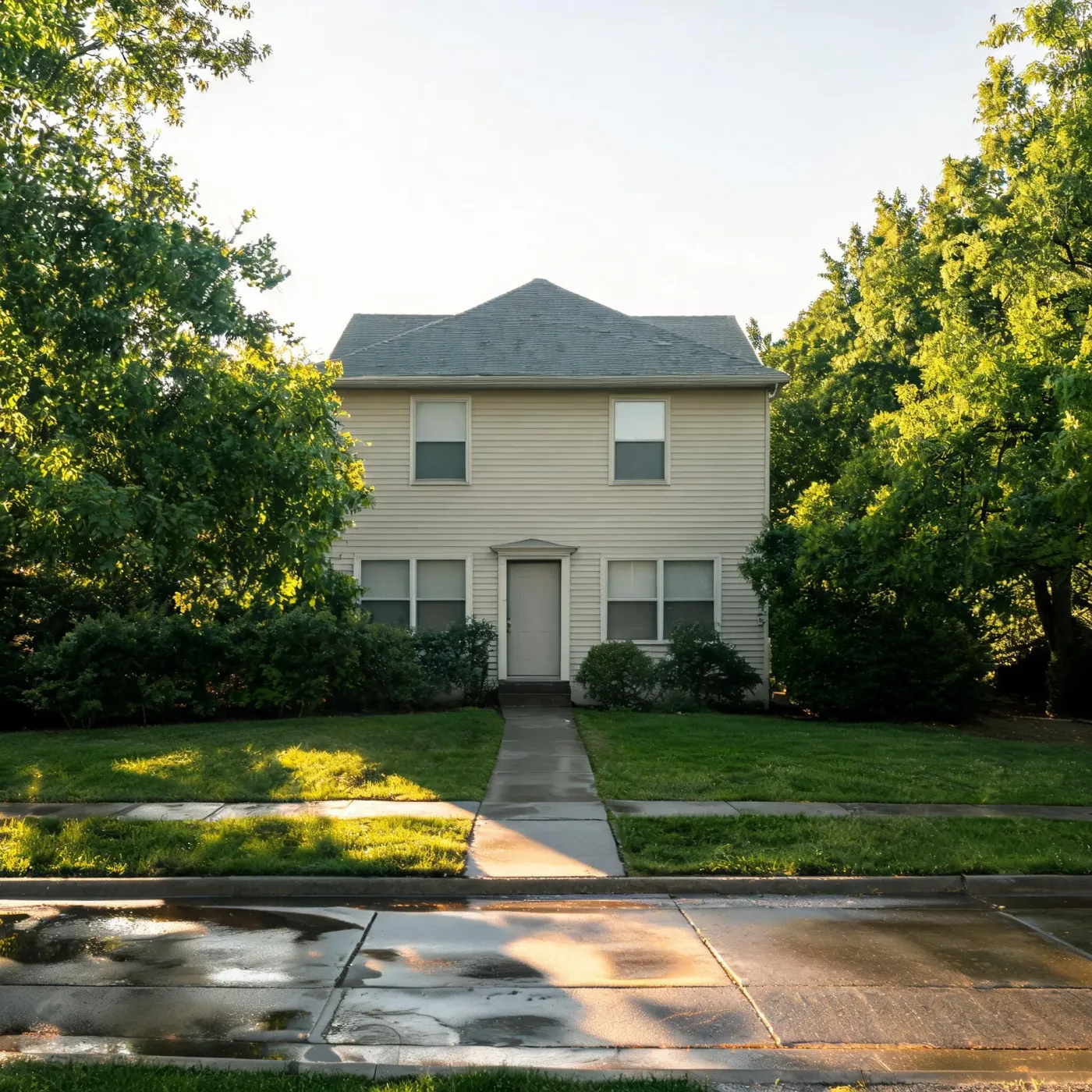
A two-story cream-colored house with horizontal siding and a gray hipped roof, flanked by large green trees and shrubs, with a concrete walkway crossing a lawn to a wet street in the foreground.

That stickiness you feel outside in July isn't just the temperature. Average it out over a Pennsylvania summer and the dew point sits at 61°F, per NOAA climate data, and air that heavy holds onto heat instead of letting it go. Your condenser's job is to dump the heat pulled out of the house into that outside air, and the outdoor fan is what moves the air across the coil to carry it away. When the dew point runs high like this, the coil already has less room to shed heat even with the fan working fine. Take the fan out of the picture and the unit has almost nothing left to push that heat into. That's why a stopped fan shows up fast here, often as a house that stops cooling within the hour instead of just losing a degree or two.

NASA POWER T2MDEW county cells weighted by homes

Is your house staying warm no matter what you set the thermostat to

You bump the thermostat down a few degrees and nothing changes. The air coming out of the vents feels weak, maybe not even cool. Upstairs rooms especially hold onto heat through the evening. You might hear the compressor humming away outside, so it seems like the system is trying, but the house doesn't respond. Some people notice the unit cycling on and off more than usual, or running a long stretch without the house cooling down to match. If this goes on through a stretch of hot days, the compressor inside is absorbing the strain the fan should be handling, and that's the part of the system that costs the most to replace.

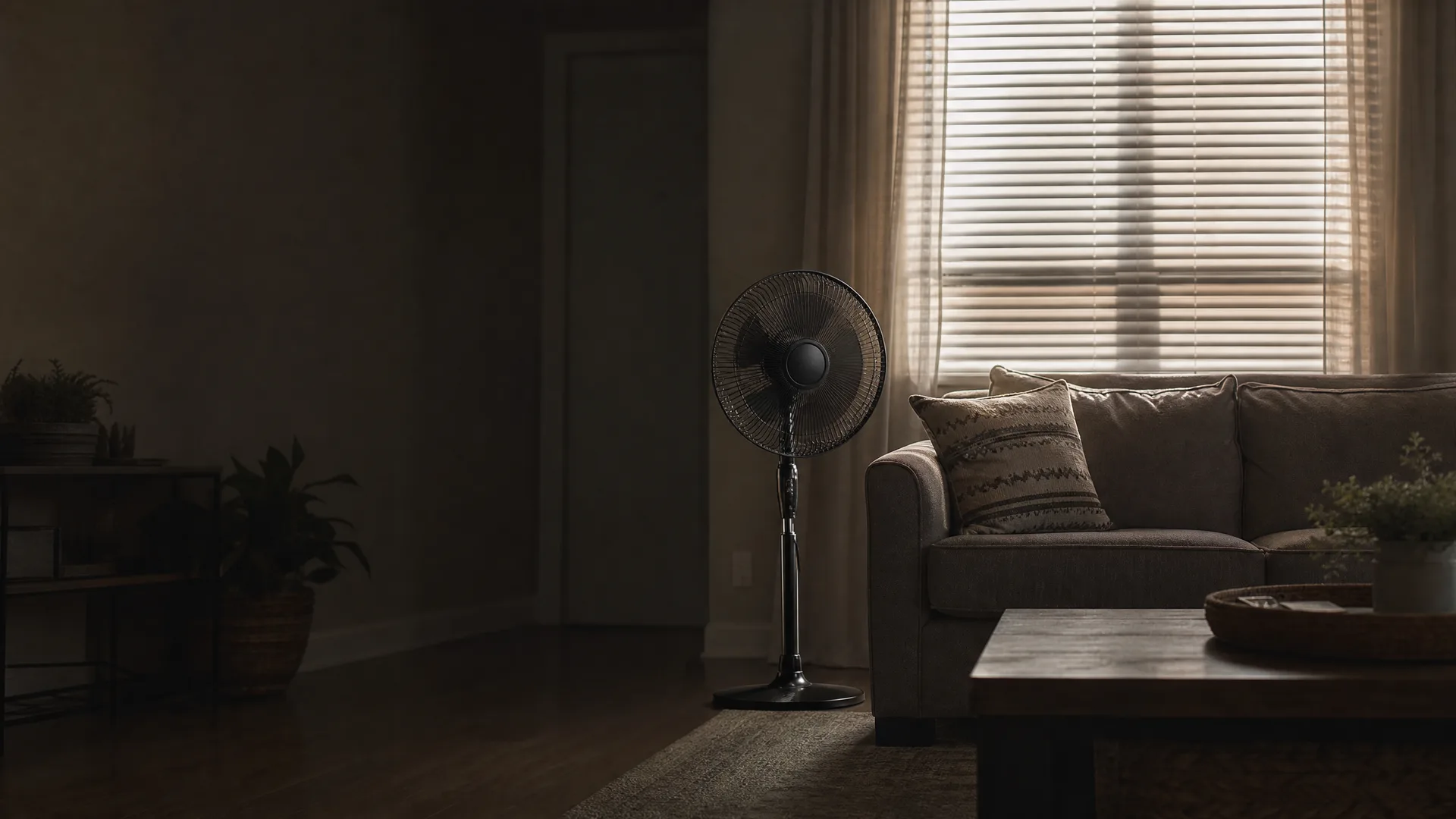
A dimly lit living room with a black pedestal fan on a wood floor beside a gray sofa with a patterned pillow, a wooden coffee table in the foreground, potted plants at left, and a curtained window with blinds behind.

It's gone three in the afternoon and the blinds are drawn against the sun. You've got the floor fan running next to the couch, pointed right at you, and it's still not enough. The air from the vents feels more warm than cool. Outside the heat sits heavy the way it does in Pennsylvania in July, the kind of afternoon where the pavement shimmers and nobody wants to be out in it. You keep glancing at the thermostat like it might change on its own. The dog's stretched out on the cool part of the floor by the hallway. Somewhere out back, the condenser is humming along, and nobody in the house has thought to check it yet.

Power costs 19.29 cents per kilowatt-hour statewide

At 19.29 cents per kilowatt-hour, a condenser that hums but can't move air is still drawing power the whole time it sits there doing nothing. Leave a bad capacitor or motor unfixed and you're paying full price for a unit that isn't cooling the house at all.

EIA-861 2025 statewide residential average

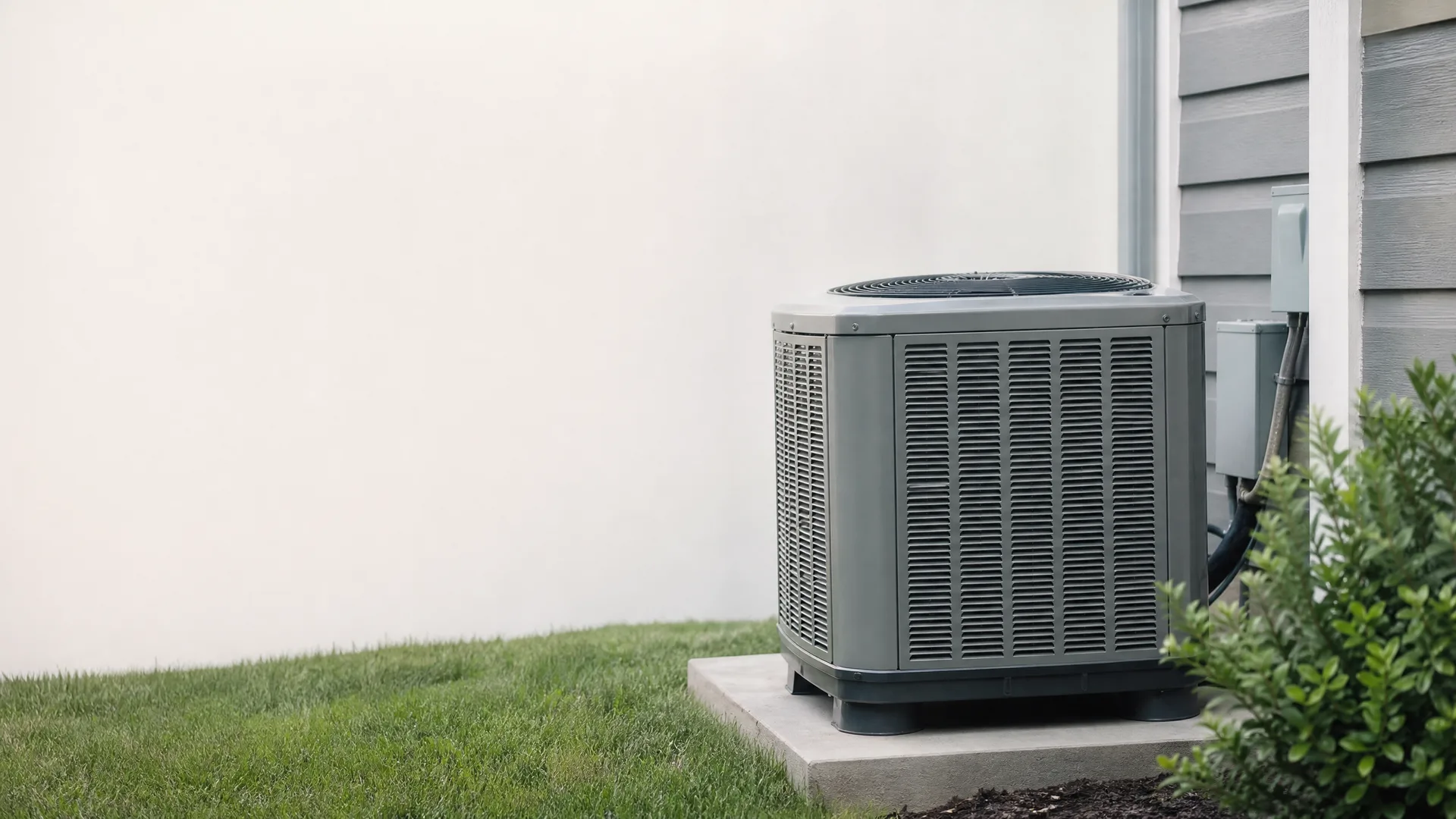
A gray outdoor air conditioner condenser unit on a concrete pad beside a house corner with lap siding and a stucco wall, surrounded by mown green grass.

Let it sit a while

You run the AC off and on, hoping the fan catches on its own, or you just don't get to it for a few days because the house is tolerable at night. The capacitor that's already weak keeps straining the motor every time it tries to start. The motor windings take the heat from pulling against a stuck fan. What started as a part a contractor could swap out becomes a motor that needs replacing too.

An outdoor air conditioning condenser unit on a concrete pad beside a house with light stucco and lap siding, with mown grass to the left and a green shrub to the right.

Get it looked at

You call someone out while the compressor is still drawing and the motor hasn't burned through. A contractor can check the capacitor and the motor before deciding anything needs replacing beyond that. Pennsylvania summers don't let up for long, and a condenser that's down a day is a house getting warmer the whole time. Catching it here usually means a smaller job than catching it later.

A woman stands in the open doorway of a white stucco house holding the dark door, facing a man in a black cap and shirt seen from behind in the blurred foreground, with a potted flowering plant beside the entry.

A quiet outdoor fan means it's time to call

A fan that won't turn is a small problem right now. Leave it through a few more muggy Pennsylvania afternoons and it stops being small. The compressor keeps drawing power either way, so the choice is between fixing a capacitor or a motor now, or facing a bigger repair once the compressor itself has had enough.

You don't have to figure out which part it is before you ask for help. Send the form and a contractor who handles this kind of repair in your area gets your details and reaches out to you. Finding someone stops being something you have to manage. The fan gets looked at, the house cools down again, and you're back to dealing with small problems before they turn into big ones.

Interior corner of a living room with a beige upholstered sofa and dark cushion in the foreground, a ceramic vase of leafy branches on a dark side table by a curtained window, a framed picture on the wall, and a wood-surround fireplace at right.
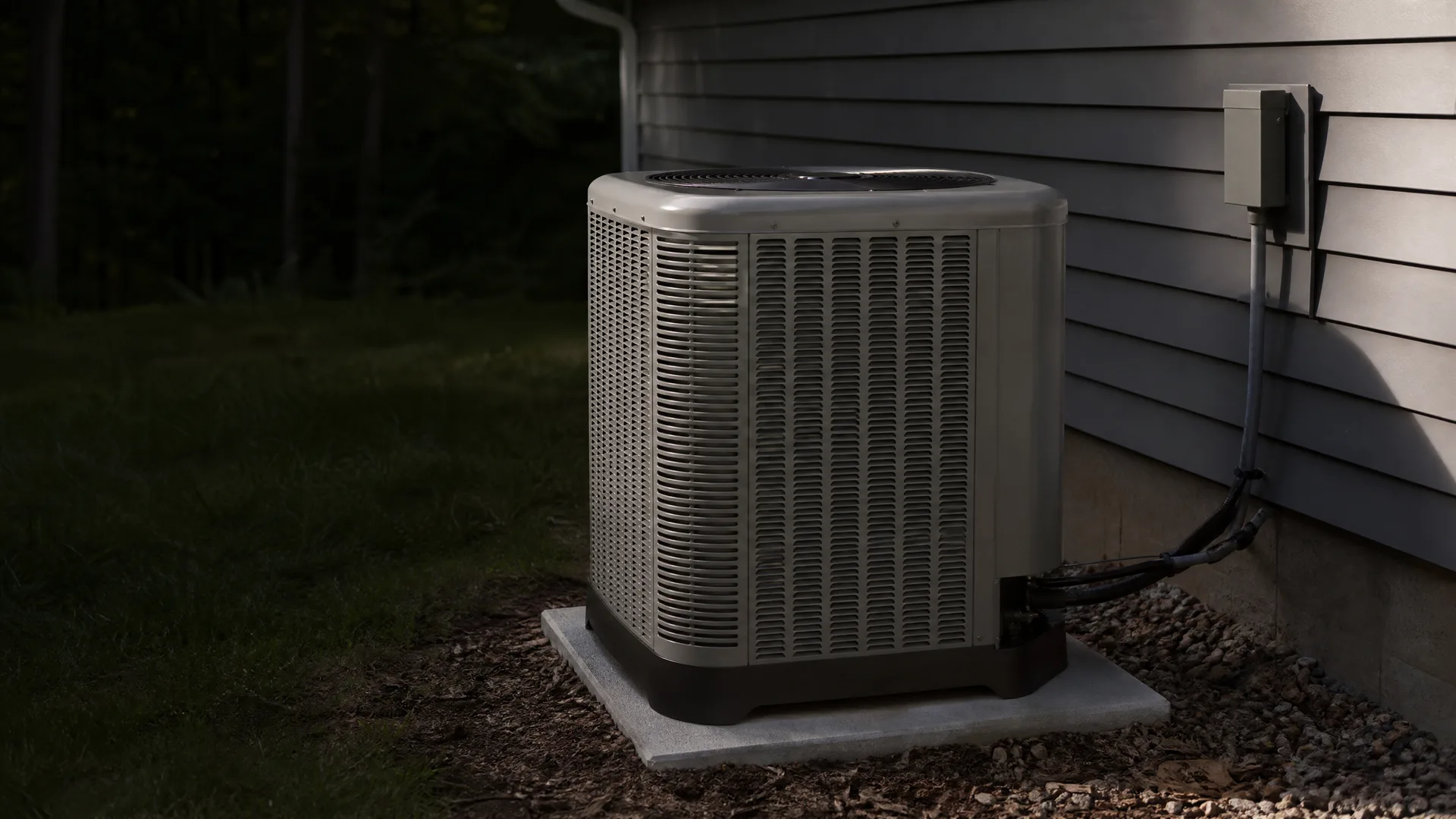
An outdoor air conditioning condenser unit sits on a concrete pad beside a house with horizontal lap siding, with a wall-mounted disconnect box and refrigerant lines entering the wall, gravel and grass around it and dark trees behind.

The right pro for this job

Step 1 of 3: Equipment