An outdoor air conditioning condenser unit on a concrete pad beside a house with stone veneer and vertical board siding, with a small shrub and mulch bed lit by a ground light at dusk.

Get the right pro for your air conditioner

Why your AC smells like burning in Pennsylvania

A burning smell from your AC usually means something electrical, not something wrong with the air itself. It could be dust burning off a dirty coil, or it could be a motor or wiring problem that needs attention before you run the system again. This page walks through what the smell is telling you and when to shut the unit off. Once you send the form, a contractor who handles this takes it from there.

Get my match

A burning smell from your AC almost always comes from the electrical side of the system, not the air itself. A motor can overheat when a bearing wears out. A capacitor can fail and scorch its casing. Wiring can loosen at a connection point and heat up right at that spot. Dust sitting on a hot component, like a blower motor that's been straining, can also singe and give off that smell without anything being broken yet. In Pennsylvania, AC runs hard through the sticky months, and that steady load is what pushes a weak part toward failure. A burning smell means heat is building up somewhere it shouldn't. Running the unit again before someone looks at it risks turning a bad capacitor or a loose wire into a bigger repair, or a fire hazard. Shut the system off at the thermostat or the breaker and leave it off until it's been checked.

A smiling bearded man in a dark green hooded jacket and blue t-shirt sits on a couch in a living room with shelves, a potted plant, and a bowl of popcorn on a wooden table.
A smiling man in a green long-sleeved shirt sits on a beige sofa in a living room, with a bowl of popcorn in the foreground, a large potted plant and shelving behind him.
A smiling man in a dark blue T-shirt sits on a couch in a dimly lit living room with a bowl of popcorn and a remote on a wooden table, a lit floor lamp and bookshelves behind him, and windows showing greenery.
A smiling bearded man in a dark green long-sleeved shirt sits on a leather couch in a living room, with a bowl of popcorn and a remote control on a wooden table in the foreground.

Burning Smell: Wait It Out or Shut It Down

Safe to run

  • A faint burning smell for the first few minutes after you turn the AC on for the first time this season, especially if it fades within ten minutes.
  • Dust that settled on the coil or in the ductwork over the winter can singe off once the system warms up and the smell clears on its own.
  • No smoke, no breaker tripping, and no smell coming back once the system has been running for a while.
  • The smell only showed up once, right after a filter change or after the vents were closed off and opened again.

Turn it off and call

  • The burning smell keeps coming back every time the system runs, or it gets stronger instead of fading.
  • You smell something sharp or like melting plastic, which points to wiring insulation or a capacitor casing overheating.
  • The outdoor unit's fan motor sounds like it is straining, grinding, or has slowed down from how it normally runs.
  • A breaker trips when the AC kicks on, or the air handler smells hot to the touch near the blower compartment.
  • Warm air comes through the vents along with the smell, which can mean the blower motor itself is overheating.
  • The smell shows up with the system you've had running fine all summer, not just on a first start of the season.
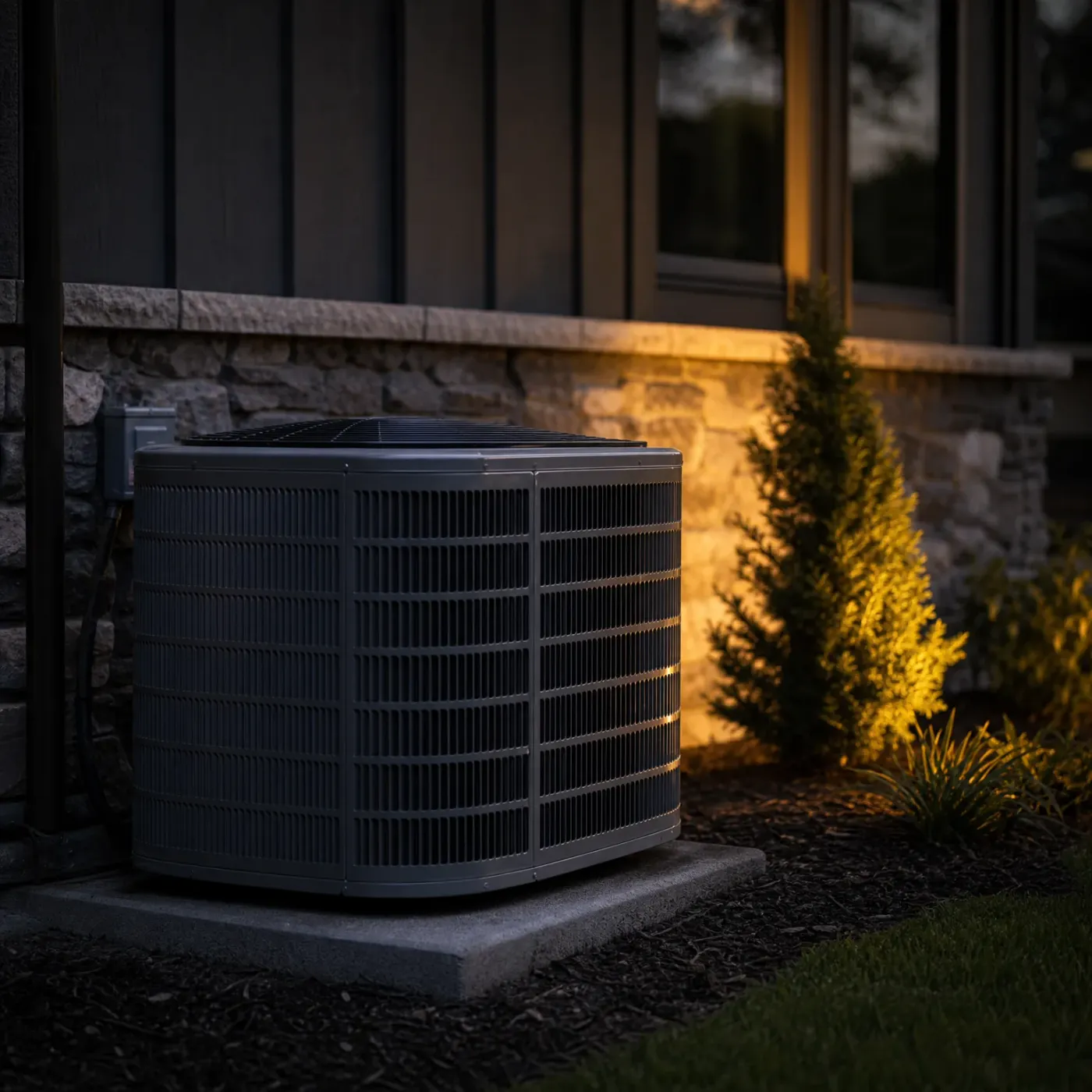
An outdoor air conditioner condenser unit sits on a concrete pad beside a shingled house wall, surrounded by mulch, broad-leaved shrubs and a lawn in low evening light.

You're out back around seven, grass still warm under your feet, the light going gold over the yard. You walk past the condenser and stop. It's quiet. Too quiet. The fan on top isn't turning, and when you lean in close there's that burnt smell, sharp, coming off the unit itself. Inside, you know the AC is still running, air still pushing through the vents, just not getting cold anymore. You crouch down near the side panel. The smell is stronger there. Upstairs someone's about to ask why the house feels sticky again. You straighten up, phone already in your hand.

What does it mean when your house smells like this

You might catch it first in the hallway near a return vent, or notice it's strongest in whatever room sits closest to the air handler. The smell can come and go with the blower, stronger when the system kicks on and fading when it cycles off. Some people notice a faint haze near a vent, or a warmth to the air that wasn't there before. If the system keeps running this way, a damaged motor or a wiring fault can get worse, and in some cases that means the AC shuts itself off or trips a breaker when you need it most. With a sticky Pennsylvania summer still ahead, a day or two without cooling while it waits for parts is worth avoiding if you can catch it now.

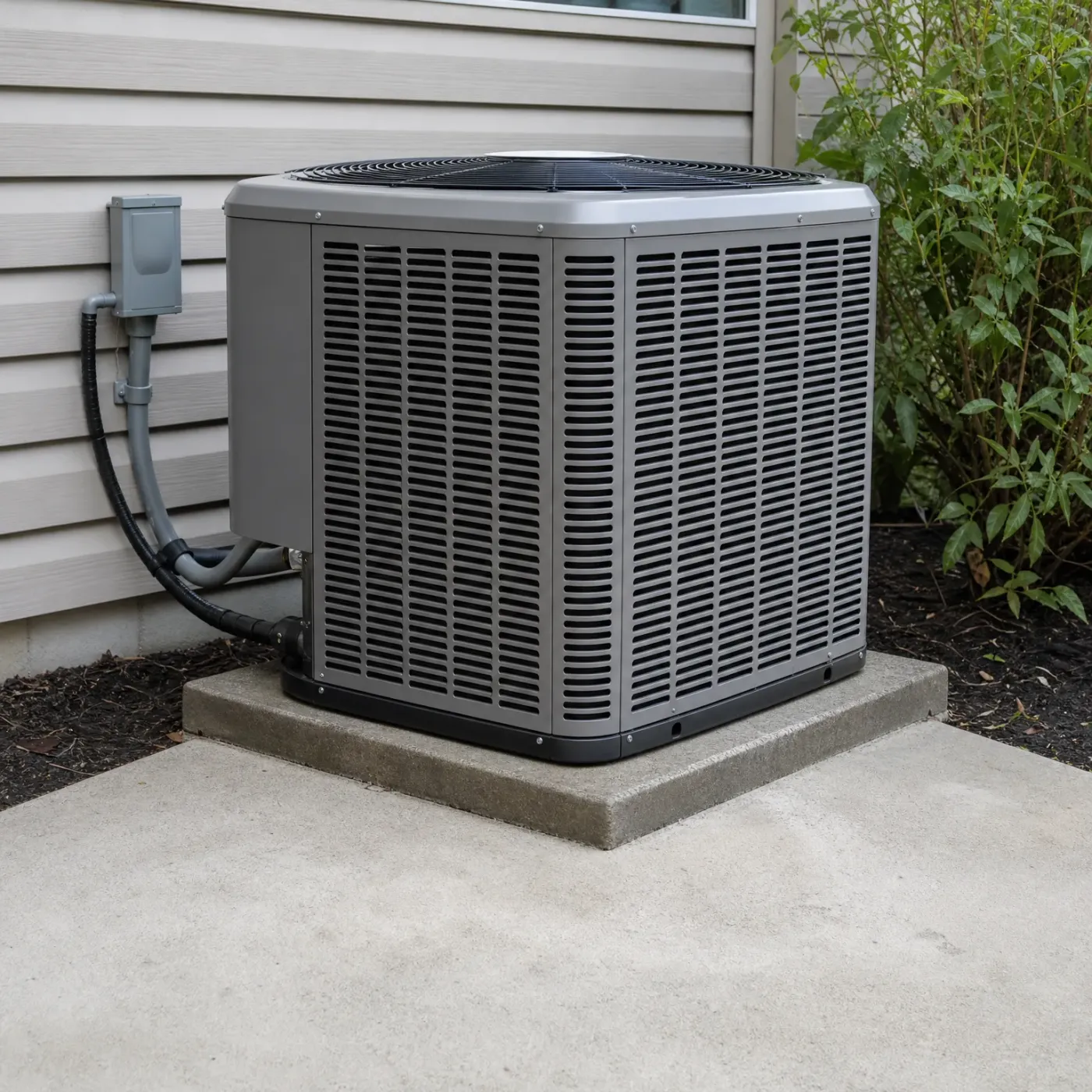
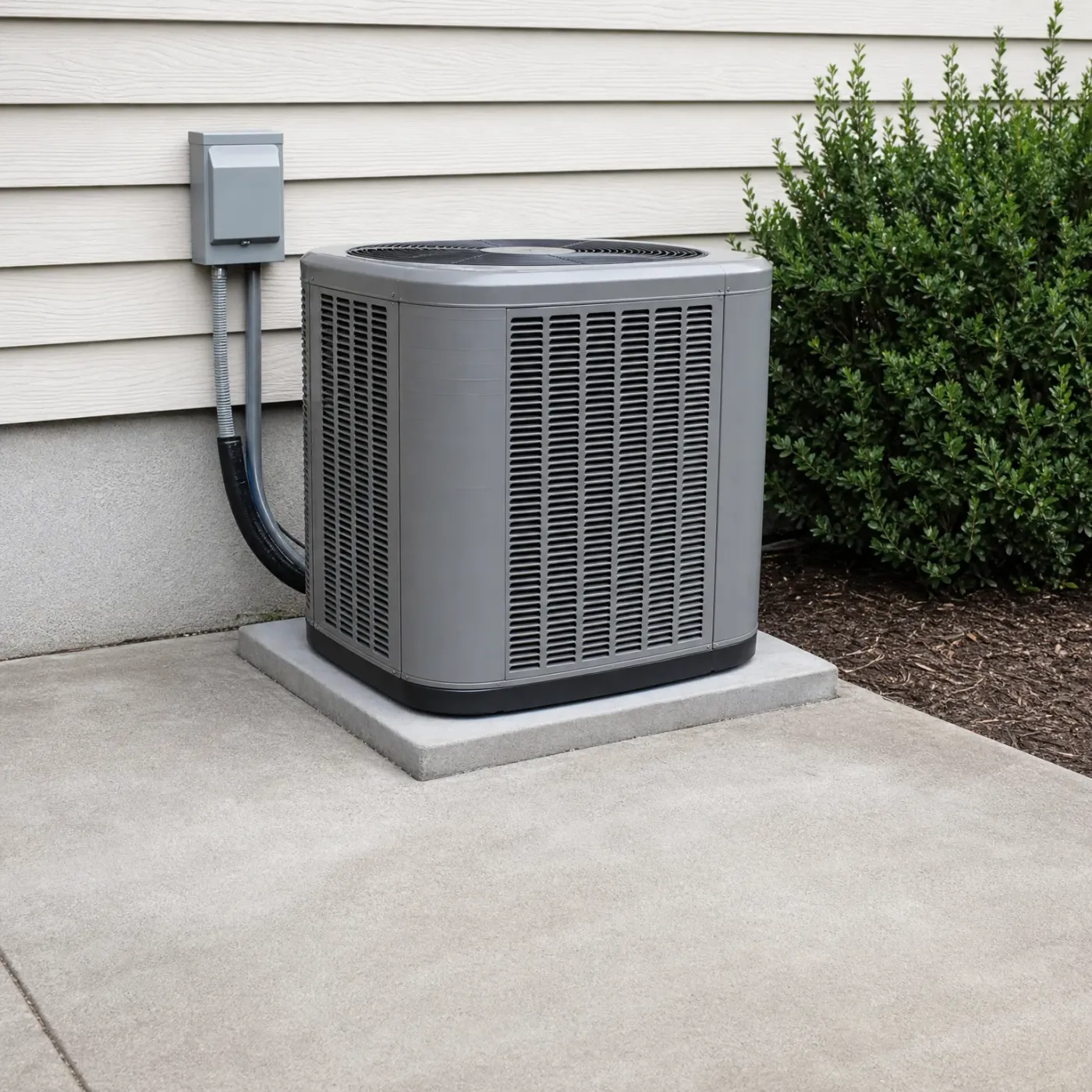
A gray outdoor air conditioner condenser unit on a concrete pad beside a house with light vinyl siding, with an electrical disconnect box and conduit on the wall and a leafy shrub with dark mulch to the right.

Running clean

A condenser that's working right sits quiet except for a low hum, the fan spinning steady behind the grille. The lines and conduit running up to the disconnect box stay cool to the touch. No smell drifts over when you walk past it in the yard.

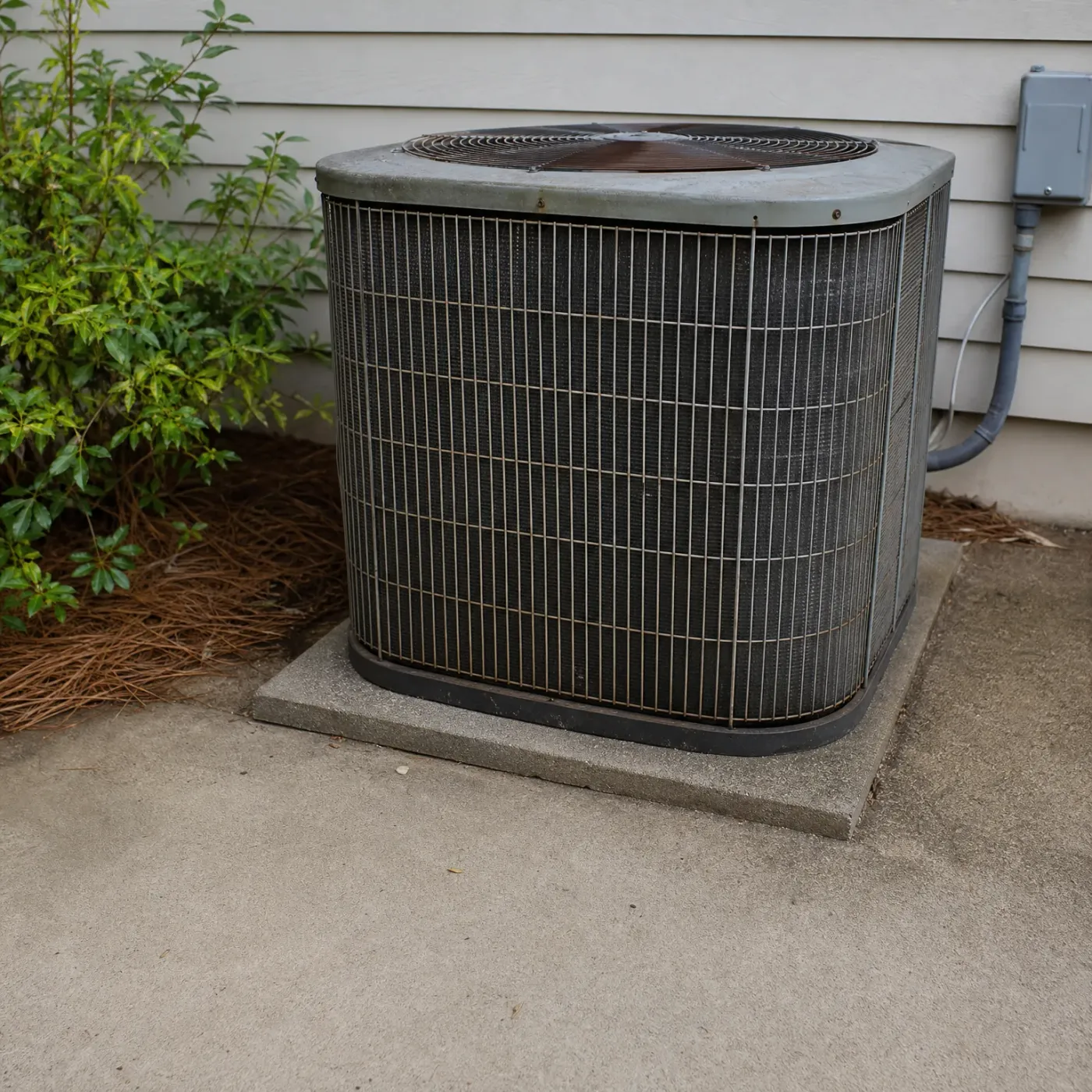
An outdoor air conditioner condenser unit on a concrete pad beside a house with horizontal lap siding, with a gray electrical disconnect box and conduit on the wall and a green shrub over pine-needle mulch at left.

Running dirty

Grime built up on the wire grille blocks airflow across the coil, and the unit has to work harder to move the same heat. A disconnect box that's taken weathering can loosen at its connections. Either one can carry heat somewhere it shouldn't go.

A woman in a dark gray sweater reclines on a light sofa with eyes closed and a slight smile, under a textured gray blanket with an open book resting on her lap, with a lit table lamp and plant in the background.
A smiling bearded man in a navy crewneck sweater sits at a dinner table with a glass of red wine, plates and glasses in the foreground, in a dimly lit room with a lamp and framed picture behind him.
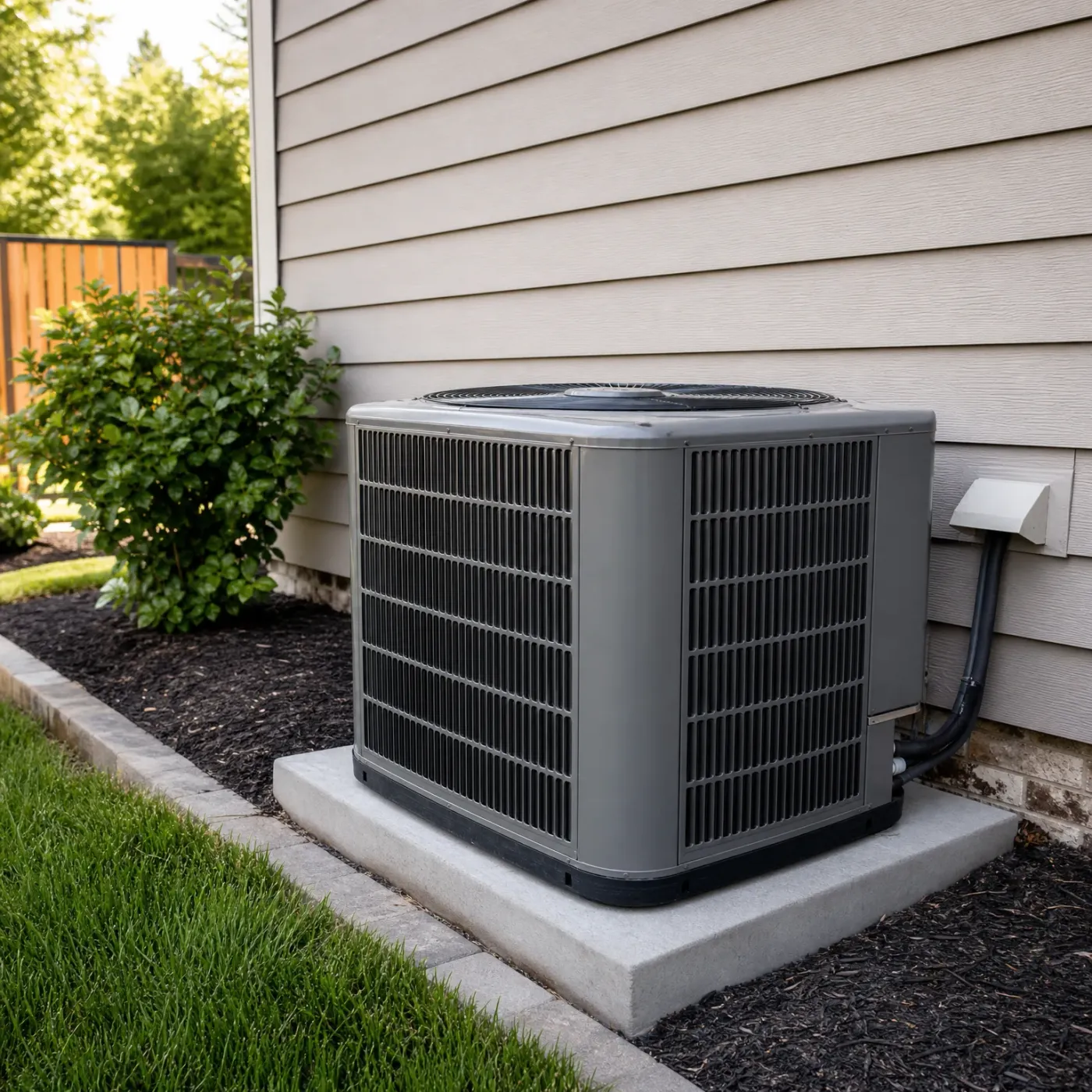
A gray outdoor air conditioning condenser unit on a concrete pad beside a house with horizontal vinyl siding, with mulch, a shrub, and lawn nearby.

A pro who works on air conditioners

Send the request today and let an air conditioner pro reach out to you.

Tell a local repair pro what your air conditioner is doing.

Request a pro

It costs nothing to send, and you don't have to hire anyone.

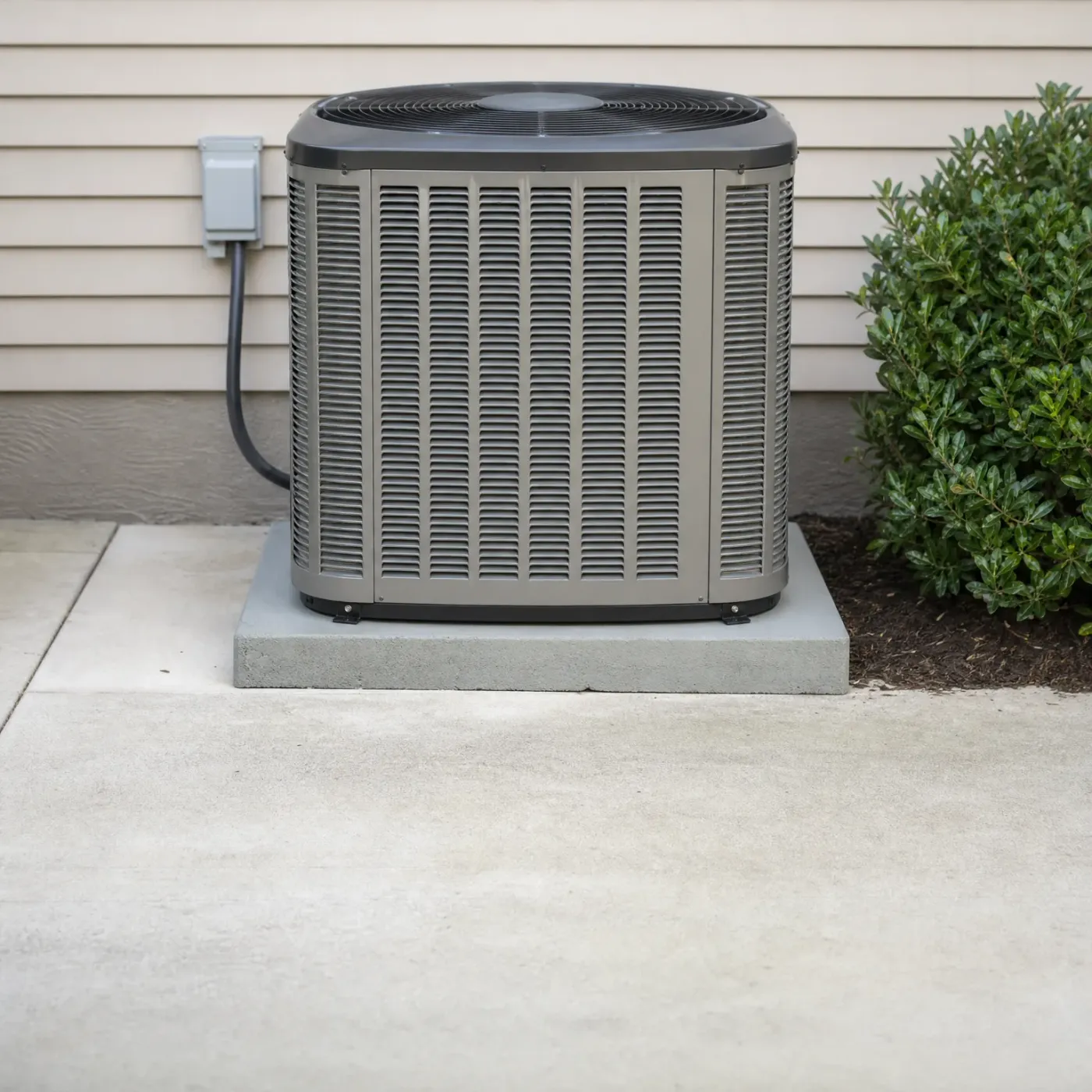
A gray outdoor air conditioning condenser unit on a concrete pad beside a house with horizontal lap siding, with a wall-mounted disconnect box and conduit to the left and a green shrub with mulch to the right.
A clean condenser pulls air through the fins without resistance, so the motor and coil run at a normal temperature all summer.
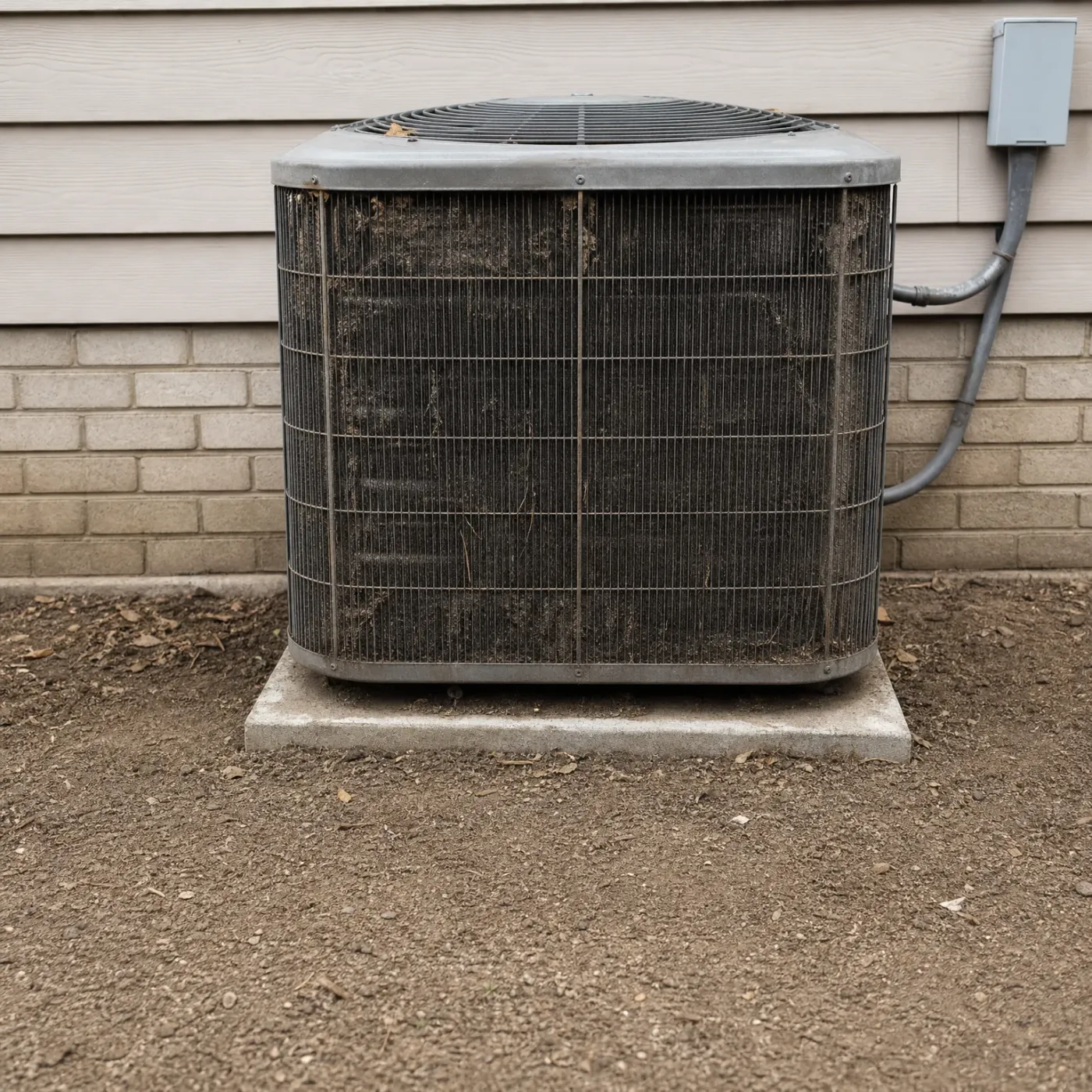
A dirty outdoor air conditioning condenser unit on a concrete pad beside a house wall with horizontal siding above a painted brick foundation, with a gray electrical disconnect box and conduit on the wall.
Dirt packed into the fins forces the fan and compressor to work harder, and that extra strain is what starts to smell like burning.

Power costs 19.29 cents per kilowatt-hour statewide

At 19.29 cents per kilowatt-hour, every hour your AC runs with a strained motor or a shorted wire costs more than it should. A burning smell is often a system drawing extra power to fight a problem, so fixing it fast keeps that strain off your electric bill too.

EIA-861 2025 statewide residential average

An outdoor air conditioning condenser unit on a concrete pad beside a house with horizontal lap siding, with an electrical disconnect box and conduit on the wall and a green shrub to the right.

Running as it should

This is a condenser doing normal work. The fan spins steady, the disconnect box above it feeds power through cool conduit, and the unit sits level on its pad without strain. No smell reaches you standing near it, even on a hot afternoon.

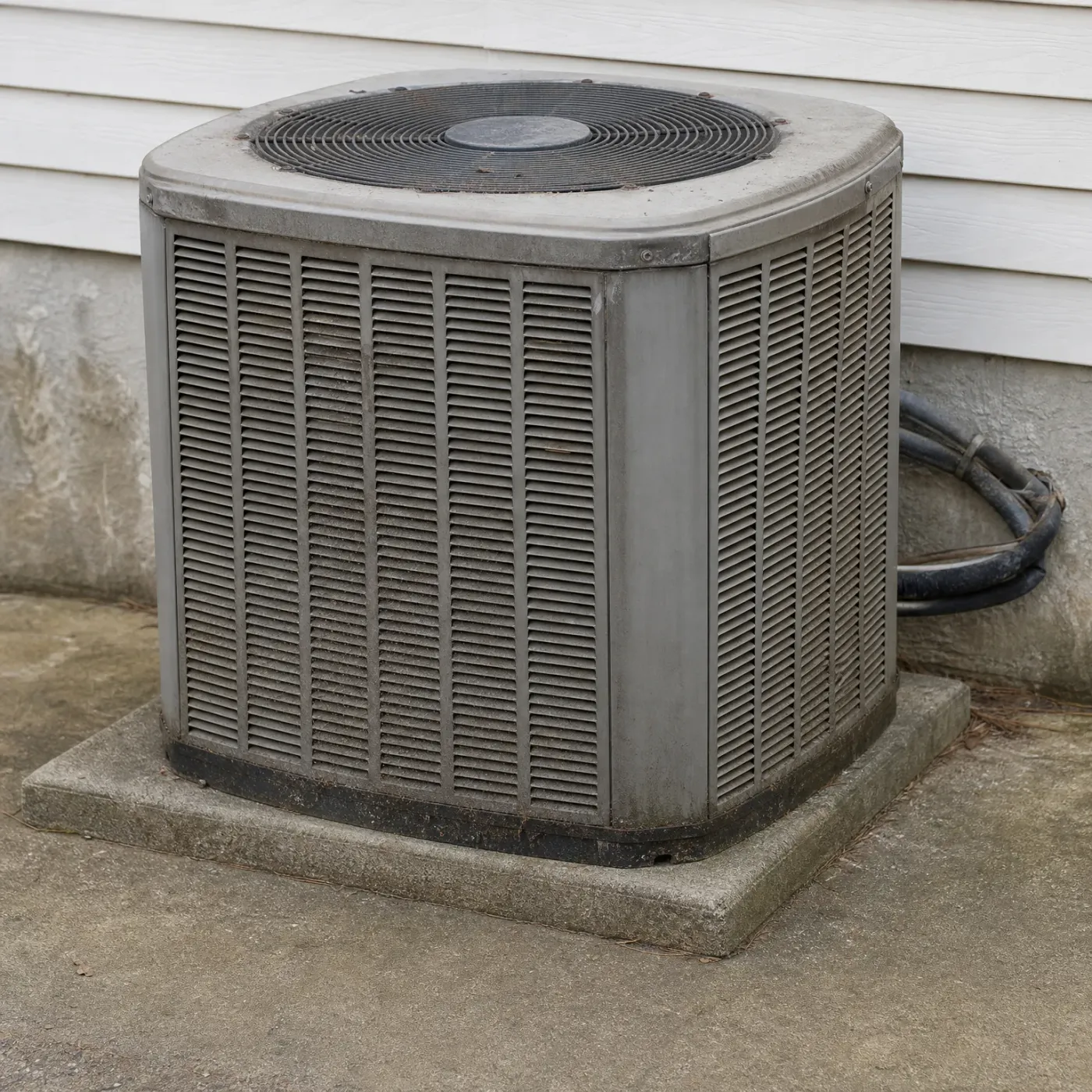
An outdoor air conditioner condenser unit on a concrete pad beside a house with horizontal siding and a lower concrete foundation wall, with coiled refrigerant lines at right.

Worn down and straining

Dirt has built up across the louvered panels and the fan grille on top, thick enough to see from a few feet away. A unit left like this pulls harder to move air, and the motor and wiring underneath take the extra load that can start to smell like burning.

A smiling man in a denim shirt and white t-shirt stands in an open dark doorway of a stucco house, facing a woman with long brown hair and a green jacket seen from behind in the foreground.

A burning smell is your AC telling you something specific

A burning smell from your AC is the system telling you something electrical is wrong, not something to wait out. Dust burning off a coil at the start of the season clears on its own in a few minutes. A smell that lingers, gets stronger, or comes with a tripped breaker is a motor, a capacitor, or a wire that needs a tech to look at it before you run the system again. In Pennsylvania summers, that's not a system you want sitting idle on a muggy week, and at 19.29 cents per kilowatt-hour it's not one you want straining through hot afternoons either.

You don't have to figure out which part it is before you ask for help. Once you send the request, the work of finding someone stops being yours. A contractor who handles this kind of repair gets matched to what you described and reaches out to you directly, so you're not the one calling around during a heat wave trying to explain a smell over the phone to three different shops.

A gray upholstered sofa with a matching cushion sits beside a potted plant and a wooden table holding a small green plant in a stone pot, near a curtained window.
A single-story stucco house at dusk with a lit paver walkway lined by low path lights, desert plants and boulders in front, and distant mountains under an orange and blue sky.

Air Conditioner Repair

Get your air conditioner to the right pro

Step 1 of 3: Equipment
  • A dimly lit living room corner with a beige upholstered sofa holding a dark green cushion and a chunky knit throw, beside a wooden sideboard with a lit ceramic table lamp, a small potted plant, and a wooden bowl, with a framed artwork on the wall and a mug on a book in the foreground.
    • Say what's going on with your air conditioner, and a pro who works on them reaches out.
    • A local pro who knows air conditioners gets your details and gets in touch.
  • A round wooden coffee table holding a round stone vase of green foliage, a lit candle in a glass container, and a small dark bowl, with a beige sofa, cushions and knit throw behind and a window at left.
    • Send the request today and stop worrying about who to call.
    • After this form, you can stop searching for an air conditioner pro.
  • Sunlit living room with a wooden coffee table holding a ceramic vase of leafy branches and a carved wooden tray with two stacked books, in front of a beige sofa with tan and green cushions and a potted plant near a window.
    • Describe your air conditioner job once, to one pro.
    • Fill out one short form instead of calling around.
  • Interior corner with a lit ceramic table lamp and wooden bowl on a wood sideboard, a framed picture and branch-filled vase behind, a knit throw over an upholstered chair, and a lit candle in a glass holder, stoneware mug and round planter of green foliage on a wooden table in the foreground.
    • The pro who reaches out is licensed in Pennsylvania.
    • Only one pro gets your request, so you hear from one company.