


Running quiet, like it should
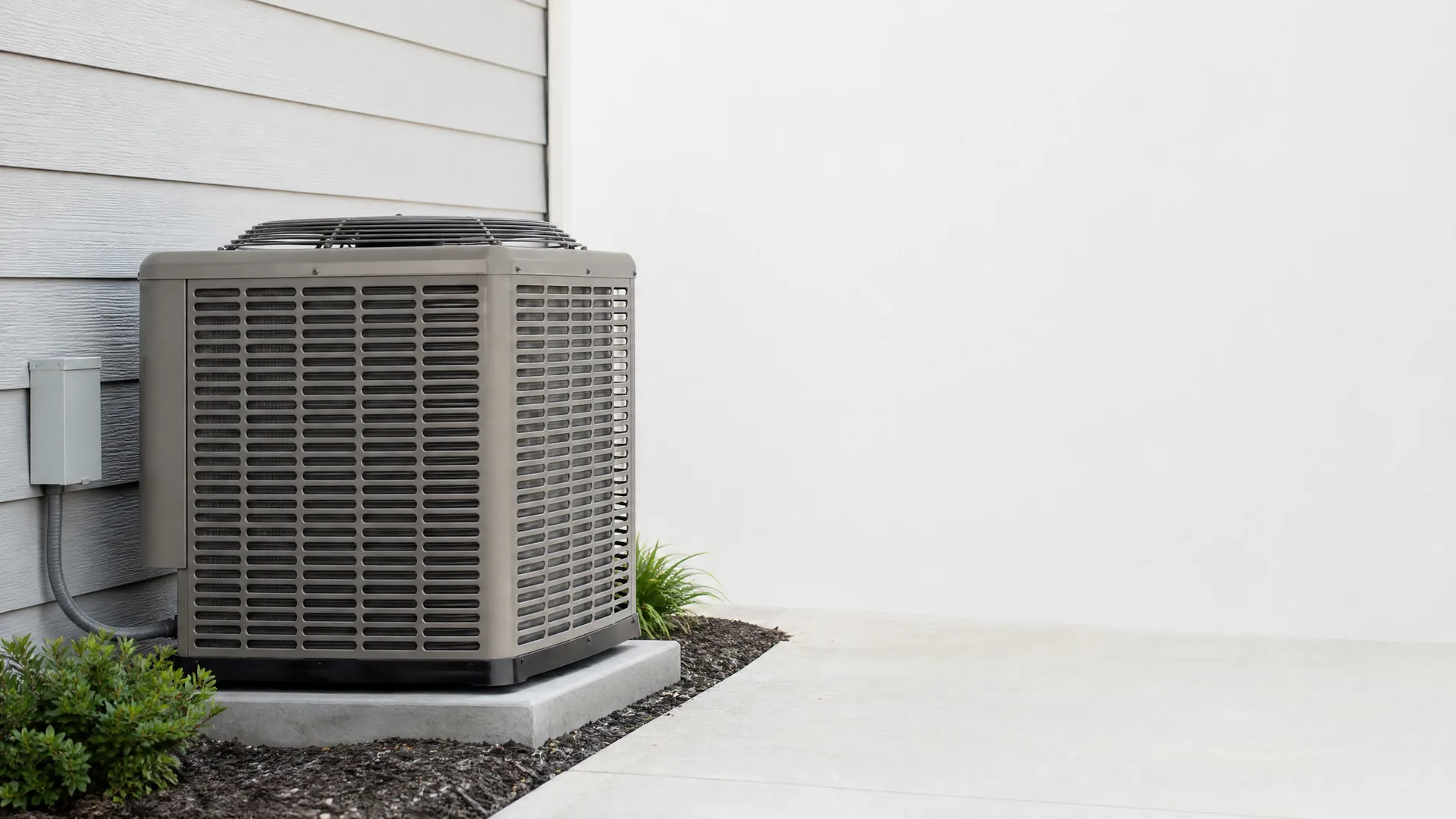
This is a unit that starts clean. The contactor closes without a fight, the capacitor sends its jolt, and the compressor and fan spin up without a sound past the normal hum of a unit doing its job on a hot day.
A buzzing sound from your outdoor unit is easy to notice and easy to put off, especially once it's running flat out through a sticky Pennsylvania summer. You're the type who'd rather check on a noise now than wait for the unit to quit on the hottest day. The question is whether this is something minor or a sign the unit is working harder than it should.
A buzzing noise almost always points to something loose or something electrical. A panel, a fan blade, or a piece of fencing or debris touching the cabinet can rattle once the compressor and fan start up. It can also mean a failing capacitor, a loose wire connection, or contactor points starting to wear, all of which run the motors that keep the unit going. With Pennsylvania summers putting long hours on the system, a part under that kind of strain is more likely to buzz before it fails outright. Left alone, a loose panel can wear a hole in wiring, and a bad capacitor can take the compressor down with it. Either way the unit is telling you something is already off, not something that might happen someday.
A buzz that stays steady while the unit runs often points to a loose part vibrating against the cabinet, a failing contactor, or a capacitor that's starting to go. A capacitor that's weak will hum or buzz as it struggles to get the compressor and fan motor started, and that strain only gets worse the longer a unit runs flat out. Refrigerant lines rattling against sheet metal can sound almost identical from a few feet away.
An outdoor unit in Pennsylvania can run for hours at a stretch once the heat and humidity settle in for the summer. A part that's starting to fail under that kind of load tends to fail faster, not slower. A loose fan blade or a worn motor bearing that only buzzed occasionally in June can seize or snap by August, turning a noise you noticed into a unit that stops cooling altogether.




Your outdoor unit does the same thing every time the thermostat calls for cooling. The contactor closes, power reaches the compressor and fan motor, and the capacitor delivers the jolt that gets both spinning. That sequence repeats thousands of times over a Pennsylvania summer, and each part wears a little differently.
The contactor is a simple switch, but the contacts inside get pitted from the small spark that happens every time it closes. A pitted contactor doesn't snap shut clean anymore. It chatters, and that chatter sounds like a buzz coming from inside the unit.
The capacitor works differently. It holds a charge and releases it to start the compressor and fan motor spinning. As it ages, it holds less charge than the motor needs. The motor tries to start, can't quite get there, and the strain shows up as a buzz instead of the usual hum of a unit kicking on.
Not every buzz is electrical. Outdoor units take a beating from wind, mowing, and just running for months straight, and a panel screw or fan bracket can work loose. Once it's loose, it vibrates against the cabinet every time the fan spins, and that's a buzz too, though it won't get worse the way a failing capacitor will.
A contractor checking a buzzing unit tests the capacitor's charge, looks at the contactor's condition, and checks for anything loose before deciding what's actually causing the noise.
You'll notice it most when you're outside near the unit, maybe doing yard work or just walking past the side of the house. A steady buzz or hum while the compressor runs, maybe a slight rattle in the cabinet. Sometimes it's louder when the AC first kicks on and settles down, sometimes it stays the same the whole time it runs. The fan might look like it's turning slower than usual, or hesitating before it catches. If this goes unchecked through a Pennsylvania summer, the part that's buzzing keeps wearing down, and the day it finally quits is usually the day you need the cooling most, with the compressor straining or refusing to start at all.


Describe what your air conditioner is doing once, in one form.
There's no charge for the request.

Summer air here sits heavy, with a dew point that averages 61°F across June, July and August, according to NOAA climate data. That kind of moisture load means your outdoor unit runs longer each cycle to pull the humidity out along with the heat. A contactor or capacitor that's already weak gets worked harder during those long runs, and a buzz that might stay quiet-ish in dry weather tends to get louder once the air turns sticky. If the sound seems worse on the muggiest days, that's the heat and moisture pushing a failing part closer to the edge, not your imagination.
NASA POWER T2MDEW county cells weighted by homes

Keep walking past it and the buzz doesn't stay a buzz. A contactor that's arcing will pit and burn until it stops closing right, and a capacitor that's weak now will be dead in a few weeks or a few months. Either one takes the compressor down with it. A $20 part turns into a compressor that won't start, and that's the most expensive thing in the cabinet. With power costs what they are in Pennsylvania, a struggling capacitor is also pulling more than it should every time the unit cycles on, all summer, before it ever quits for good.
You don't have to spend an evening calling around to get this looked at. Describe what you're hearing once, and you get matched with a contractor who handles exactly this kind of outdoor unit problem, and they'll reach out to you directly. No explaining the buzz to three different companies, no sorting through quotes that don't match what you actually need. You check on noises before they turn into real damage, so handle this one the same way, without the extra legwork.

The thermostat calls for cooling and sends a signal outside.
The contactor closes and routes power to the capacitor.
The capacitor sends a jolt that starts the compressor and fan motor.
A weak capacitor or pitted contactor buzzes instead of switching clean.
At 19.29 cents per kilowatt-hour, a compressor that's straining to start on a weak capacitor is pulling harder than it should every time it kicks on. That buzzing unit isn't just at risk of failing, it's costing you more to run until someone replaces the part.
EIA-861 2025 statewide residential average
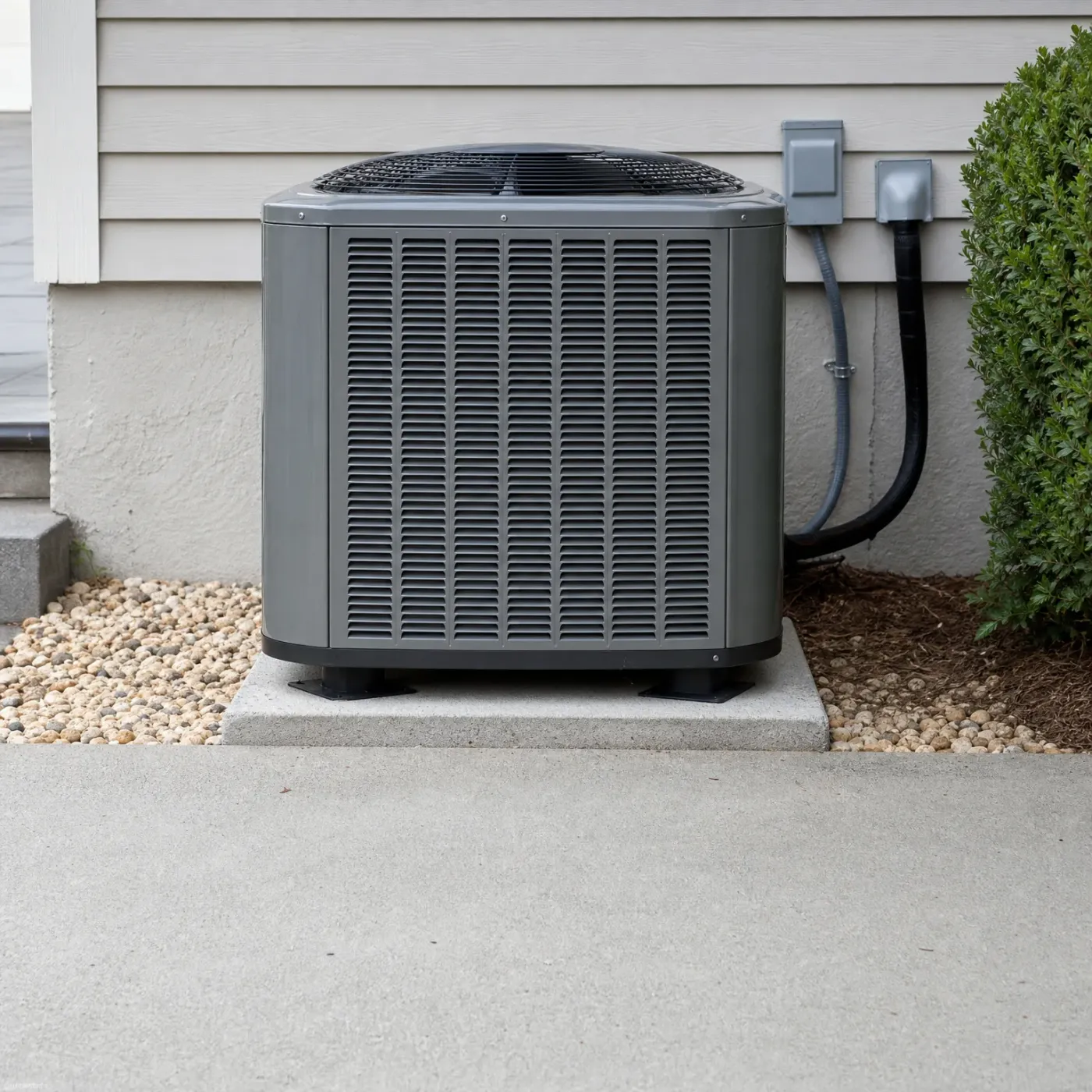
This is a unit that starts clean. The contactor closes without a fight, the capacitor sends its jolt, and the compressor and fan spin up without a sound past the normal hum of a unit doing its job on a hot day.
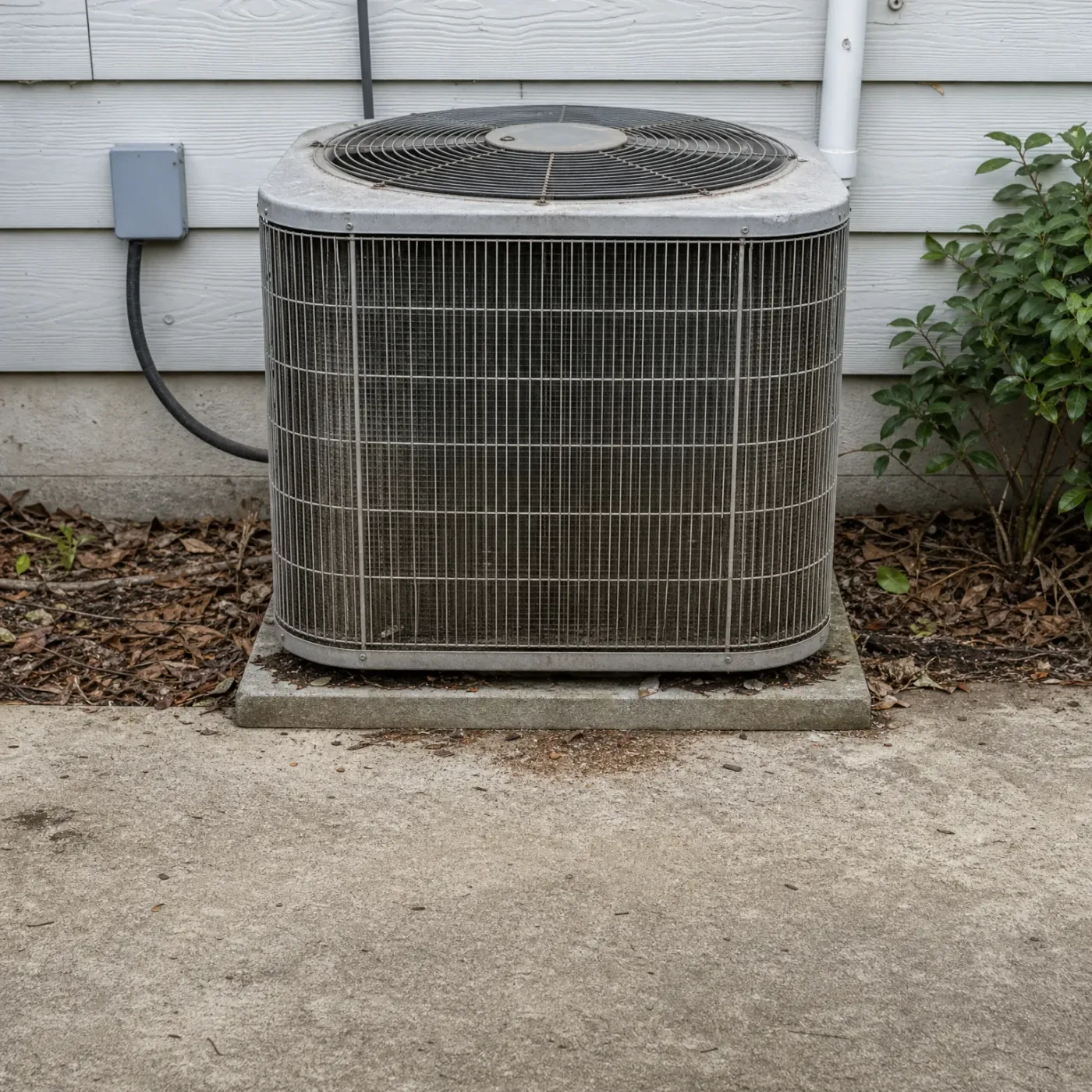
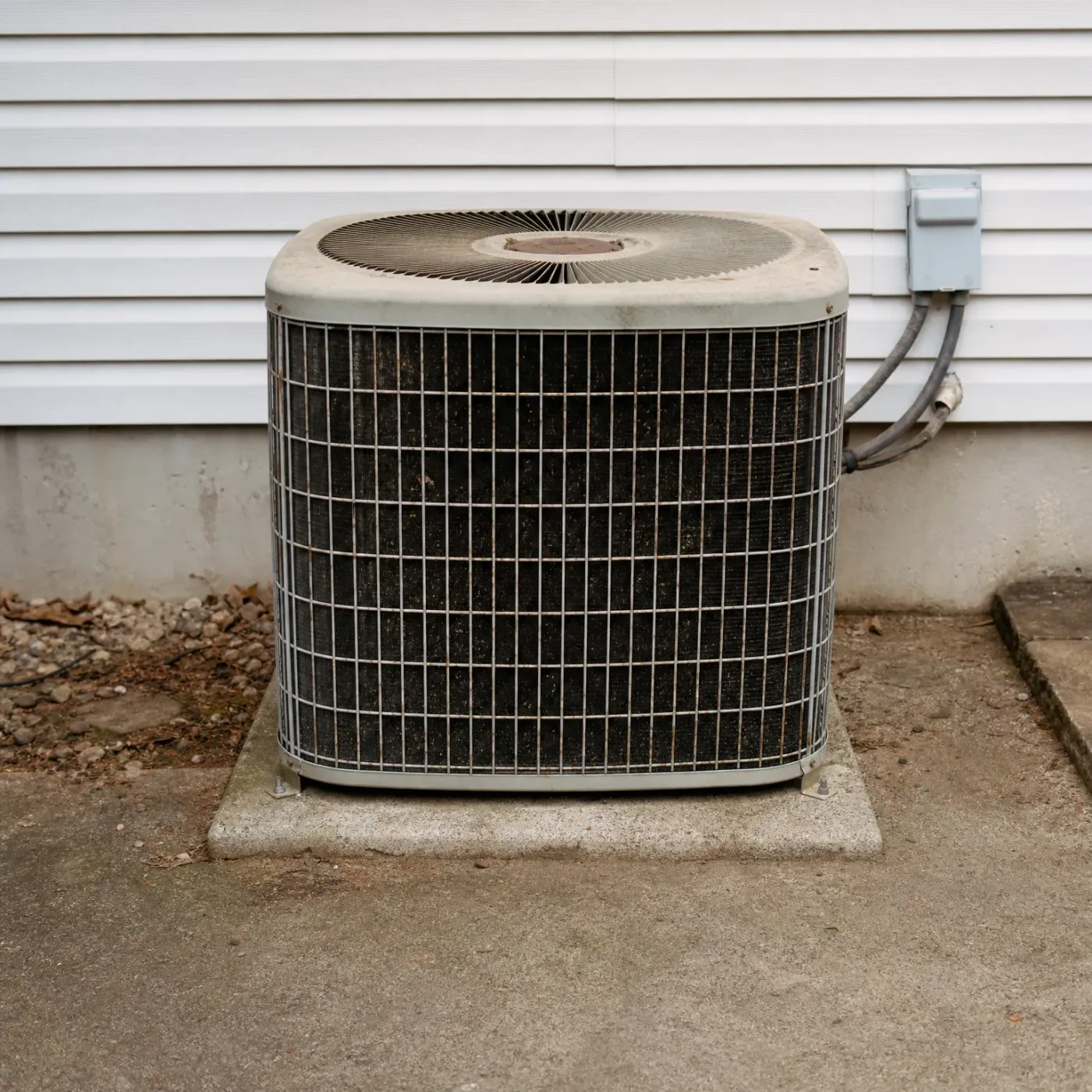
Grilles caked like this choke the airflow the coil needs to work. The unit strains to move heat through a clogged coil, and that extra strain is often what's behind a buzz you've been hearing from a contactor or capacitor working harder than it should.
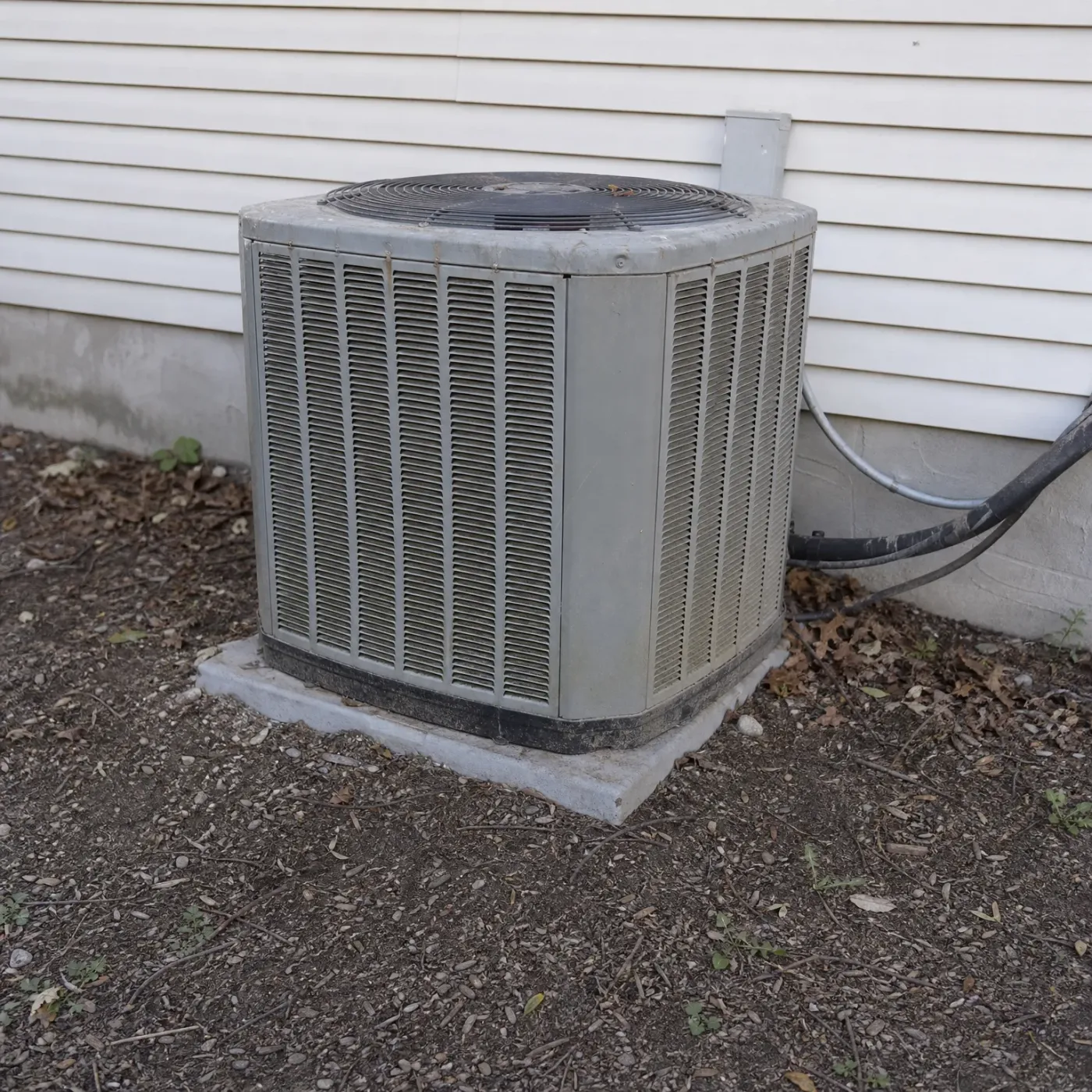
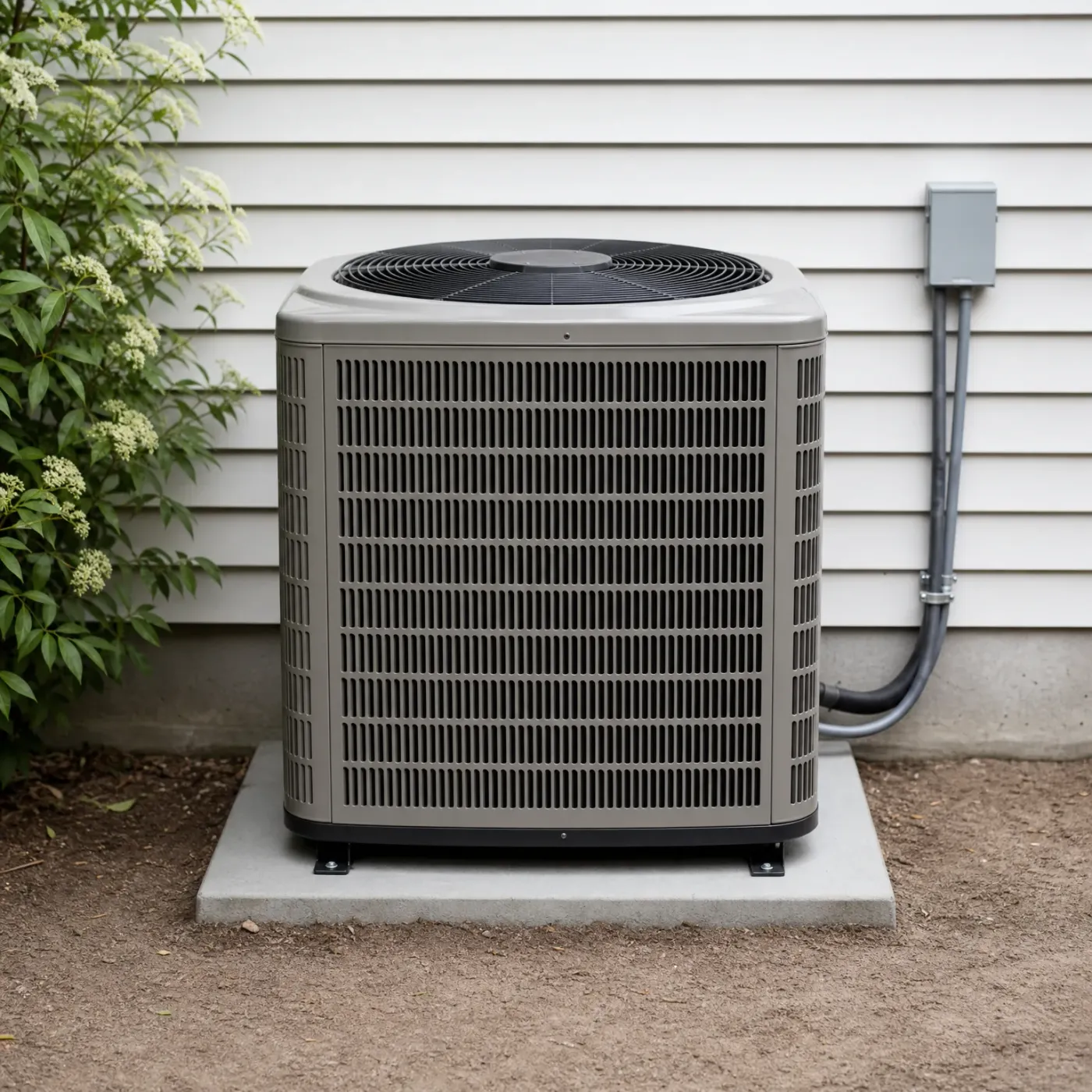
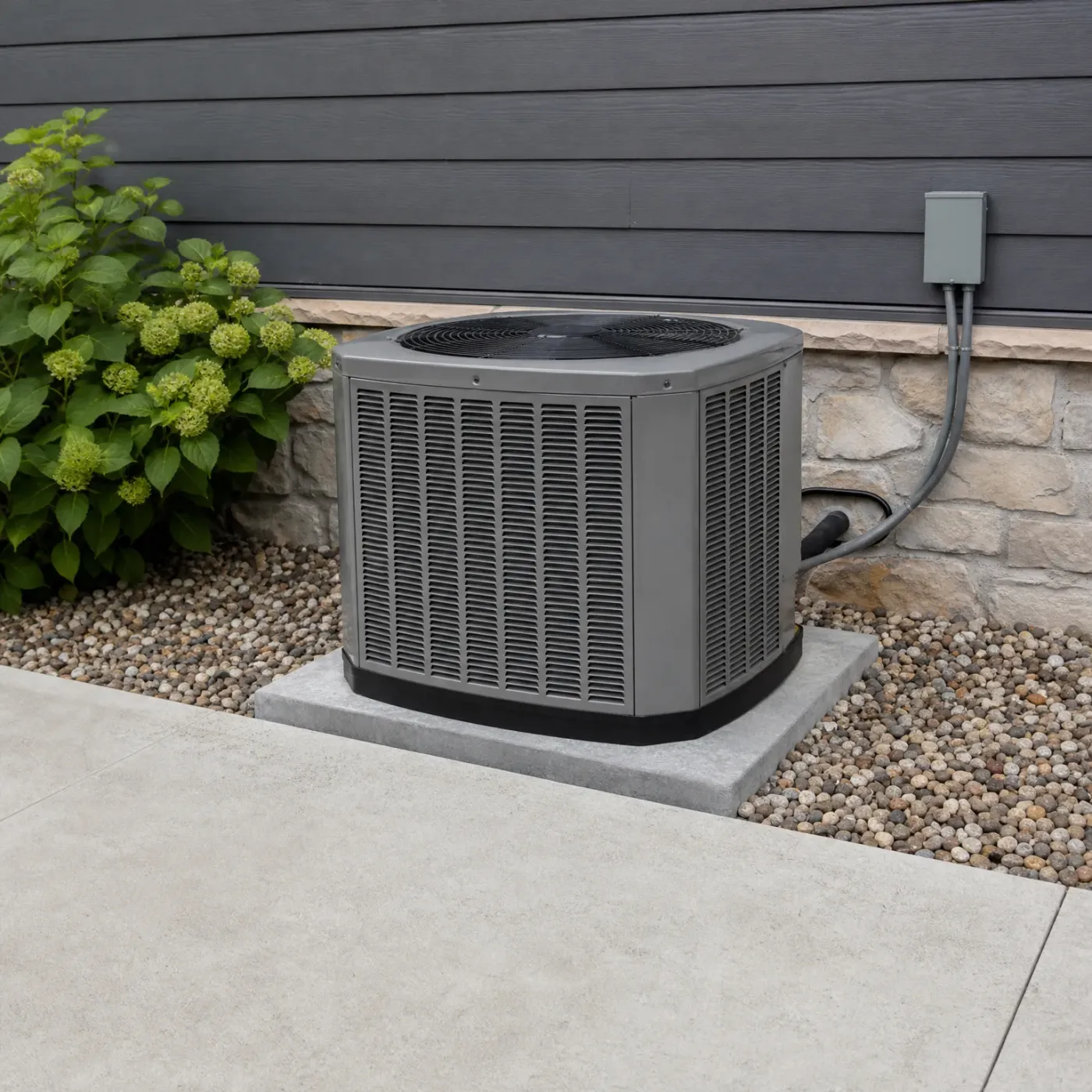
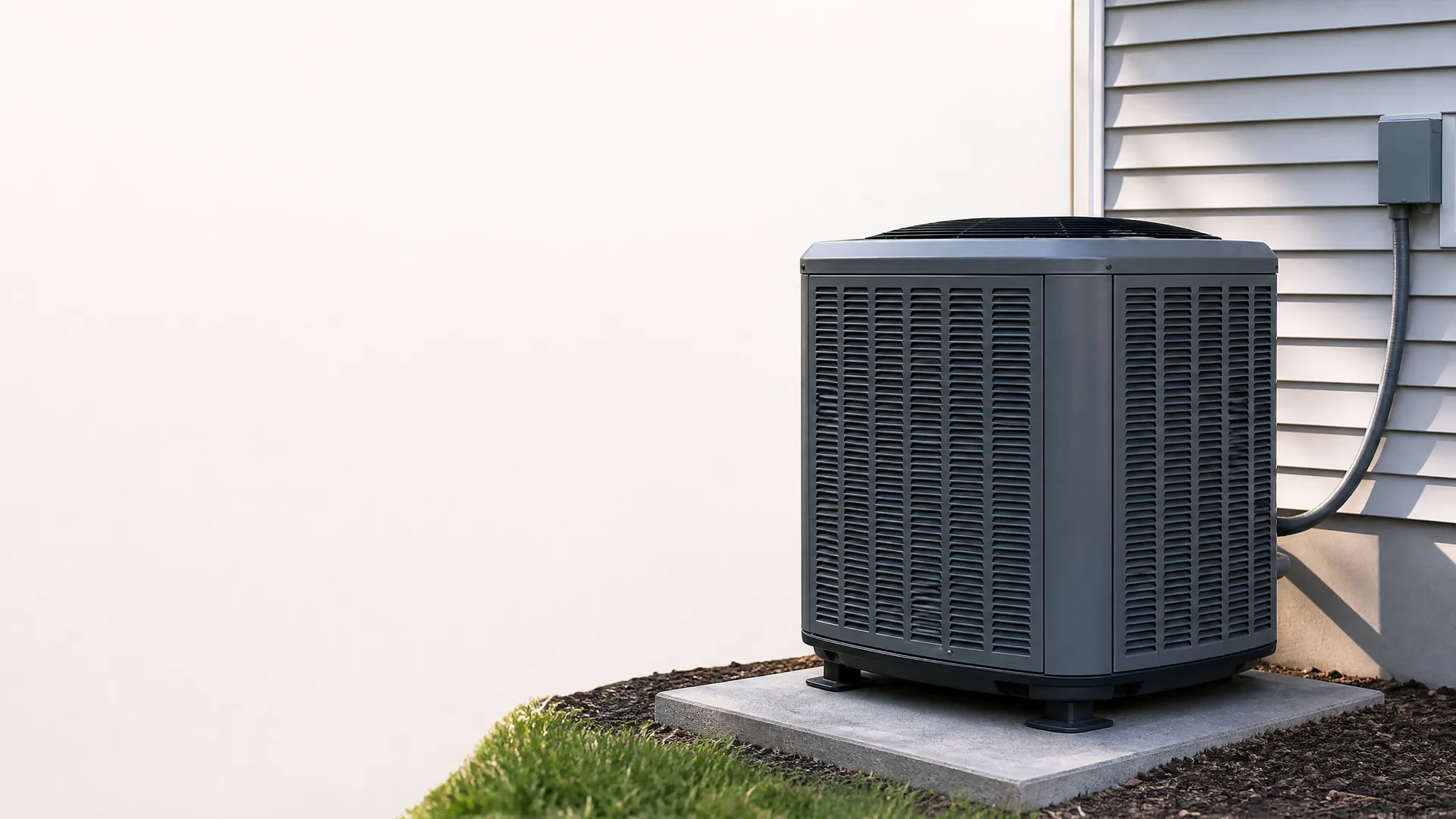
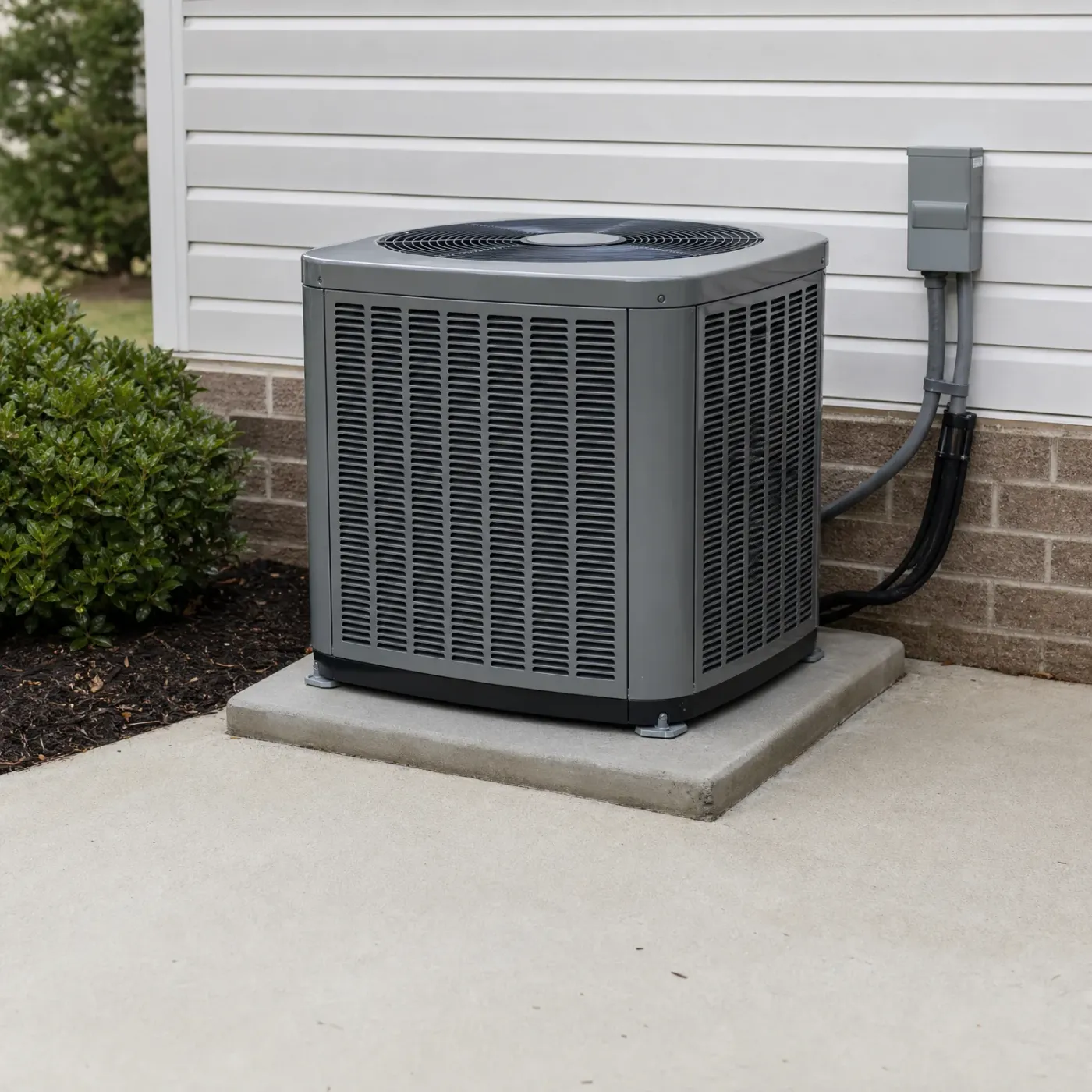
This unit sits on its pad with the fins clear and the cabinet quiet. Power goes to the compressor and fan without a fight. Nothing vibrating loose, nothing arcing inside. You walk past it on a hot day and hear nothing but the normal hum of a unit doing its job.
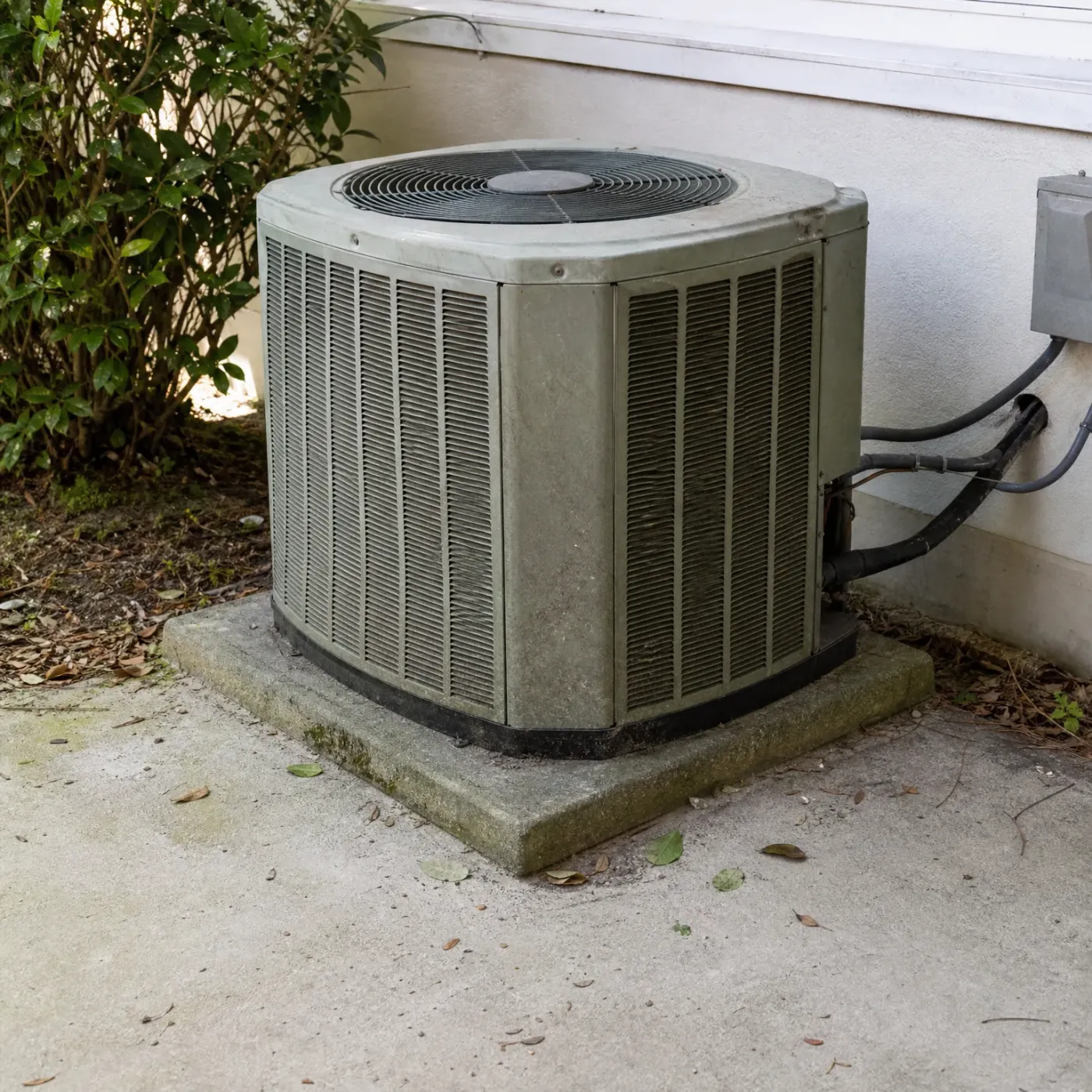
Grime has built up on the fins and casing over seasons of running hard. The lines running into the wall still carry power to a contactor or capacitor that's working harder than it should. Left alone, a unit like this stops cooling on its own schedule, usually the hottest day of the year.
A buzzing unit is telling you something specific: a contactor or capacitor is wearing out, and that part won't heal itself. It's a small problem now, which is exactly why it's worth catching before it turns into a compressor that won't start on the hottest day of the summer. You could start calling around, explaining the noise to one contractor after another, waiting on quotes and trying to judge which one actually knows what a buzzing contactor sounds like versus a fan blade hitting the cabinet. Or you could skip that part. Getting matched means you don't have to track down who's available, repeat yourself on the phone three or four times, or sit with a stack of quotes trying to compare them against each other. You still know what's wrong and why it matters. What changes is that the part where you find someone qualified to fix it is no longer on you.

You only hire the pro if you want to.
A buzzing unit rarely fixes itself before it fails outright. Send the request and skip calling around Pennsylvania for someone who can look at it, explaining the same noise to each one. You get matched with a contractor who reaches out to you, instead of chasing quotes while the buzz gets worse.